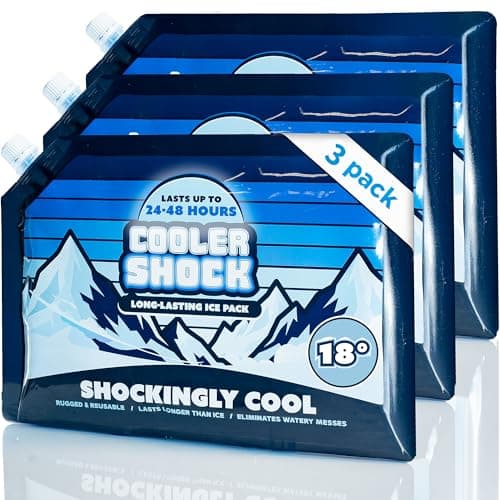
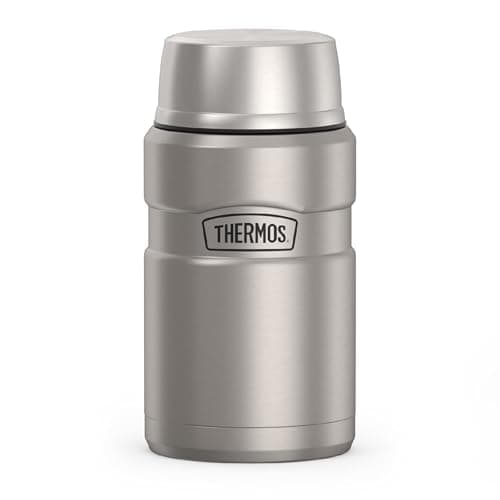
Tired of meltwater?Best ice packs for coolers is decided by freeze point, which most brands never print.
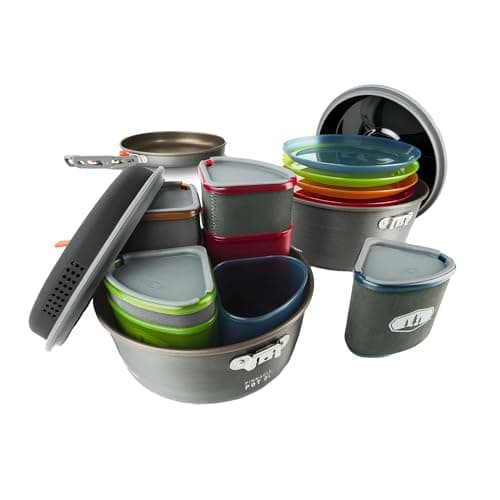
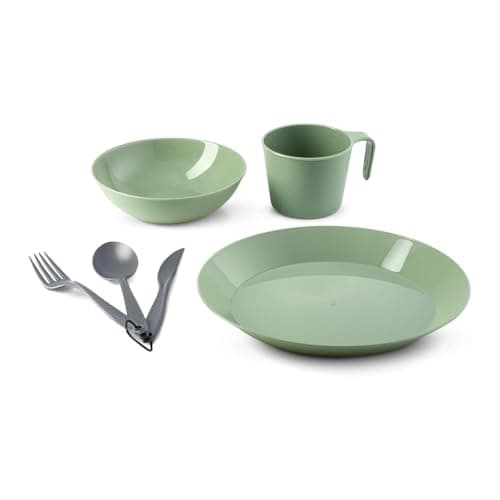
Need something to eat off, not cook in?Best camping mess kits counts by the number of people eating and explains why a cookware set is not the same purchase.
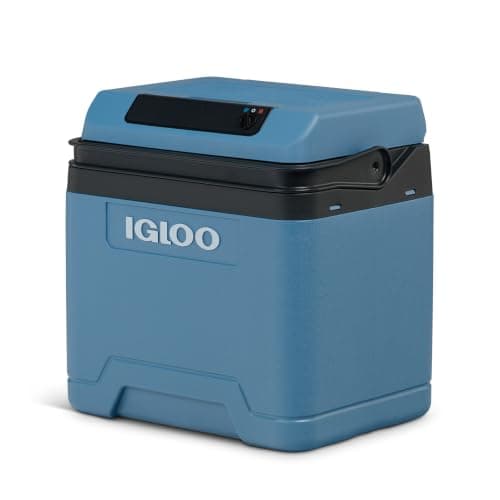
Done with buying ice?Best 12V coolers for camping explains the one spec that decides the whole category — these cool a fixed number of degrees below the air around them rather than holding a set temperature — and does the arithmetic on which days that is safe for food.
Trail & Tarp earns a commission from qualifying purchases made through links on this page, at no extra cost to you. Full disclosure.
What BTU means, and why the headline number misleads
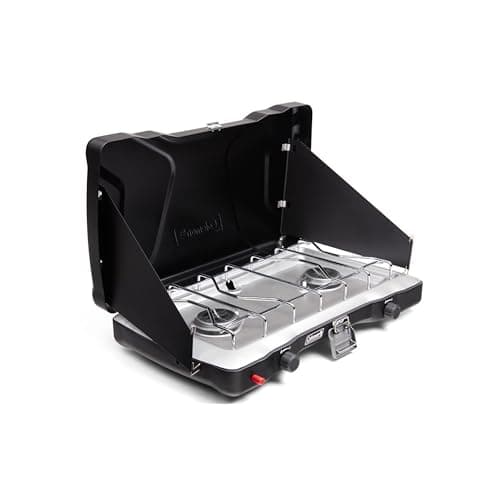
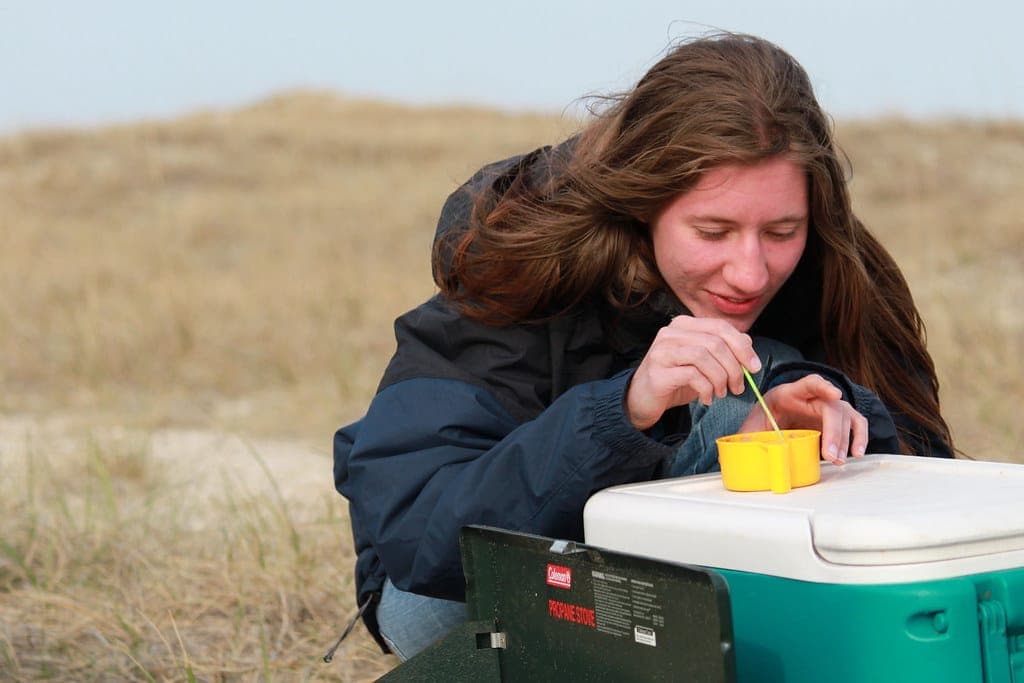
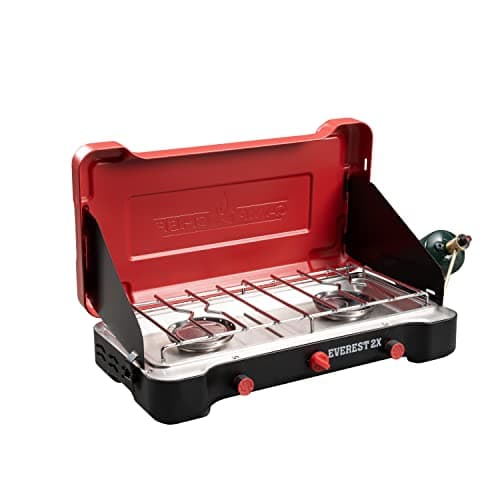
BTU per hour measures how fast a burner delivers heat. The trap is that some manufacturers publish a total across all burners and others publish per burner. Coleman's Classic stove is 20,000 BTU total across two burners, roughly 10,000 each. Camp Chef's Everest 2X is 20,000 BTU per burner. Same headline number, twice the stove.
High output matters in three situations: boiling large volumes, cooking in wind, and cooking in cold. Making eggs for two on a still summer morning, a 10,000 BTU burner is entirely adequate and you will notice nothing. That is why we do not tell everyone to buy the biggest stove.
The fuel question, settled
Propane keeps producing usable vapor pressure well below freezing. Butane stops as it approaches freezing — the canister is not empty, it simply cannot make vapor. Isobutane blends exist to split the difference, which is why nearly every backpacking canister is a blend.
For US camping, availability decides it anyway. The green 16.4 oz propane cylinder is stocked by campground stores, hardware stores and highway gas stations everywhere. Butane cartridges are not. If you have ever run out of fuel on a Saturday evening two hours from anywhere, that fact outweighs everything else.
Coolers, and why day claims are not comparable
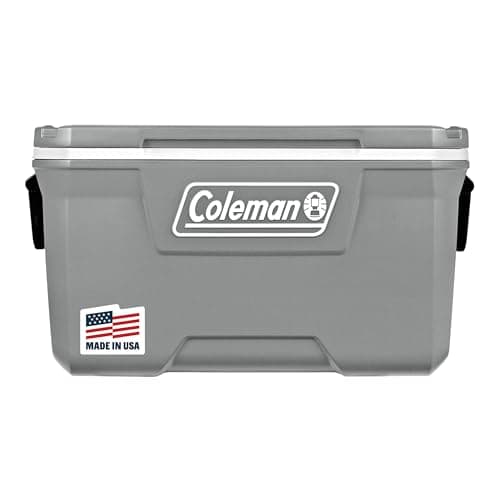
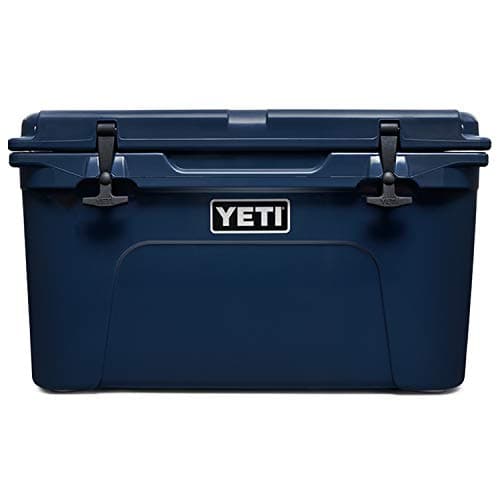
There is no standard test for ice retention. Each brand runs its own protocol, so a five-day claim and a seven-day claim were not measured the same way. Coleman publishes “up to 5 days at temperatures as high as 90 F” for the 70-quart Xtreme; Igloo publishes the same for the BMX 52; RTIC publishes “up to 7 days” for its Ultra-Light while explicitly attaching its own cooling tips. YETI publishes no day count at all for the Tundra 45, and instead gives a 2:1 ice ratio: 54 cans with no ice, 28 cans packed with ice.
That last figure is the honest one, and it applies to every cooler. A cooler packed correctly holds about half as much food as its can rating suggests, because the rest is ice.
Cooler
Capacity
Published ice claim
Empty weight
Coleman 70 qt Xtreme
70 qt / 100 cans
up to 5 days at 90 F
not published
Igloo BMX 52
52 qt / 83 cans
up to 5 days at 90 F
16.4 lb
RTIC 52 QT Ultra-Light
76 cans / 51 lb ice
up to 7 days with RTIC's tips
21 lb
YETI Tundra 45
54 cans / 37 lb ice
no day count published
24.6 lb
All figures as published by the manufacturers.
Technique beats equipment here
More than anywhere else in camping, what you do matters more than what you buy. Pre-chilling the cooler, using block ice rather than cubes, packing two parts ice to one part food, keeping drinks in a separate cooler so the food one stays shut, and leaving the meltwater in — those five habits will outperform a category upgrade on almost any weekend trip.
The kitchen is a workflow
Set it up in a line: cooler, prep surface, stove, wash station, with the stove at the downwind end so smoke blows away from food and dirty water never crosses back over clean surfaces. The two items people forget are a second water container and a light above the work surface, and both cost very little.
None of this gear has been tested by us. The BTU figures, ice claims, weights and dimensions are all published by the manufacturers, cited on each page, and the reasoning on top of them is ours. See how we research.
Questions people actually ask
QHow many BTU do I need in a camp stove?
About 10,000 BTU per burner is adequate for normal camp cooking. 20,000 BTU per burner boils large pots faster and holds temperature better in wind and cold. Check whether a stove's headline figure is per burner or a total across both.
QHow long does ice last in a cooler?
Manufacturers claim up to five days for standard hard coolers and up to seven for thicker rotomolded ones, but there is no standard test, so the claims are not comparable. Pre-chilling, block ice, a 2:1 ice ratio and fewer lid openings matter more than the brand.
QShould I use propane or butane for camping?
Propane, for US camping. It works well below freezing where butane loses canister pressure, and the 16.4 oz cylinders are stocked almost everywhere near a campground. Butane suits warm-weather tabletop stoves.