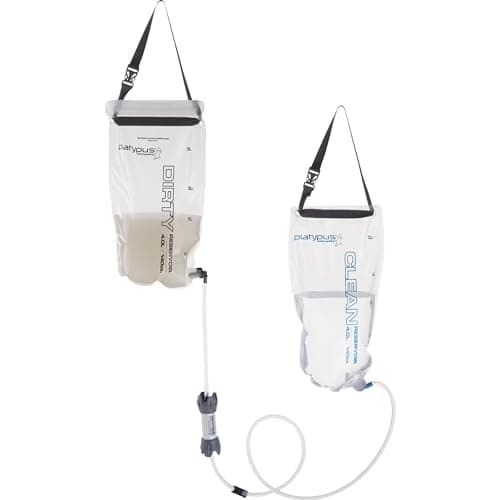
Platypus GravityWorks 4 L
Platypus
Four liters filtered unattended in about two and a half minutes, which is roughly one meal's washing-up water for a family.
$134.95 · Check price on Amazon
#ad how this is funded · price as of October 23, 2026
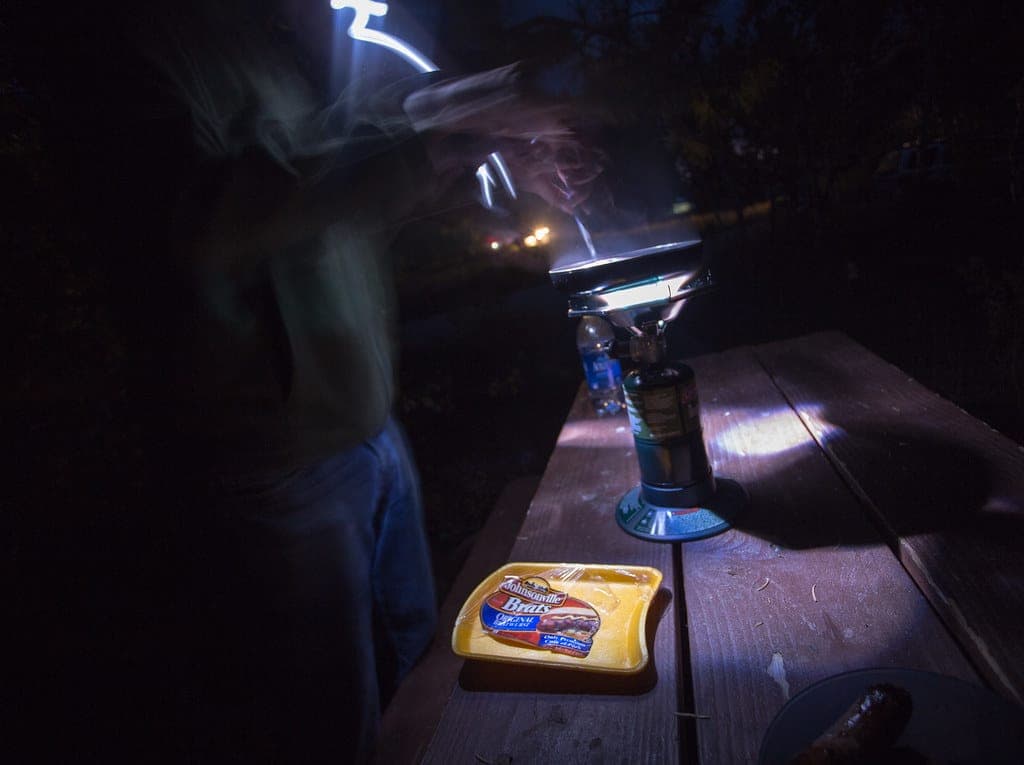
Washing up is the job everyone at the campsite tries to be somewhere else for. It takes eight minutes with a system and forty without one.
Trail & Tarp earns a commission from qualifying purchases made through links on this page, at no extra cost to you. Full disclosure.
The short answer
Scrape first, then two basins: one hot with a drop of biodegradable soap, one with clean warm water to rinse. Air dry rather than towel dry. Strain the dirty water, bin the solids, and dispose of the water where the campground tells you to. Two basins uses roughly a third of the water of washing under a running tap, and it is the only method that works when there is no tap at all.
The whole system fits in a bag: two collapsible basins, a bottle of concentrated biodegradable soap, a sponge with a scouring side, a small strainer, a quick-dry towel and a mesh bag to dry things in. Several cook sets ship with a carry bag that doubles as one basin, which halves the purchase.
Get every scrap of food off the plates before water touches them. Use a spatula, a piece of bread, or the edge of a spork, and put the scrapings straight into a sealed bin bag. Food that goes into the wash water has to come back out of the wash water, and straining a basin of greasy soup is a far worse job than scraping a plate.
Then deal with the pans while they are still warm. A pan left to go cold with sauce in it needs soaking; the same pan wiped out at once needs a rinse. If something has burnt on, put an inch of water in it and bring it back to a simmer for two minutes — it lifts almost anything and costs a minute of fuel.
| Group | Wash basin | Rinse basin | Total per meal |
|---|---|---|---|
| Two people, one pot meal | About 2 L | About 2 L | 4 L |
| Family of four | About 3 L | About 3 L | 6 L |
| Backpacking, one pot | 250-500 ml | None: drink the rinse water | Under 500 ml |
Those numbers are the argument for planning water rather than fetching it. A family of four cooking two meals a day needs somewhere around 12 L a day for washing alone, on top of drinking and cooking. Two large containers are better than one: one stays full as the reserve, one gets carried to the tap. If water is filtered rather than tapped, a gravity filter filling four liters unattended is the difference between a chore and a non-event.
Soap: less than you think, and the right kind
Use a concentrated biodegradable soap and use a few drops, not a squeeze. Biodegradable does not mean harmless to water: it means it breaks down in soil, given soil bacteria and time. Soap of any kind put into a stream or lake is pollution, and that includes the eco-labeled sort. Hot water and a scouring sponge handles most camp cooking on its own, and many experienced campers use no soap at all except on anything that held raw meat or dairy.
At a developed campground, the answer is whatever the site says: usually a dedicated grey water disposal point or a utility sink, never the drinking water tap and never the toilet block hand basins. Look for the sign on arrival rather than at 9pm with a full basin.
Where there is no facility, the standard practice is to strain the solids out, bag them with the rest of the food waste, and scatter the strained water widely over ground at least 200 feet from any water source, camp or trail. Scattering matters: a single pour in one place concentrates food smells and attracts animals to a spot, and the point of scattering is dilution.
Never pour washing-up water down a pit toilet unless the site says to, never into a stream, and never in the same spot twice.
Everything that comes off a plate is an attractant, and the animals that respond are mostly not the dramatic ones: mice, raccoons, foxes, crows and wasps cause the overwhelming majority of campsite food problems. All of them are drawn by smell, and all of them find a bin bag left outside a tent overnight.
Bag food waste in something sealable, put it in the site's bins before dark, and if there are no bins, keep it in the car rather than the tent. Wipe the table down after eating, because a greasy picnic table is as attractive as an open bag. In bear country, follow the site's food storage rules exactly — food lockers, hangs or canisters are not optional and the rules vary by location. The same logic that keeps the cooler cold applies here: anything with a smell is inventory that has to be managed.
Air drying is more hygienic than towel drying, because a camp tea towel is damp within one use and stays damp for the rest of the trip. A mesh drying bag hung from a tree or the awning of the tent does the whole job while you do something else, and it is the one piece of washing-up kit that almost no cook set includes.
Everything must be fully dry before it goes back into the kitchen bin, especially if that bin has a gasket. A damp pot sealed in a plastic box for three weeks between trips is how a kitchen set starts to smell, and the smell does not come out.
The fastest washing up is the washing up you designed away. One-pot meals mean one pot, one utensil and a bowl each. Eating from bowls rather than plates halves the surface area. Boiling water in the pot you are about to wash loosens everything before you start. And a pot that goes back on the stove for the next meal does not need to be spotless, only clean.
Set the kitchen up so the washing station is a defined place with the basins, soap and bin bag already in it, rather than something assembled after every meal. That is the argument in the camp kitchen setup guide, and it is the difference between eight minutes and forty.
Platypus
Four liters filtered unattended in about two and a half minutes, which is roughly one meal's washing-up water for a family.
#ad how this is funded · price as of October 23, 2026
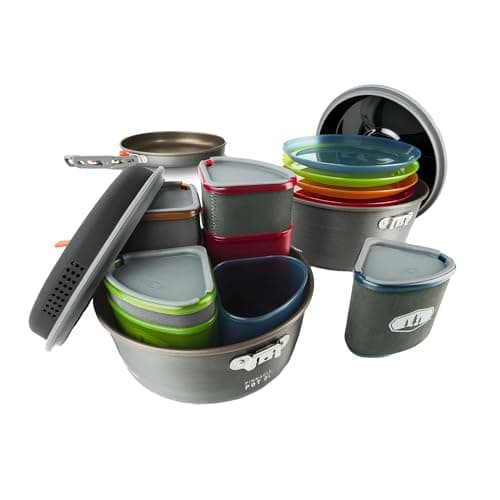
GSI Outdoors
The carry bag doubles as a sink, so the set arrives with half the washing-up station already in it.
#ad how this is funded · price as of October 23, 2026
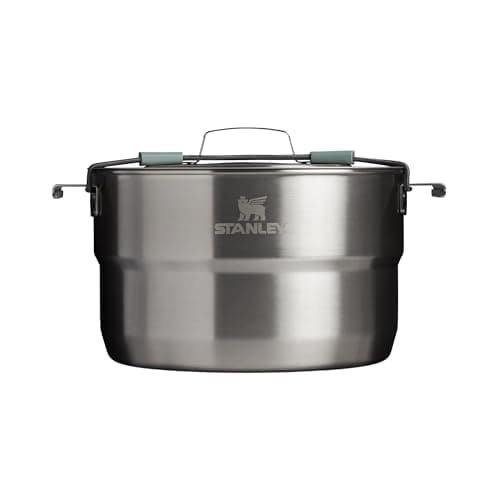
Stanley
Food-grade 18/8 stainless throughout: it takes a scourer and hot water without any of the care a non-stick coating needs.
#ad how this is funded · price as of October 23, 2026
Scrape everything into a bin bag first, then use two basins: one with hot water and a few drops of biodegradable soap, one with clean water to rinse. Air dry in a mesh bag. This uses roughly a third of the water of washing under a running tap.
At a developed campground, at the grey water disposal point or utility sink the site provides, never the drinking tap. Where there is no facility, strain out the solids, bag them, and scatter the water widely at least 200 feet from any water source, camp or trail.
No. Biodegradable means it breaks down in soil, given soil bacteria and time. Soap of any kind in a stream or lake is pollution. Wash well away from water and scatter the strained water on soil.
Roughly 4 liters per meal for two people and 6 for a family of four using the two-basin method, on top of drinking and cooking water. Backpacking with one pot, under 500 ml is enough.
Every figure on this page comes from a published source. We have not tested this gear, so the numbers are the manufacturer's or the standard body's, not ours. How we research.