The beginner on-ramp
What camping gear do you actually need?
Five systems, bought in a specific order, with the reasoning for each. If you read one page on this site before spending money, make it this one.
Trail & Tarp earns a commission from qualifying purchases made through links on this page, at no extra cost to you. Full disclosure.
The five systems
The short answer
Camping gear is five systems, not eighty items: shelter, sleep, kitchen, light and comfort. Buy them in this order — tent, sleeping pad, sleeping bag, light, stove, chairs — and stop at any point. Every stage is a usable trip on its own, and the order puts the two things that decide whether you sleep at the front.
Camping shops sell gear by category, which encourages you to buy a great tent and a bad sleeping mat. The order above is deliberately different: it puts the sleeping pad second, ahead of the sleeping bag, because your body weight crushes the insulation underneath you flat, and the ground takes heat from you all night. That is one measured, published number — R-value — and getting it wrong is the most common reason a family does not camp twice.
1. Shelter
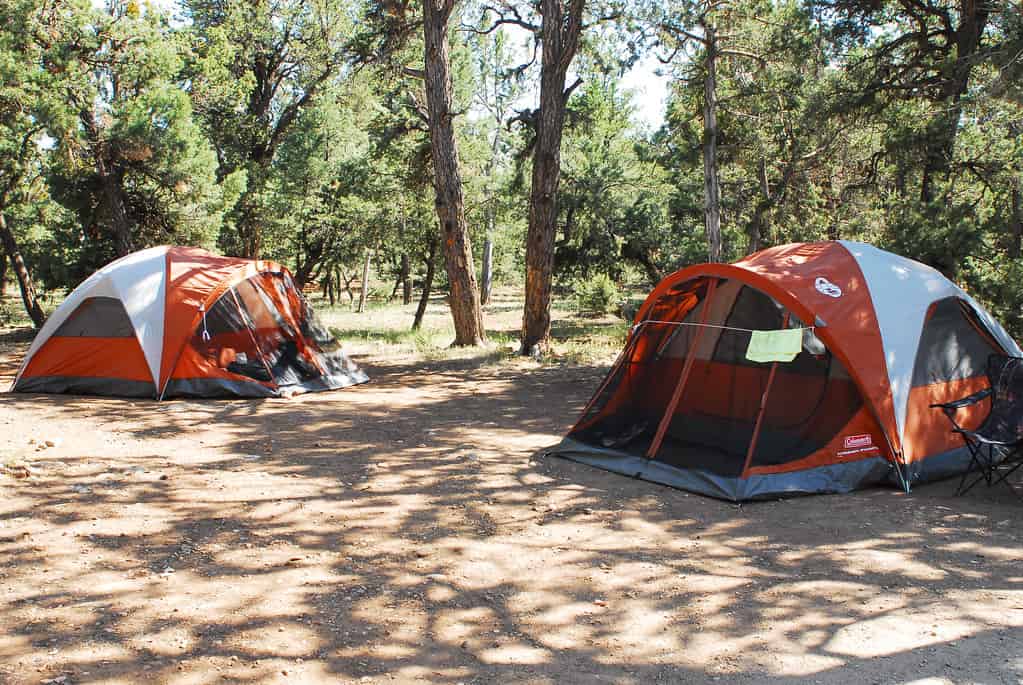
Size it by sleepers, not by the number on the box. Aim for 20 to 25 square feet per person, which means a family of four wants a tent sold as a 6-person and two people want one sold as a 4-person. CORE Equipment publishes both numbers for its own tents — a 14 by 9 ft model listed as “9 (industry standard) / 4 + gear (most comfortable)” — which tells you how far apart marketing capacity and real capacity are.
After size, the specs that matter are center height (6 ft means adults can stand), setup type (instant tents pitch in a minute and weigh double), and whether the rainfly reaches the ground. Start at what size tent do I need.
2. Sleeping pad
The one place we tell beginners to over-buy. R-value is standardized under ASTM F3340, so the numbers are comparable between brands: R 1 to 2 is summer only, R 3 to 4 is three-season, R 5 and up handles frozen ground. Too much R-value costs you only bulk; too little costs you the night.
R-values also add up, which makes a cheap closed-cell foam pad under an air pad the cheapest warmth upgrade available. Picks at best sleeping pads for car camping.
3. Sleeping bag
Buy on the ISO comfort rating, not the number in the product name. Under ISO 23537 a bag gets a comfort figure (a standardized cold sleeper is comfortable) and a limit figure (a standardized warm sleeper survives the night curled up), and the name usually reflects the limit. Kelty publishes comfort 31 F on a bag called a 20; Marmot publishes comfort 32.2 F on a bag called a 20.
If a bag publishes no ISO figures at all, subtract 10 to 15 degrees from its headline number before you plan around it. More at sleeping bag temperature ratings explained.
4. Light
One lantern for the shared area, one small light per tent, one headlamp per person including children. Lanterns are for staying still and headlamps are for moving; trying to do one job with the other is why people cook in their own shadow. Compare on runtime at the setting you will actually use, not on peak lumens.
5. Kitchen
You can start almost free here: pans from your kitchen, a cool box borrowed, and a campground grill. When you do buy, a two-burner propane stove is the item that changes camp cooking, because something is always waiting on a single burner. Propane rather than butane, for cold performance and because the 16.4 oz cylinders are sold everywhere near campgrounds.
The two items people forget: a second water container (drinking and washing are different jobs) and a light above the work surface. Layout is in the camp kitchen setup guide.
6. Comfort, which is the entire point of car camping
You are carrying nothing, so buy a chair each with a seat height of 18 to 20 in. Below about 15 in your knees sit above your hips, which is fine for twenty minutes and unpleasant for an evening. Everything you leave at home to save space in a car is a comfort given up for no reason.
The costed kit
What a first kit costs
We do not publish fixed prices anywhere on this site, because they change weekly and a number typed into a page is out of date the day after it is written. The prices below come from the live price feed, dated on each button.
Shelter for two
Coleman Sundome 4-Person Tent
63 sq ft, 4 ft 11 in center height
Shelter for four
Coleman Skydome 6-Person Tent
85 sq ft, 6 ft center height
#ad how this is funded · price as of October 23, 2026
Sleep surface
Therm-a-Rest MondoKing 3D
R 7.0, 4.25 in thick, one per person
#ad how this is funded · price as of October 23, 2026
Sleeping bag
Kelty Cosmic Down 20
ISO comfort 31 F, ISO limit 21 F
#ad how this is funded · price as of October 23, 2026
Stove
Coleman Triton+ 2-Burner Propane Stove
22,000 BTU across two burners
#ad how this is funded · price as of October 23, 2026
Cooler
Coleman Classic 70-Quart Cooler
70 qt, up to 5 days of ice at 90 F
#ad how this is funded · price as of October 23, 2026
Area light
Coleman OneSource 1000-Lumen Rechargeable Lantern
1,000 lm high, up to 100 h on low
#ad how this is funded · price as of October 23, 2026
Headlamp, one each
Black Diamond Spot 400 Headlamp
400 lm, IPX8
#ad how this is funded · price as of October 23, 2026
Chair, one each
Coleman Cooler Quad Chair
325 lb capacity, 18.1 in seat height
#ad how this is funded · price as of October 23, 2026
Three ways to build a kit, by budget
| Borrow and improvise | Budget kit | Buy-once kit | |
|---|---|---|---|
| Shelter | Borrowed tent | Coleman Sundome | Kelty Wireless or a cabin tent |
| Sleep | Foam mat and blankets, summer only | Klymit Static V2 plus a foam pad | MondoKing 3D at R 7.0 |
| Bag | Duvet from home, warm nights only | Coleman Brazos | Kelty Cosmic Down 20, ISO comfort 31 F |
| Kitchen | Campground grill, pans from home | Gas One single burner | Coleman Classic two-burner |
| Light | Phone plus a battery bank | One lantern, cheap headlamps | Rechargeable lantern, Spot 400 each |
| Chairs | Picnic bench | Coleman quad chairs | GCI rockers |
The gap between the columns is largest in the sleep system and smallest in the kitchen. That is not an accident: sleep quality is where measurable specs exist, and a cheap pan boils water exactly as well as an expensive one.
Before you buy anything, do this
Borrow a tent and camp one warm night close to home. It costs nothing, and it answers the only question that matters: do you enjoy this? Everything on this page is a good purchase for someone who has already answered yes.
Where to go next
Take the checklists and work down one, or read the trip guide for what you are actually doing: car camping, family camping with kids, or a first backpacking trip. If a piece of jargon stops you, it is defined in the glossary.
Questions beginners actually ask
QWhat gear do I need for camping?
Five systems: shelter (tent, stakes, mallet), sleep (a pad and a bag per person), kitchen (stove, fuel, cooler, two water containers, basic cookware), light (a lantern and a headlamp each) and comfort (a chair each). Everything else can be borrowed or improvised from your kitchen at home for a first trip.
QHow much does camping gear cost?
Prices move constantly, so we do not publish fixed totals. What we can tell you is the shape: a tent and a sleep setup are the two largest items, the kitchen can start almost free using pans from home, and the gap between a budget kit and a mid-range one is largest in the sleep system and smallest in the kitchen.
QWhat camping gear should I buy first?
Tent, sleeping pad, sleeping bag, light, stove, chairs, in that order. The pad comes before the bag because the ground is what makes people cold, not the air, and a good pad on a cheap bag beats a good bag on a thin mat every time.
QCan I go camping without buying anything?
Almost. Borrow a tent, use blankets and a foam mat for one warm night, cook on a campground grill or eat food that needs no cooking, and use your phone as a light with a spare battery. It is not comfortable, but it tells you whether you enjoy it before you spend anything.
QIs expensive camping gear worth it?
It depends entirely on the category. In sleeping pads the expensive version is measurably warmer, and R-value is a published, standardized number you can check. In tents the expensive version is lighter and better in wind, neither of which matters much at a campground. Spend where the spec is measurable and the difference is real.