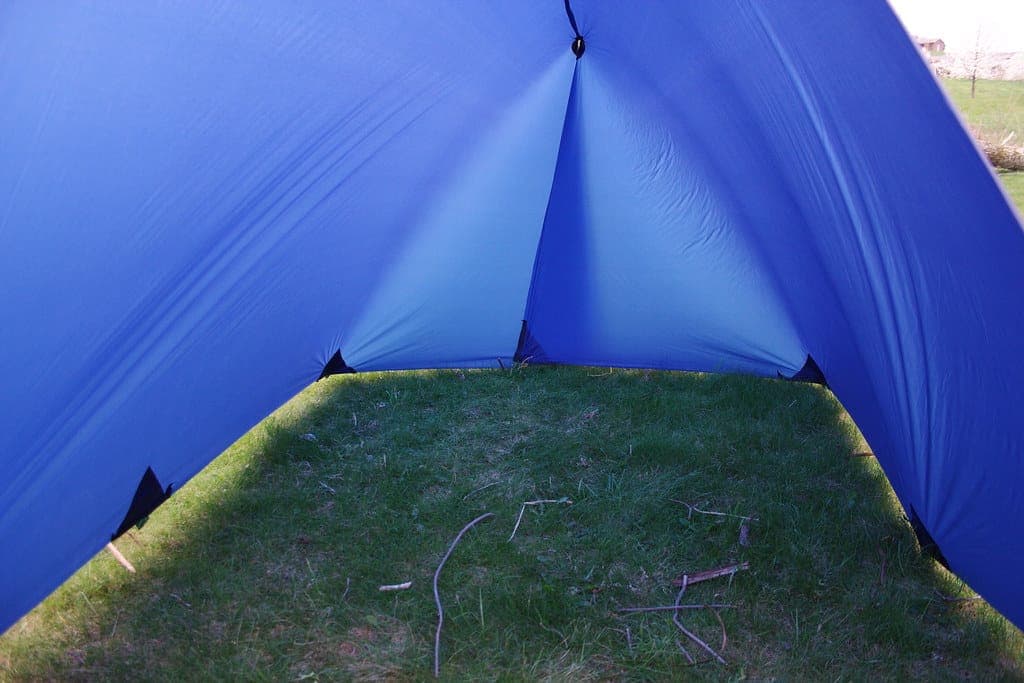
No photo
Coleman Sundome 4-Person Tent
Coleman
A 9 x 7 ft floor: sold as a 4-person tent, genuinely comfortable for two adults with gear.
Tent capacity is a measurement of a situation nobody wants to be in. This page converts it into the number that matters: square feet per sleeper, with room for the bags.
Trail & Tarp earns a commission from qualifying purchases made through links on this page, at no extra cost to you. Full disclosure.
The short answer
Buy a tent rated for two more sleepers than you have, and check that it gives at least 20 square feet of floor per person. Two people want a 4-person tent (about 55 to 65 square feet). A family of four wants a 6-person (about 85 to 100 square feet). Five or six people want a 8 to 9-person cabin (120 square feet and up).
| Sleepers | Buy a tent sold as | Floor to look for | Per person | Example |
|---|---|---|---|---|
| 1 | 2 to 3 person | 35-45 sq ft | 35-45 | Any small dome |
| 2 | 4 person | 55-65 sq ft | 28-32 | Coleman Sundome 4, 63 sq ft |
| 3 | 5 to 6 person | 75-90 sq ft | 25-30 | Kelty Wireless 6, 86.5 sq ft |
| 4 | 6 person | 85-100 sq ft | 21-25 | Coleman Skydome 6, 85 sq ft |
| 5-6 | 8 to 9 person cabin | 120+ sq ft | 20-25 | CORE 9 Person, 126 sq ft |
This page is about people sleeping in a tent. If you are searching for a tent to seat guests at an event, you want a marquee or a canopy, which is a different product entirely.
A tent's capacity rating describes how many adult sleeping pads fit side by side on the floor, touching, with nothing else in the tent. There is no industry body enforcing it and no standard mat width, so it is a floor-area division rather than a promise about comfort.
The clearest evidence is a manufacturer's own spec sheet. CORE Equipment publishes two capacity figures for its 14 by 9 ft tent: 9 (industry standard) and 4 + gear (most comfortable). A 9-person tent that the maker says is most comfortable for four tells you everything about how the industry number is generated. Its 11 by 9 ft tent is published the same way: 6 standard, 3 + gear comfortable.
Divide the published floor area by the number of people actually sleeping in it.
Worked example: the Coleman Skydome 6 publishes 10 ft by 8 ft 6 in, which is 85 square feet. A family of four gets 21.25 square feet each, just inside the comfortable band. The same tent with five people drops to 17 square feet each, which is the cramped band.
Listed floor size is a maximum, not a measurement of your tent
OutdoorGearLab measured the Coleman Sundome 6 at 9 ft 8 in by 9 ft 7 in against its listed 10 by 10 ft. That is about 93 square feet rather than 100 — a 7% difference, which for a family of four is most of a square foot each. Nothing sinister, just seam allowances and the difference between the footprint and the floor. Assume a few percent less than the box says.
Two tents with the same floor area can differ enormously in how much of it you can use. A dome slopes its walls inward, so the perimeter is space you can lie in but not sit up in. A cabin tent with near-vertical walls gives you almost the entire footprint at full height.
That is why the Eureka Copper Canyon LX 6, at 100 square feet with a 7 ft peak, feels much larger than a 100 square foot dome with a 72 in center. If you camp anywhere it rains, buy the height.
The tent that fits your family may not fit your trunk with everything else. The CORE 9-person packs to 48 by 12 by 12 in and weighs 40 lb; the Coleman Skydome 6 is roughly 16.8 lb in a far shorter bag. Both fit a family of four; only one of them still leaves room for a cooler and four camping chairs.
When you have the size settled, the shortlist is in best family camping tents or best car camping tents, depending on how many of you there are.
Coleman
A 9 x 7 ft floor: sold as a 4-person tent, genuinely comfortable for two adults with gear.
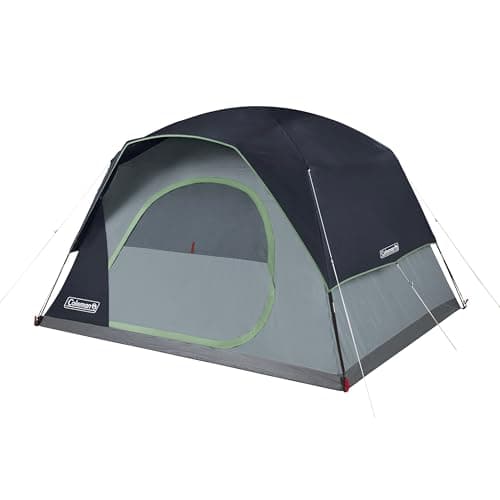
Coleman
85 sq ft and a 6 ft center height, which is the size most couples and small families actually want.
#ad how this is funded · price as of October 23, 2026
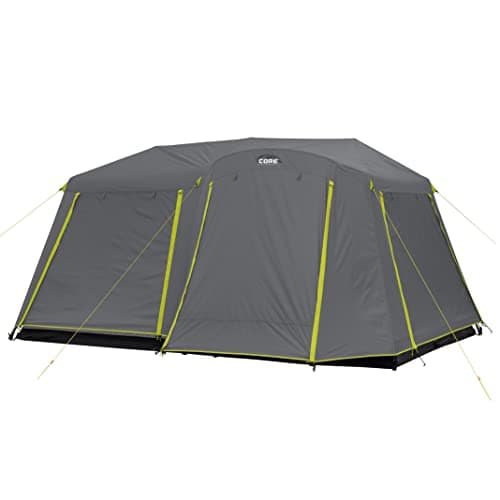
CORE Equipment
14 x 9 ft, published as 9 standard or 4 plus gear: the clearest example of how far apart those two numbers are.
#ad how this is funded · price as of October 23, 2026
A tent sold as a 6-person, with 85 to 100 square feet of floor. That gives four sleepers 21 to 25 square feet each, which fits pads or airbeds plus bags and a walkway. A 4-person tent gives four people about 14 square feet each with nowhere for gear.
Twenty to 25 square feet per sleeper is comfortable for car camping. Under 20 means people touch and gear goes outside. Backpackers accept 15 or less because they carry the weight; nobody camping from a car has to.
Only in the sense that six adult sleeping pads fit on the floor edge to edge with nothing else in the tent. CORE Equipment publishes both figures for its own tents: its 6-person is listed as most comfortable for 3 plus gear.
Usually yes, and they will fill it. A queen airbed is 78 by 60 in, so two of them need about 65 square feet laid side by side, leaving almost no floor in an 85 square foot tent. Check the tent's shorter dimension is at least 10 ft.
Every figure on this page comes from a published source. We have not tested this gear, so the numbers are the manufacturer's or the standard body's, not ours. How we research.