
Skip to content
Trail & Tarp

Sleep

Air Mattress vs Sleeping Pad vs Cot: What to Sleep On

Three products, three completely different failure modes. The right answer depends on the temperature more than on the comfort, which is the opposite of how they are usually sold.

By Sawyer V.Published September 3, 2026Last updated September 3, 2026How we research
A camping cot and bedding set up inside a tent

Trail & Tarp earns a commission from qualifying purchases made through links on this page, at no extra cost to you. Full disclosure.

Quick picks

#ProductBest forPrice
1
No photo

Most comfortable in summer

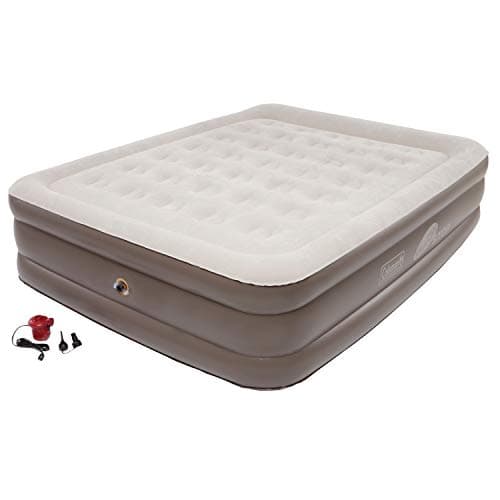
Coleman SupportRest Double-High Queen Airbed

A 78 by 60 in queen at 18 in tall with a built-in pump, rated to 600 lb.

Warm-weather car camping, guests, bad backs
2
No photo

Best for getting off the ground

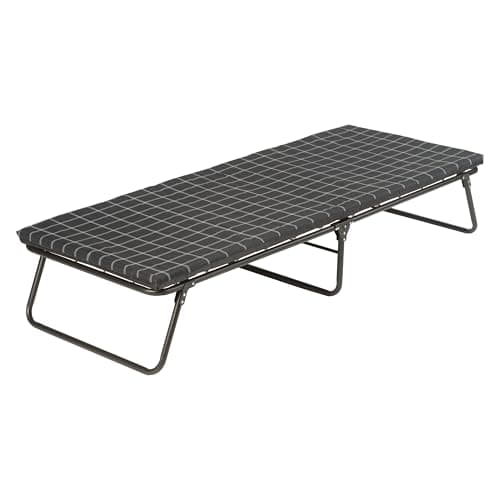
Coleman ComfortSmart Deluxe Cot

80 by 30 in of sleeping surface, 15 in off the floor, rated to 300 lb and fits people up to 6 ft 6 in.

Tall campers, sore backs, hard or lumpy pitches
3
No photo

Warmest and simplest

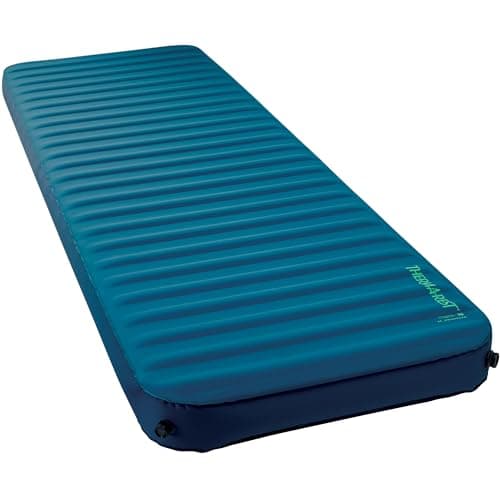
Therm-a-Rest MondoKing 3D

R-value 7.0 and 4.25 in of self-inflating foam, in a 77 by 25 in pad that weighs 4 lb 6 oz.

Anything below about 50 F, and anyone who wants one thing to buy

Which should you sleep on?

The short answer

Sleeping pad for warmth and simplicity, air mattress for summer comfort, cot for getting off rough ground or up off the floor. The deciding factor is usually temperature, not comfort: a thick self-inflating pad publishes an R-value of 7, while air mattresses and cots publish none, because moving air under you carries heat away.

Sleeping padAir mattressCot
WarmthBest. R 7.0 on the MondoKing 3DWorst. Air circulates and carries heat awayPoor. Open air moves under you
Comfort on a good pitchVery good at 3-4 in thickBest, most bed-likeGood, and firm
Comfort on a bad pitchGoodGoodBest. It ignores the ground entirely
SetupUnroll, few breathsPump, 3-4 minutesUnfold, no air needed
Bulk in the carModerate, 26 x 10 in rolledSmall packed, big pumpLarge and rigid
Failure modePuncture, patchablePuncture, and you are on the floorNone, but it can be too big for the tent
Warmth ratings from published R-values where they exist; airbeds and cots do not publish them.

The temperature question decides it

In July on a warm pitch, all three work and the air mattress is the most comfortable. In October the ranking inverts completely. A queen airbed holds a large volume of air that circulates as you move, taking your body heat to the cold underside and dumping it into the ground. A cot has open air moving under it, which is exactly what you want on a hot night and exactly what you do not want on a cold one.

Both problems have the same fix: put insulation between you and the surface. A closed-cell foam pad (R 2.0) on top of an airbed or a cot costs very little and changes the night. See sleeping pad R-value explained for why the numbers add up the way they do.

Measure the tent floor first

A queen airbed is 78 by 60 in, which is 32.5 square feet. A Coleman Skydome 6 publishes 85 square feet of floor. Two queens do fit, and almost nothing else does. A cot at 80 by 30 in needs its rectangle in the flat part of the floor, away from sloping walls. Run the numbers with what size tent do I need before you buy either.

Who should buy which

Our pad picks, with published R-values, are in best sleeping pads for car camping.

The picks in full

1. Most comfortable in summer

Coleman SupportRest Double-High Queen Airbed

Coleman

A 78 by 60 in queen at 18 in tall with a built-in pump, rated to 600 lb.

Coleman lists 78 by 60 by 18 in, a 600 lb capacity and a built-in pump that inflates in about three to four minutes. For a warm night it is the most bed-like thing you can put in a tent, and the double height makes getting up much easier for anyone with a bad back or bad knees.

The catch is thermal. Air circulates inside the mattress, carrying your heat to the cold underside and away into the ground. Airbeds do not publish R-values because they have almost nothing to publish. Put a foam pad or a blanket on top of one in fall.

The drawback

A big volume of air between you and cold ground, with no insulation value. In fall it is the coldest option here by a distance.
No product photo: we don't take our own

Published specs

Size
78 x 60 x 18 in
Capacity
600 lb
Pump
built in
Inflation
about 3-4 minutes

Specs: Coleman airbed published specs

2. Best for getting off the ground

Coleman ComfortSmart Deluxe Cot

Coleman

80 by 30 in of sleeping surface, 15 in off the floor, rated to 300 lb and fits people up to 6 ft 6 in.

Coleman lists 80 by 30 by 15 in, a 300 lb capacity, a coil suspension and a foam mattress pad, and states a fit up to 6 ft 6 in. A cot solves problems the other two cannot: root-covered pitches, getting up in the night, and anyone who simply cannot get comfortable at floor level.

Being suspended in moving air is warm in summer and cold in fall, so a cot in cool weather needs a pad on top of it, not just a sleeping bag. Also check the tent: 80 by 30 in of rigid frame needs its full rectangle of flat floor.

The drawback

About 24.7 lb and a rigid footprint that cannot be pushed into a tent's sloping walls. Cold air moves freely underneath you.

No product photo: we don't take our own

Published specs

Size
80 x 30 x 15 in
Capacity
300 lb
Weight
about 24.7 lb
Fits up to
6 ft 6 in
Pad
foam mattress included

Specs: Coleman ComfortSmart Deluxe Cot product page

3. Warmest and simplest

Therm-a-Rest MondoKing 3D

Therm-a-Rest

R-value 7.0 and 4.25 in of self-inflating foam, in a 77 by 25 in pad that weighs 4 lb 6 oz.

A thick self-inflating pad is the only one of these three that is both comfortable and warm. Therm-a-Rest publishes R 7.0, which is winter-capable, and 4.25 in of loft, which is enough that side sleepers do not bottom out.

If you buy one sleep surface and want it to work in every month you are likely to camp, this is the category to buy from.

The drawback

Narrower than an airbed and it needs storing unrolled at home. Two people need two of them.

No product photo: we don't take our own

Published specs

R-value
7.0
Thickness
4.25 in
Size (large)
77 x 25 in
Weight (large)
4 lb 6 oz
Type
self-inflating

Specs: Cascade Designs (Therm-a-Rest) product page

Questions people actually ask

QIs an air mattress or sleeping pad better for camping?

A sleeping pad is warmer and simpler; an air mattress is more comfortable in warm weather. Air mattresses have essentially no insulation value because air circulates inside them and carries heat to the cold underside, so below about 50 F a pad wins clearly.

QAre camping cots comfortable?

For many people yes, especially on hard or uneven ground, and they make getting up much easier. They are firm rather than plush, and they are cold in cool weather because air moves freely underneath, so add a pad on top below about 50 F.

QIs a camping cot more comfortable than an air mattress?

It depends on the pitch and the sleeper. A cot ignores lumpy ground completely and is easier to get out of; an air mattress is softer and warmer in summer. On a smooth pitch in warm weather most people prefer the airbed.

QWhy is an air mattress so cold to sleep on?

Because the air inside circulates. Your body heats the air touching you, that air moves to the cold underside of the mattress, gives up its heat to the ground, and returns. A foam pad or blanket on top of the airbed breaks the cycle.

How we picked

Everyone else in this category will tell you they tested twenty of these. We have not tested any of them, and we would rather say so than pretend. There is no gear closet here and no test lab.

What we did instead: pulled the published specifications from each manufacturer's own spec sheet or manual, named the standard behind every rating so you can check what it actually promises, did the arithmetic that turns a spec into a decision, and pulled today's real retail price rather than quoting one from memory. Every pick states a drawback, because a list where nothing is wrong with anything is an advert.

The limits of that method, stated plainly: published specs do not capture zipper quality, seam durability, or how a tent behaves at 2am in a storm. Where that matters, we say so on the pick. The full method is here.

Sources for this page