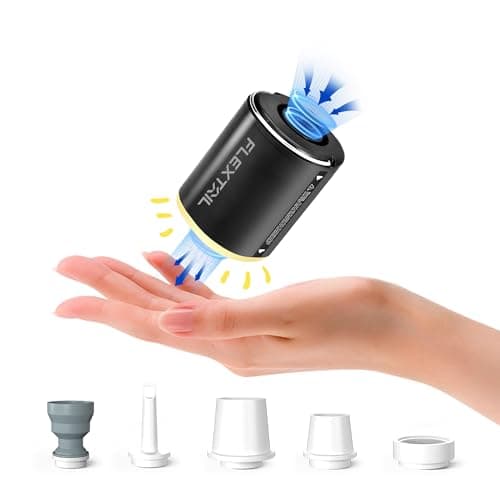
Inflating it?Air pumps for camping is decided by airflow against pressure, because a pad and a queen air bed need opposite things.
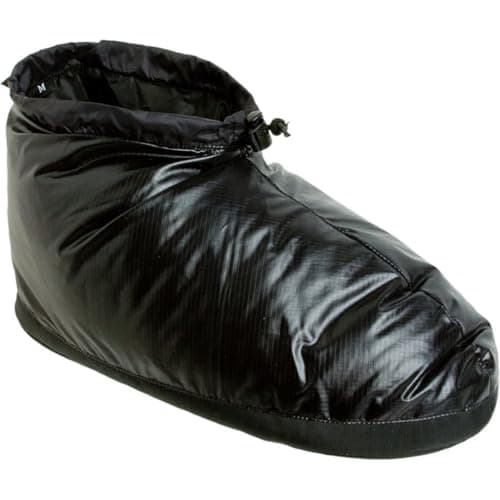
Cold feet, specifically?Best down booties for cold nights starts with the reason thick socks make it worse, which is compression rather than insulation.
Trail & Tarp earns a commission from qualifying purchases made through links on this page, at no extra cost to you. Full disclosure.
This is the single most useful thing on this site, and it goes against every instinct. Insulation works by trapping air. Lie down and your body weight crushes the fill beneath you until it is nearly solid, and solid material conducts heat efficiently. So the bottom half of even an excellent sleeping bag does almost nothing, while the ground — colder than the air, and effectively infinite — keeps drawing heat out of you for eight hours.
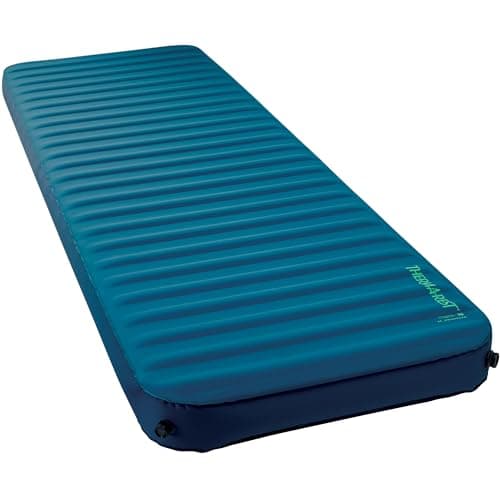
The spec that fixes this is R-value, and it is the one camping number that is genuinely standardized. Since 2020, every pad sold in the US is tested under ASTM F3340: the pad goes between a hot plate at 35 C, standing in for a body, and a cold plate at 5 C, standing in for the ground, and testers measure the energy needed to hold 35 C over four hours at three points on the pad. Because it is one method, the numbers are comparable between brands.
R-value
Season
Example
1.0-2.0
Summer only
Klymit Static V2, R 1.3
2.0-3.0
Late spring, early fall
Therm-a-Rest Z Lite Sol, R 2.0
3.0-5.0
Three-season
Stack a foam pad under an air pad
5.0-8.0+
Winter capable
MondoKing 3D at 7.0, Exped MegaMat 10 at 8.1
R-values as published by the manufacturers under ASTM F3340.
Then read the bag rating properly
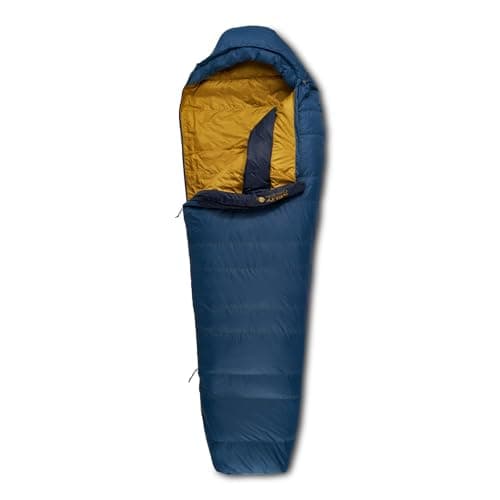
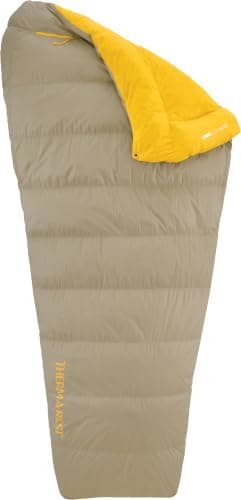
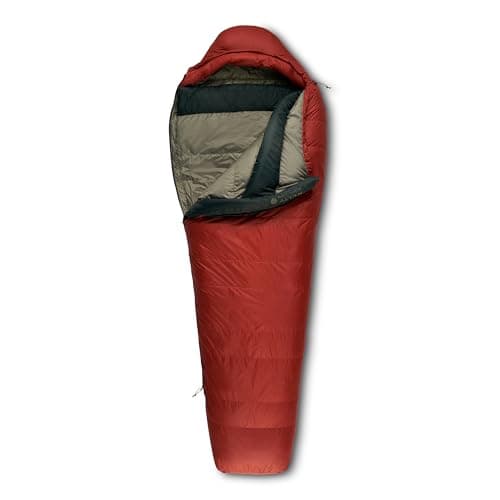
Sleeping bags are rated under ISO 23537, published in 2016 to replace the earlier European EN 13537, using a heated manikin fitted with sensors, on a standardized mat, in a climate-controlled room. The test produces two figures: a comfort rating, where a standardized cold sleeper is comfortable, and a limit rating, where a standardized warm sleeper gets through the night curled up. The number in a bag's name is usually the limit.
The gap is about ten degrees, and you can see it on the spec sheets. Kelty publishes ISO comfort 31 F and limit 21 F for its Cosmic Down 20. Marmot publishes comfort 32.2 F and limit 21.6 F for the Trestles Elite Eco 20. Both are “20 degree bags” that are comfortable in the low thirties.
Plenty of camping bags publish no ISO figures at all — Coleman lists the Brazos as 20 F, TETON lists the Celsius XXL as 0 F — and those are manufacturer estimates rather than test results. They are not necessarily wrong; they just have nothing standardized behind them, so leave more margin.
Beds, mats and cots
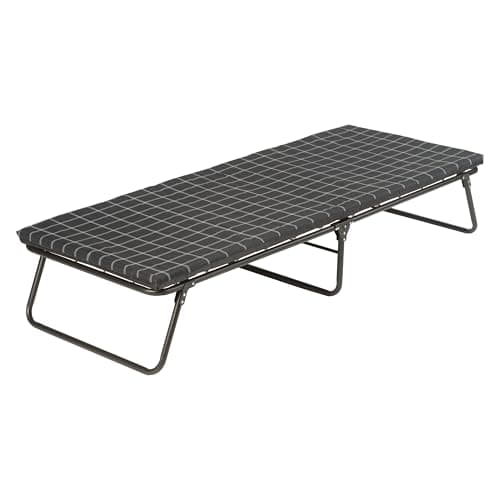
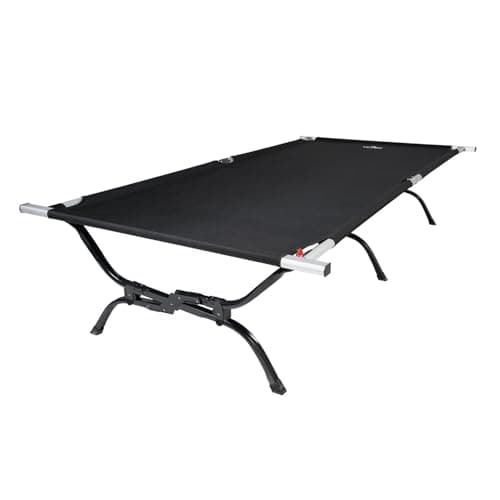
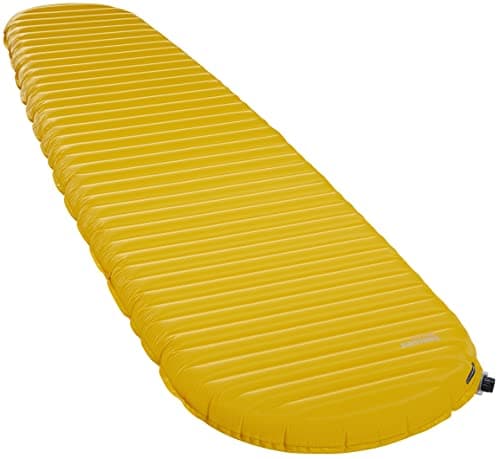
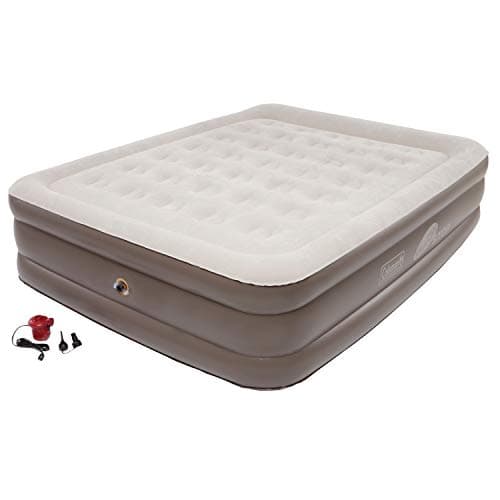
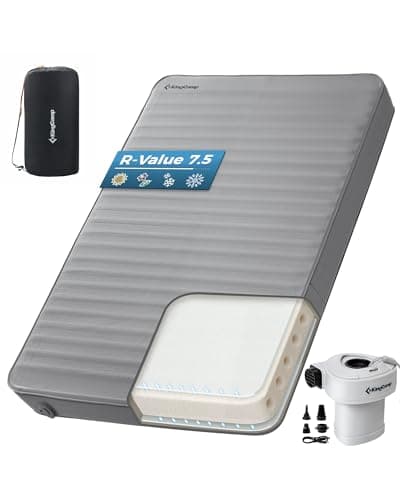
Sleeping pads, air mattresses and cots fail in different ways. A thick self-inflating pad is warm and comfortable and bulky. An air mattress is the most bed-like and the coldest, because the air inside circulates, carrying your heat to the cold underside and into the ground. A cot is superb on rocky or wet ground and equally cold, because open air moves freely underneath you.
Both cold problems have the same cheap fix: a closed-cell foam pad on top of the airbed or cot. R-values add, so a 14 oz foam pad is a genuine warmth upgrade to any surface.
What we can and cannot tell you
We have not slept in any of this gear. What we have done is compile published specifications, name the standard behind each rating, explain what the test actually measures, and do the arithmetic that turns those numbers into a decision. Where a rating is ISO or ASTM tested, we say so, because the difference between a measured number and an asserted one is the most useful thing a buyer can know. The full method is at how we research.
Questions people actually ask
QWhat R-value sleeping pad do I need?
R 1 to 2 for summer, R 3 to 4 for three-season use, and R 5 or more for camping on frozen ground. R-values are additive, so stacking a foam pad under an inflatable adds the two together.
QWhat does a sleeping bag temperature rating mean?
Under ISO 23537 a bag gets a comfort rating, where a standardized cold sleeper sleeps comfortably, and a limit rating, where a standardized warm sleeper gets through the night curled up. The name of the bag usually reflects the limit figure.
QWhy am I cold when my sleeping bag is rated for the temperature?
Usually because the pad underneath you has too low an R-value. Your weight crushes the insulation beneath you flat, so the ground draws heat away regardless of how good the bag is.