Skip to content
Trail & Tarp

Sleep

The Best Sleeping Bags for Camping, Rated by What the Number Means

Two bags marked 20F can be 10 degrees apart in practice, because only one of them was tested to a standard. Here is how to tell which is which before you buy.

By Sawyer V.Published September 3, 2026Last updated September 3, 2026How we research
A rolled sleeping bag and camping gear laid out

Trail & Tarp earns a commission from qualifying purchases made through links on this page, at no extra cost to you. Full disclosure.

Quick picks

#ProductBest forPrice
1
No photo

Best overall

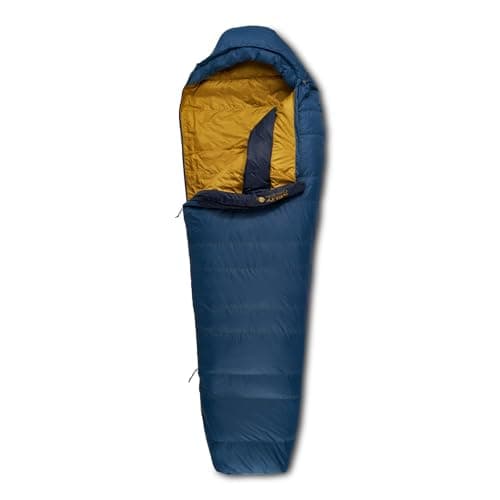
Kelty Cosmic Down 20

Publishes ISO comfort 31F and ISO limit 21F, so you are buying a tested number rather than a marketing one.

Three-season camping, published ISO numbers
2
No photo

Best for damp conditions

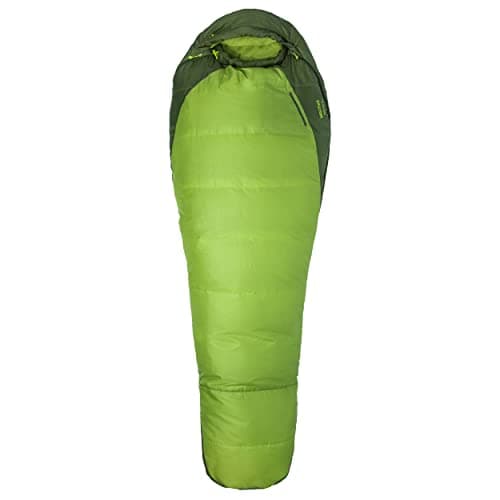
Marmot Trestles Elite Eco 20

ISO comfort 32.2F, ISO limit 21.6F, synthetic fill that keeps insulating when it gets damp.

Wet regions, campers who will not baby their gear
3
No photo

Best value

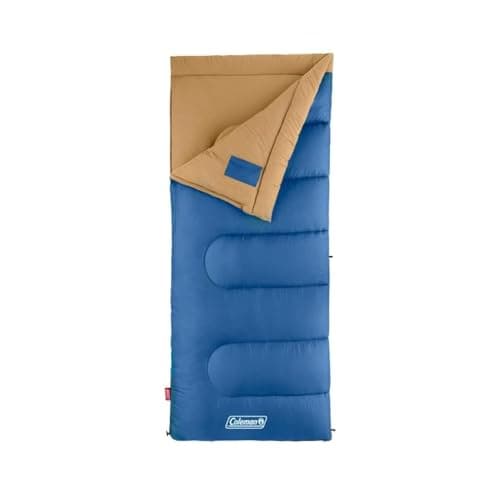
Coleman Brazos 20F Sleeping Bag

A 75 by 33 in rectangular bag with a 20F maker's rating, at a price that makes a first season cheap.

A first bag, summer and shoulder-season car camping
4
No photo

Best for cold sleepers and big humans

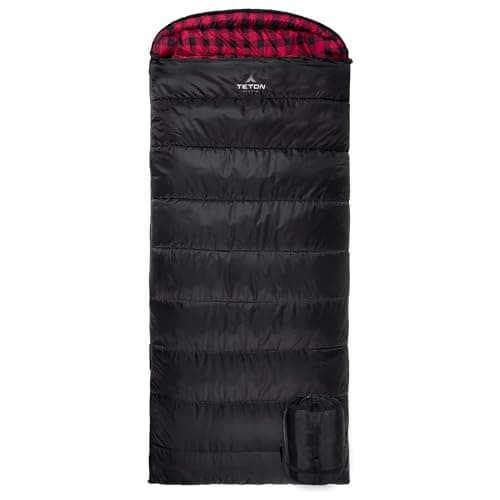
TETON Celsius XXL 0F Sleeping Bag

90 by 39 in of interior with a 0F maker's rating and a mummy-style hood on a rectangular body.

Larger campers, cold nights, people who hate mummy bags

How to read a sleeping bag temperature rating

The short answer

Look for a bag that publishes an ISO comfort rating, and buy for that number rather than the number in the product name. Under ISO 23537, a bag gets two figures: comfort (a standardized cold sleeper is comfortable) and limit (a standardized warm sleeper gets through the night curled up). The name on the bag is usually the limit. Kelty publishes comfort 31 F on a bag called a 20; Marmot publishes comfort 32.2 F on a bag called a 20.

The full mechanism, including how the heated manikin test works and why EN 13537 labels still appear on packaging, is in sleeping bag temperature ratings explained. The short version for shopping: a bag with published ISO numbers has been measured; a bag with a single round number has been assigned one by its maker.

BagRating as publishedISO tested?FillWeight
Kelty Cosmic Down 20comfort 31 F / limit 21 FYes550-fill DriDown2 lb 7 oz
Marmot Trestles Elite Eco 20comfort 32.2 F / limit 21.6 FYessynthetic3 lb 8.4 oz
Coleman Brazos20 F (maker's own)Not publishedpolyester ColeTherm5.3 lb
TETON Celsius XXL0 F (maker's own)Not publishedSuperLoft Elite7 lb
Ratings and weights as published by each manufacturer.

Down or synthetic?

Down gives more warmth per pound and packs smaller; synthetic keeps insulating when damp and costs less. For camping out of a car in a dry climate, down is a luxury rather than a requirement. For a bag that lives in a car trunk, gets handled by children, or camps anywhere humid, synthetic is the sane default.

The weight difference between the two ISO-rated bags here makes the point precisely: within a degree of each other on both ISO figures, and a pound apart in weight.

Shape decides how warm the rating feels

The bag is only half the system

Most people who are cold in a rated sleeping bag are not under-bagged, they are under-padded. Your body compresses the insulation beneath you until it does almost nothing, so the ground pulls heat out through the compressed fill. That is what R-value measures, and it is why our advice is to spend on the pad before the bag. If you are already cold at night, start with why you get cold in a sleeping bag.

What we did not do

We have not slept in any of these bags. Every figure above is from the manufacturer's published specification, and where a rating is ISO-tested we say so, because that is the difference between a measured number and an asserted one. Our full method is at how we research.

The picks in full

1. Best overall

Kelty Cosmic Down 20

Kelty

Publishes ISO comfort 31F and ISO limit 21F, so you are buying a tested number rather than a marketing one.

Kelty publishes both halves of the ISO pair: comfort 31 F and limit 21 F. That single fact separates this bag from most of the category. The number on a bag's label is usually the limit rating, which is the point at which a standardized warm sleeper survives the night curled up — not the temperature at which a standardized cold sleeper is comfortable. Kelty telling you both means you can plan against the honest one.

At 2 lb 7 oz for the regular it is also light enough to carry, which the two big rectangular bags below are not. That makes it the bag that survives the transition from car camping to a first backpacking trip.

The drawback

Down loses loft when wet, and 550-fill is not a premium fill power. Keep it dry or buy synthetic.
No product photo: we don't take our own

Published specs

ISO comfort
31 F
ISO limit
21 F
Fill
550-fill DriDown
Weight (regular)
2 lb 7 oz
Shape
semi-rectangular

Specs: Kelty product page

2. Best for damp conditions

Marmot Trestles Elite Eco 20

Marmot

ISO comfort 32.2F, ISO limit 21.6F, synthetic fill that keeps insulating when it gets damp.

Marmot publishes ISO comfort 32.2 F and ISO limit 21.6 F, within a degree of the Kelty on both halves, using synthetic HL-ElixR Eco fill and a recycled polyester ripstop shell. The trade against down is well understood and worth stating plainly: synthetic is heavier and bulkier for the same warmth, and it keeps a usable amount of loft when it gets wet, where down collapses.

If you camp somewhere reliably damp, or your bag will be handled by children, that trade is the right way round.

The drawback

3 lb 8.4 oz for the regular, so a pound heavier than the Kelty for a nearly identical rating. Synthetic buys damp performance with weight.

No product photo: we don't take our own

Published specs

ISO comfort
32.2 F
ISO limit
21.6 F
Fill
synthetic HL-ElixR Eco
Weight (regular)
3 lb 8.4 oz
Shell
recycled polyester ripstop

Specs: Marmot product page

3. Best value

Coleman Brazos 20F Sleeping Bag

Coleman

A 75 by 33 in rectangular bag with a 20F maker's rating, at a price that makes a first season cheap.

Coleman lists 75 by 33 in, 5.3 lb, polyester ColeTherm fill and a fit for people up to 5 ft 11 in. It is a rectangular bag, which is roomier and less thermally efficient than a mummy shape — the extra air inside is air your body has to heat.

The honest way to buy this bag is to treat the number as a manufacturer's own estimate rather than a test result, and to give yourself a wide margin. For summer campground camping with a warm pad underneath it is genuinely fine.

The drawback

The 20F figure is not an ISO-tested rating and Coleman does not publish comfort and limit separately, so treat it as optimistic. Plan for it as a 35 to 40F bag if you sleep cold.

No product photo: we don't take our own

Published specs

Maker's rating
20 F
Size
75 x 33 in
Weight
5.3 lb
Fill
polyester (ColeTherm)
Fits up to
5 ft 11 in

Specs: Coleman Brazos product page

4. Best for cold sleepers and big humans

TETON Celsius XXL 0F Sleeping Bag

TETON

90 by 39 in of interior with a 0F maker's rating and a mummy-style hood on a rectangular body.

The size is the point: 90 in long and 39 in wide is enough for a tall or broad sleeper to move without fighting the bag, which is why many people sleep badly in a mummy. TETON lists double-layer construction with SuperLoft Elite fill and a half-circle hood.

As with the Coleman, the 0 F figure is the manufacturer's own. A bag this large also has a lot of internal air to heat, so pair it with a warm sleeping pad rather than relying on the bag alone.

The drawback

7 lb, and packed to 17.5 by 12.5 in. This is car-camping-only bulk, and again the rating is the maker's own, not ISO-tested.

No product photo: we don't take our own

Published specs

Maker's rating
0 F
Size
90 x 39 in
Weight
7 lb
Fill
SuperLoft Elite hollow fiber
Packed
17.5 x 12.5 in

Specs: TETON product page

Questions people actually ask

QHow do I choose a sleeping bag for camping?

Start with the lowest temperature you will realistically camp in, then buy a bag whose ISO comfort rating is at or below that number. If a bag does not publish ISO figures, treat its headline rating as optimistic and allow yourself 10 to 15 degrees of margin.

QWhat temperature sleeping bag do I need for summer camping?

For summer campground camping in most of the US, a bag with a comfort rating in the 30s F covers all but unusual nights, because campground summer lows rarely approach freezing. The risk is over-buying: a 0F bag in July is a bag you sleep on top of.

QIs a 20 degree sleeping bag warm enough?

It depends which 20 you mean. If 20F is an ISO limit rating, the comfort rating is usually around 30 to 32F, and that is the temperature it is comfortable at. If 20F is a manufacturer's own figure with no ISO testing behind it, allow more margin still.

QShould I get a rectangular or mummy sleeping bag?

Rectangular bags are roomier and less thermally efficient; mummy bags are warmer for their weight but restrictive. For car camping, semi-rectangular is the sensible middle. Anyone who sleeps badly when confined should take the weight penalty of a rectangular bag.

How we picked

Everyone else in this category will tell you they tested twenty of these. We have not tested any of them, and we would rather say so than pretend. There is no gear closet here and no test lab.

What we did instead: pulled the published specifications from each manufacturer's own spec sheet or manual, named the standard behind every rating so you can check what it actually promises, did the arithmetic that turns a spec into a decision, and pulled today's real retail price rather than quoting one from memory. Every pick states a drawback, because a list where nothing is wrong with anything is an advert.

The limits of that method, stated plainly: published specs do not capture zipper quality, seam durability, or how a tent behaves at 2am in a storm. Where that matters, we say so on the pick. The full method is here.

Sources for this page