Your body weight crushes the insulation underneath you completely flat, and flattened fill has almost no insulating value. A quilt removes that fill and the zipper that holds it, typically saving 20 to 30 percent of the weight while losing very little warmth — because the warmth underneath you was already coming from the sleeping pad.
This is the whole argument, and it stands or falls on the pad. A quilt over a pad with an adequate R-value is warm; a quilt over a thin pad is cold in a way a sleeping bag would only be slightly less cold. If you switch to a quilt, the pad is the part of the system that has to be right — see sleeping pad R-value explained and best backpacking sleeping pads.
The second saving is freedom of movement, which is the reason a lot of people switch and never go back. A quilt lets you stick a leg out, roll over without the whole thing rotating with you, and sit up in it. A mummy bag does none of those.
Compared on published numbers
Quilt
Rating
Standard
Fill
Weight
Packed
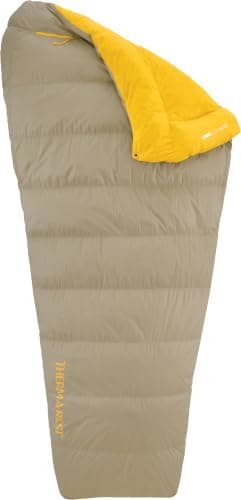
Therm-a-Rest Corus 32
comfort 41 F / limit 32 F
ISO
650-fill hydrophobic down
1 lb 4 oz
7 x 10 in
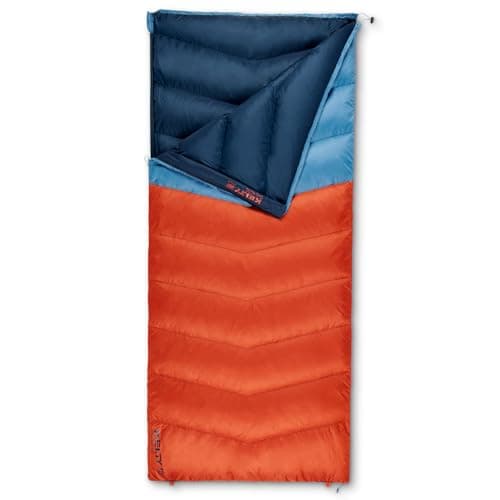
Kelty Galactic 30
30 F
maker's own
550-fill RDS down
2 lb 10 oz
15 x 7.5 in
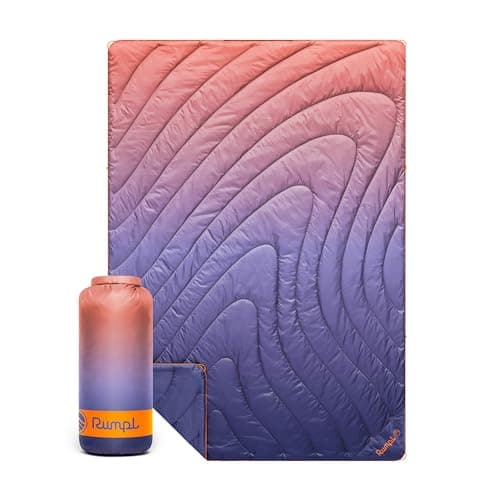
Rumpl Original Puffy
not rated
not applicable
240 gsm recycled synthetic
2.2 lb
7 x 16 in
Figures as published by each manufacturer. Rumpl does not publish a temperature rating for the Original Puffy.
The standard column is the one to read first. Therm-a-Rest publishes ISO comfort and limit figures, which are produced on a standardized heated manikin under ISO 23537 and are directly comparable across brands. Kelty publishes a single number of its own choosing. Both are honest; only one is comparable.
The one question that decides whether a quilt suits you
Do you move around a lot at night? A quilt has an open back, and the way it seals is by strapping to the sleeping pad or by tucking underneath you. An active sleeper who rolls repeatedly will let cold air in at the edges — drafts are the failure mode of a quilt, the way an over-tight fit is the failure mode of a bag.
Still sleepers, and anyone who sleeps on their back, generally get on with quilts immediately. Restless sleepers often prefer a bag or need to work harder at the pad attachment. The head-to-head is in sleeping bag vs quilt.
A quilt has no hood, and you lose real heat from your head
Every quilt here is hoodless, which is part of the weight saving and a genuine gap on a cold night. The fix is a warm hat worn to bed, or a hooded down jacket used as the top of the system. Neither is a compromise: a hat weighs a couple of ounces against the six to eight a hood adds to a sleeping bag, and you can take it off without getting out of the quilt.
Getting the seal right
Use the pad straps. Most quilts include a strap system that runs under the pad and clips to the quilt edges. Set them loose enough to move and tight enough that the edges stay against the pad.
Close the footbox. Quilts with a cinchable or zipped footbox should be shut in cold weather and opened in warm. That adjustability is one of the advantages over a bag.
Use a wide pad. A 25 in pad gives the quilt edges somewhere to sit; a 20 in pad leaves them hanging over the sides where air gets in.
Wear a base layer. A dry base layer closes the small gaps a quilt leaves far more efficiently than more fill would — see best base layers for camping.
Down or synthetic in a quilt
Down for weight and pack size, synthetic for damp conditions and for anything that will be treated roughly. The distinction matters more in a quilt than in a bag for one reason: a quilt is more likely to be used as a blanket around camp, and that is where things get spilled.
Which is why the sensible answer for many people is both, in different roles: a down quilt for sleeping and a synthetic camp blanket for the evening. The blankets that do the second job are in best camping blankets, and the full material comparison is in down vs synthetic sleeping bags.
Storage, which decides how long it lasts
Compressed storage is what kills loft, not use. A quilt left in its stuff sack between trips loses fill power permanently over a season or two, and no amount of washing brings it back.
Buy the Therm-a-Rest Corus 32 if you are backpacking and want tested numbers at 1 lb 4 oz. Buy the Kelty Galactic 30 if the budget matters or you want two that zip together. Buy the Rumpl Original Puffy as a camp blanket rather than a sleep system, and put it over a sleeping bag rather than inside one.
The picks in full
1. Best overall
Therm-a-Rest Corus 32F Down Quilt
Therm-a-Rest
An ISO comfort rating of 41 F and a limit of 32 F, at 1 lb 4 oz, on 650-fill hydrophobic down in box baffles.
Therm-a-Rest publishes a comfort rating of 41 F / 5 C and a limit of 32 F / 0 C, a regular weight of 1 lb 4 oz / 574 g, 650-fill-power hydrophobic down certified to the Responsible Down Standard, a regular fill weight of 12 oz / 339 g, dimensions of 79 by 49.5 in, a packed size of 7 by 10 in, and a 20-denier ripstop nylon fabric that is PFAS-free and 100 percent recycled.
Two published temperature numbers rather than one is the reason this is the pick. Most quilts publish a single figure chosen by the maker; a comfort and limit pair tells you what the quilt actually does, and it lets you compare it against ISO-rated sleeping bags directly.
The drawback
650 fill power is mid-range, so it is bulkier than a premium quilt at the same warmth. Down also needs to stay dry, and a quilt has no hood.
A 30 F rating on 550-fill RDS down at 2 lb 10 oz, hoodless, and it zips to a second one to make a double.
Kelty publishes a 30 F rating, 550-fill-power gray duck down certified to the Responsible Down Standard and PFC-free, a regular fill weight of 21.1 oz / 0.6 kg, a regular total weight of 2 lb 10 oz / 1.2 kg, a stuffed size of 15 by 7.5 in, a 50D high filament poly taffeta shell and liner, and a hoodless design that zips to a second bag for a two-person setup.
The zip-together feature is genuinely useful and rarely discussed. Two of these makes a double quilt for less than most purpose-built doubles, and either one still works alone, which a dedicated double never does.
The drawback
550 fill power is low, so it is heavier and bulkier than the Corus for a similar rating, and the 30 F figure is Kelty's own rather than an ISO result.
52 by 75 in of 240 gsm recycled synthetic fill at 2.2 lb, machine washable, with a PFAS-free DWR finish.
Rumpl publishes a size of 52 by 75 in, a weight of 2.2 lb, a packed size of 7 by 16 in, a 30D recycled ripstop polyester shell and liner, 240 gsm recycled synthetic hollow fiber insulation, a PFAS-free DWR finish, and machine washability in cold water.
Synthetic and washable is the specification that matters for a camp quilt. This is the layer that gets sat on, spilled on, dragged across a campsite and used as a picnic blanket, and down would be ruined by any one of those.
The drawback
It is a blanket rather than a quilt with a footbox, so it has no way to close around your feet and no attachment to a pad. As a sleep system on its own it leaks heat everywhere.
Yes, if the sleeping pad is right. Body weight crushes insulation underneath you flat, so a bag's underside contributes almost nothing and the warmth there comes from the pad. A quilt removes the flattened fill and the zipper, saving 20 to 30 percent of the weight.
QWho should not use a camping quilt?
Restless sleepers. A quilt seals by strapping to the pad or tucking underneath you, so someone who rolls repeatedly will let cold air in at the edges. Drafts are the failure mode of a quilt the way a tight fit is the failure mode of a mummy bag.
QDo camping quilts have hoods?
No, and that is part of the weight saving. You lose real heat from your head, so wear a warm hat to bed or use a hooded down jacket as the top of the system. A hat weighs a couple of ounces against six to eight for a bag hood.
QWhat temperature rating do I need in a quilt?
Read comfort ratings where they exist. The Therm-a-Rest Corus 32 publishes ISO comfort 41 F and limit 32 F, which are directly comparable to ISO-rated sleeping bags. A single maker-chosen number, like Kelty's 30 F, should be treated as optimistic.
How we picked
Everyone else in this category will tell you they tested twenty of these. We have not tested any of them, and we would rather say so than pretend. There is no gear closet here and no test lab.
What we did instead: pulled the published specifications from each manufacturer's own spec sheet or manual, named the standard behind every rating so you can check what it actually promises, did the arithmetic that turns a spec into a decision, and pulled today's real retail price rather than quoting one from memory. Every pick states a drawback, because a list where nothing is wrong with anything is an advert.
The limits of that method, stated plainly: published specs do not capture zipper quality, seam durability, or how a tent behaves at 2am in a storm. Where that matters, we say so on the pick. The full method is here.