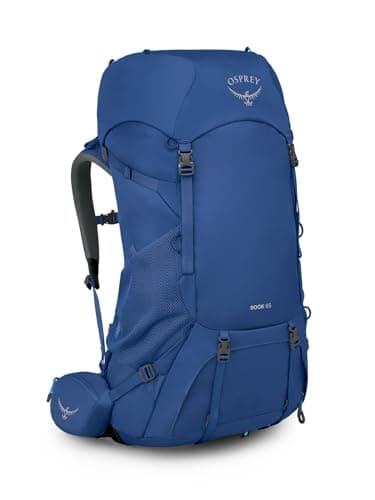
Osprey Rook 65
Osprey
65 L with an adjustable 18-22 in torso range, which absorbs the measuring error every first-time buyer makes.
$190.00 · Check price on Amazon
#ad how this is funded · price as of October 23, 2026
Backpacking is car camping with a weight budget. Work out the budget first and every other decision follows from it, including which of your existing gear can come.
Trail & Tarp earns a commission from qualifying purchases made through links on this page, at no extra cost to you. Full disclosure.
The short answer
Aim for a loaded pack of about 20% of your body weight, and treat 25% as the ceiling for a first trip. For a 160 lb person that is roughly 32 lb loaded, including food and water. Water alone is 2.2 lb per liter, and two liters is a normal carry, so the gear budget is what remains after water and food come out.
This is the single calculation that makes backpacking planning tractable. Everything you own has a weight; the pack has a limit; the difference is what you leave behind. Work in that direction and you stop agonizing over individual items.
| Body weight | 20% target | 25% ceiling | Gear budget after 2 L water + 2 lb food |
|---|---|---|---|
| 130 lb | 26 lb | 32.5 lb | about 19 lb |
| 160 lb | 32 lb | 40 lb | about 25 lb |
| 190 lb | 38 lb | 47.5 lb | about 31 lb |
| 220 lb | 44 lb | 55 lb | about 37 lb |
Some of a car camping kit walks straight onto the trail. Most of it does not, and knowing which is which saves you buying things you already own.
| Item | Transfers? | Why |
|---|---|---|
| Kelty Cosmic Down 20 sleeping bag | Yes | 2 lb 7 oz with ISO comfort 31 F, light enough to carry |
| Therm-a-Rest Z Lite Sol pad | Yes | 14 oz, R 2.0, and it cannot puncture |
| Klymit Static V Base pad | Yes in summer | 18.7 oz but only R 1.3, so warm ground only |
| Jetboil Flash | Yes | 13.1 oz all in, boils 2 cups in about 100 seconds |
| Coleman Brazos bag | No | 5.3 lb for a 20 F maker's rating |
| Therm-a-Rest MondoKing 3D | No | 4 lb 6 oz. Superb in a tent beside a car, absurd in a pack |
| Coleman Triton+ stove | No | 11.9 lb before fuel |
| Family tent | No | 16 to 40 lb. You need a 2 to 5 lb backpacking tent |
The pattern: sleep insulation and small stoves transfer; shelter, cooking and furniture do not. That is also the order in which to buy backpacking-specific gear.
Borrow first. A first backpacking trip on borrowed gear tells you whether you like carrying things up hills, which is the question, and no amount of research answers it.
The pad is still the thing that decides whether you sleep
The same physics applies on a trail as at a campground: your weight compresses the insulation beneath you, and the ground draws heat away all night. A Z Lite Sol at R 2.0 and 14 oz is the classic light answer for warm months. Below about 50 F you want more, and stacking pads works because R-values add up.
Keep it boil-only. A dehydrated meal in its own bag, oatmeal for breakfast, bars and nuts for the walk. That gives you one pot to clean and about a pound and a half of food, and it means the Jetboil Flash's 100-second boil time is the whole kitchen.
Fuel: one small isobutane canister is more than enough for an overnight. Take it out of its box and check it is not empty before you leave, because canisters cannot be part-measured from the outside.
Tell someone your route, where you are parking, and when you will be back. Cell coverage on a trail is unreliable, and this costs you one text message. Also carry a paper map or an offline downloaded one: navigation apps are excellent right up until the phone gets cold and the battery drops.
If you are still deciding whether to do this at all, the trade-offs are laid out in car camping vs backpacking. Nothing says you have to progress from one to the other — plenty of people do both, for different weekends and different reasons.
The full item-by-item list is the beginner backpacking gear list.
Osprey
65 L with an adjustable 18-22 in torso range, which absorbs the measuring error every first-time buyer makes.
#ad how this is funded · price as of October 23, 2026
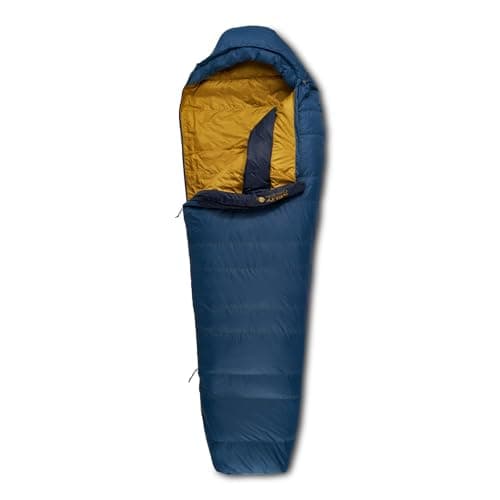
Kelty
Down, with published ISO comfort and limit ratings rather than a single marketing number.
#ad how this is funded · price as of October 23, 2026
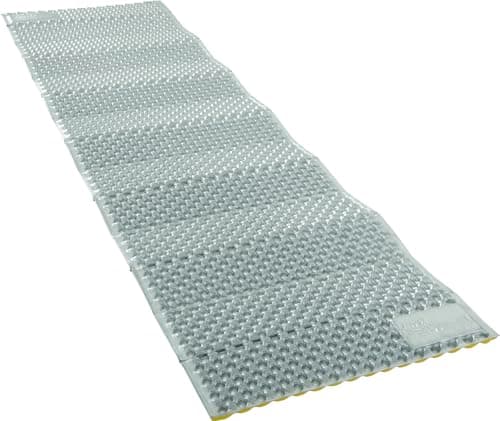
Therm-a-Rest
Closed-cell foam: it cannot puncture, which on a first trip matters more than the last ounce.
#ad how this is funded · price as of October 23, 2026
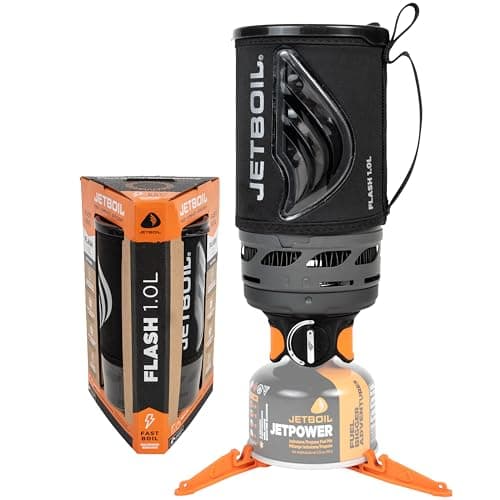
Jetboil
An integrated boil system, because a first backpacking trip is boil-water cooking and nothing more.
#ad how this is funded · price as of October 23, 2026
Around 20% of your body weight loaded, with 25% as a ceiling for a first trip. For a 160 lb person that is roughly 32 lb including food and water, and water alone is 2.2 lb per liter.
Some of it. A light sleeping bag such as the Kelty Cosmic Down 20 at 2 lb 7 oz and a foam pad at 14 oz both transfer, as does an integrated stove like the Jetboil Flash at 13.1 oz. Family tents, two-burner stoves and thick self-inflating pads do not.
Three to five miles each way with under about 1,000 ft of elevation gain, to an established site with a confirmed water source. Far enough to be a real trip, close enough to walk out if something is wrong.
Boil-only food: a dehydrated meal, oatmeal for breakfast, bars and nuts for the walk. One pot to clean, about a pound and a half of food for an overnight, and one small isobutane canister is more than enough fuel.
Every figure on this page comes from a published source. We have not tested this gear, so the numbers are the manufacturer's or the standard body's, not ours. How we research.