Skip to content
Trail & Tarp

Camp kitchen

The Best Camp Stoves for Cooking Real Food Outdoors

BTU is the number everyone quotes and almost nobody explains. Here is what the published output actually buys you, and which stove fits the way your family eats.

By Sawyer V.Published September 3, 2026Last updated September 3, 2026How we research
A two-burner camp stove set up for cooking outdoors

Trail & Tarp earns a commission from qualifying purchases made through links on this page, at no extra cost to you. Full disclosure.

Quick picks

#ProductBest forPrice
1
No photo

Best overall for families

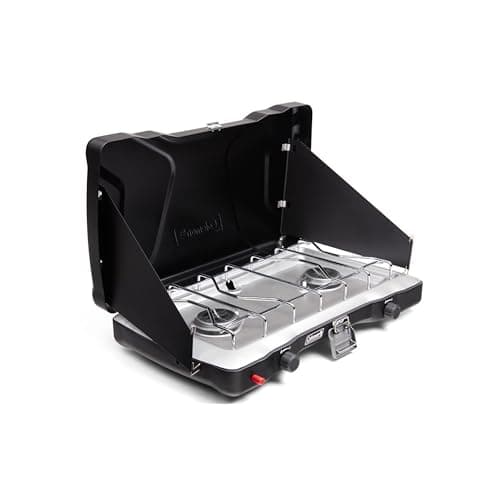
Coleman Classic 2-Burner Propane Stove

20,000 BTU across two independently adjustable burners, fitting a 12 in and a 10 in pan at once.

Cooking for three or more, on a budget
2
No photo

Best for actually cooking

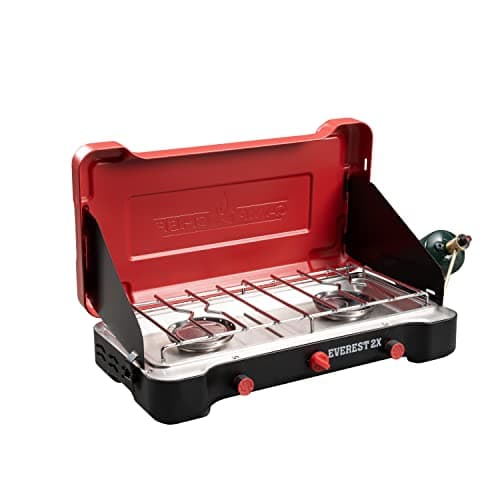
Camp Chef Everest 2X

20,000 BTU per burner, so twice the Coleman's total output, with matchless ignition and a three-sided wind barrier.

Cooking beyond boiling, cooler and windier sites
3
No photo

Best cheap backup

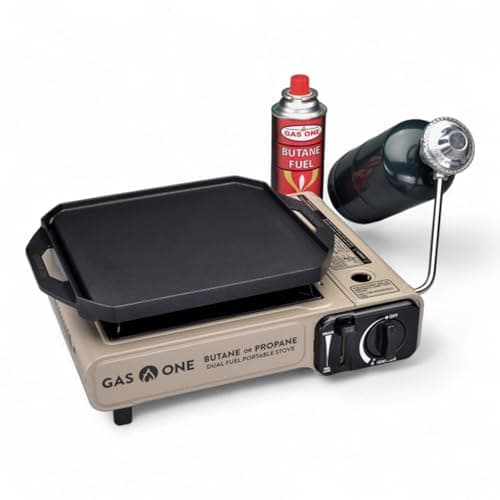
Gas One GS-3400P Dual-Fuel Stove

8,000 BTU on either butane or propane, at 3.1 lb, with a pressure-sensor cartridge ejection safety mechanism.

A spare burner, or a first stove for one or two people
4
No photo

Best for boiling water fast

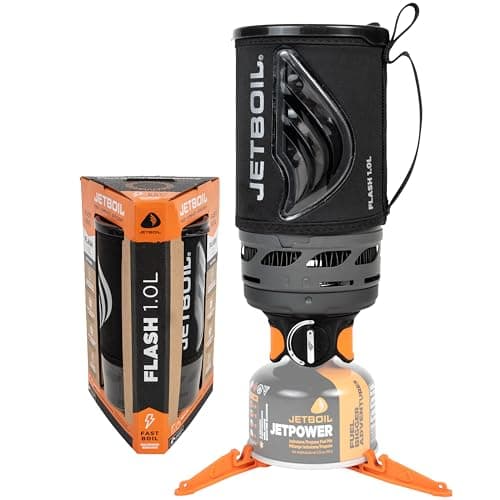
Jetboil Flash 1.0 L

Boils two cups in about 100 seconds, in a 13.1 oz system that packs inside its own 1 L pot.

Solo trips, backpacking, coffee at 6am

What BTU actually buys you

The short answer

BTU per hour is how fast a burner delivers heat, and the number to compare is BTU per burner, not total. Coleman's Classic publishes 20,000 BTU total across two burners, roughly 10,000 each. Camp Chef's Everest 2X publishes 20,000 BTU per burner. Those are very different stoves described with the same headline number.

StoveOutput as publishedBurnersWeightFuel
Coleman Classic20,000 BTU total211.65 lb16.4 oz propane
Camp Chef Everest 2X20,000 BTU per burner212 lbpropane
Gas One GS-3400P8,000 BTU13.1 lbbutane or propane
Jetboil Flashboils 2 cups in about 100 sec1, integrated13.1 ozisobutane-propane canister
Figures as published by each manufacturer.

High output matters in three situations: boiling large volumes, cooking in wind, and cooking when it is cold. In still, warm weather making eggs for two, a 10,000 BTU burner is entirely adequate and you will notice nothing.

How many burners do you need?

Buy the fuel your campground sells

The 16.4 oz green propane cylinder is stocked by almost every campground store, hardware store and gas station near a state park in the country. Butane canisters are not. If you are choosing between two otherwise similar stoves, the one that runs on propane is the one you can refuel when you get it wrong.

What the specs do not tell you

Wind performance is the biggest gap. Every one of these stoves loses output in wind, and published BTU figures are measured in still air. Wind panels and a three-sided lid help — but a stove tucked behind a car or a table is worth more than any wind screen.

Simmer control is the second gap. Nothing in a spec sheet tells you whether a burner will hold a low flame without going out, which matters for anything involving sauce or rice. We have not cooked on these stoves and will not claim a simmer ranking we cannot support.

For the rest of the kitchen — table, water, washing up and the order to set it all up in — see the camp kitchen setup guide.

The picks in full

1. Best overall for families

Coleman Classic 2-Burner Propane Stove

Coleman

20,000 BTU across two independently adjustable burners, fitting a 12 in and a 10 in pan at once.

Coleman publishes 20,000 total BTU, two independently adjustable burners, a pressure regulator and a fit for a 12 in and a 10 in pan simultaneously, at 11.65 lb. It runs on the standard 16.4 oz green propane cylinders sold at every campground store in the country, which is a real advantage when you run out on a Saturday night.

This is the default first camp stove for good reason. Two burners means coffee and eggs at the same time, and the adjustable wind panels do a meaningful amount of work.

The drawback

20,000 BTU total means about 10,000 per burner, so it is noticeably slower than the Camp Chef when both burners are working. Windy sites expose that.
No product photo: we don't take our own

Published specs

Output
20,000 BTU total
Burners
2, independently adjustable
Weight
11.65 lb
Fuel
16.4 oz propane cylinder
Pan fit
12 in + 10 in

Specs: Coleman Classic stove product page

2. Best for actually cooking

Camp Chef Everest 2X

Camp Chef

20,000 BTU per burner, so twice the Coleman's total output, with matchless ignition and a three-sided wind barrier.

Camp Chef publishes 20,000 BTU per burner — not total — in a 25.2 by 12.7 by 5.6 in body weighing 12 lb, with 215 square inches of cooking area and matchless ignition. The high-output burners are the reason this stove appears on every list of stoves people actually keep.

Where you feel it: boiling a large pot for pasta while something else simmers, and cooking in wind or cold when a lower-output stove struggles to hold temperature.

The drawback

Twelve pounds and a much higher price. If your camp cooking is coffee and hot dogs, this is more stove than the job needs.

No product photo: we don't take our own

Published specs

Output
20,000 BTU per burner
Weight
12 lb
Size
25.2 x 12.7 x 5.6 in
Cooking area
215 sq in
Ignition
matchless

Specs: Camp Chef product page

3. Best cheap backup

Gas One GS-3400P Dual-Fuel Stove

Gas One

8,000 BTU on either butane or propane, at 3.1 lb, with a pressure-sensor cartridge ejection safety mechanism.

Gas One publishes 8,000 BTU, dual fuel from either an 8 oz butane canister or a 16.4 oz propane cylinder, 3.1 lb, and a pressure-sensor mechanism that ejects the cartridge if the pressure rises dangerously.

The dual-fuel design is the point: butane is cheap and simple for warm weather, propane works when it gets cold. Which to run when is covered in propane vs butane camp stoves.

The drawback

One burner and 8,000 BTU. It cannot cook a family meal, and butane loses pressure badly as temperatures approach freezing.

No product photo: we don't take our own

Published specs

Output
8,000 BTU
Fuel
8 oz butane or 16.4 oz propane
Weight
3.1 lb
Size
13.5 x 11.2 x 4.4 in
Safety
pressure-sensor cartridge ejection

Specs: Gas One GS-3400P published specs

4. Best for boiling water fast

Jetboil Flash 1.0 L

Jetboil

Boils two cups in about 100 seconds, in a 13.1 oz system that packs inside its own 1 L pot.

Jetboil publishes a boil time of about 100 seconds for two cups, a 1.0 L capacity, a 13.1 oz system weight and a push-button igniter, running on isobutane-propane canisters. The heat exchanger on the pot is what makes it that fast and that fuel-efficient.

For a family campsite it is a second stove for morning coffee. For a first backpacking trip where dinner is a dehydrated meal, it is the whole kitchen.

The drawback

It boils; it does not really cook. Simmering anything in an integrated system like this is awkward, and it is a one-pot device.

No product photo: we don't take our own

Published specs

Boil time
2 cups in about 100 seconds
Weight
13.1 oz
Capacity
1.0 L
Fuel
isobutane-propane canister
Ignition
push button

Specs: Jetboil product page

Questions people actually ask

QHow many BTU do I need in a camp stove?

Around 10,000 BTU per burner is adequate for ordinary camp cooking in calm, warm conditions. 20,000 BTU per burner boils large pots noticeably faster and holds temperature better in wind and cold, which is what you are paying for in a higher-output stove.

QWhat is the best camp stove for a family?

A two-burner propane stove. Two burners let you cook and boil at the same time, which matters as soon as you are feeding three or more people, and propane cylinders are stocked almost everywhere near a campground.

QCan you use a camp stove inside a tent?

No. Burning fuel in an enclosed space produces carbon monoxide, which is odorless and can be fatal, and a stove inside a tent is a fire risk on top of that. Cook outside, under an awning if it is raining.

QDo camp stoves work in cold weather?

Propane keeps working at low temperatures far better than butane, which loses canister pressure as it approaches freezing and can stop delivering usable gas. If you camp in the cold, run propane or a dual-fuel stove on its propane setting.

How we picked

Everyone else in this category will tell you they tested twenty of these. We have not tested any of them, and we would rather say so than pretend. There is no gear closet here and no test lab.

What we did instead: pulled the published specifications from each manufacturer's own spec sheet or manual, named the standard behind every rating so you can check what it actually promises, did the arithmetic that turns a spec into a decision, and pulled today's real retail price rather than quoting one from memory. Every pick states a drawback, because a list where nothing is wrong with anything is an advert.

The limits of that method, stated plainly: published specs do not capture zipper quality, seam durability, or how a tent behaves at 2am in a storm. Where that matters, we say so on the pick. The full method is here.

Sources for this page