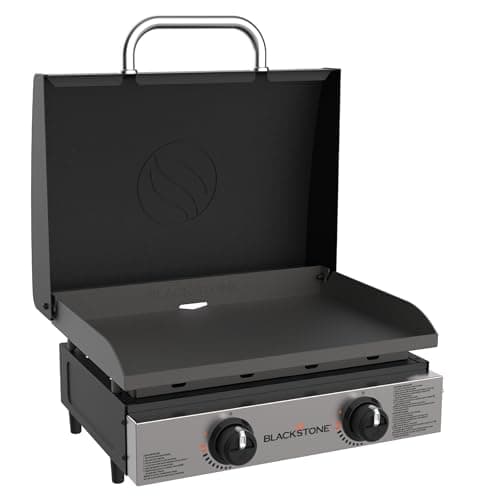
Blackstone 22 in. Tabletop Griddle with Hood
Blackstone
362 sq in and 24,000 BTU across two controlled zones. Breakfast for the whole site.
$219.99 · Check price on Amazon
#ad how this is funded · price as of October 23, 2026
A griddle is a flat steel surface. A grill is a grate over a flame. They cook different food, and the meals you actually make at a campsite point clearly at one of them.
Trail & Tarp earns a commission from qualifying purchases made through links on this page, at no extra cost to you. Full disclosure.
The short answer
Griddle for breakfast, groups and anything small enough to fall through a grate: eggs, pancakes, bacon, smash burgers, fajitas. Grill for steaks, chops, sausages and anything you want charred with the fat dripping away. Camping food skews heavily toward the first list.
| Blackstone 22 in Tabletop Griddle | Weber Q 1200 | |
|---|---|---|
| Cooking surface | 362 sq in | 189 sq in |
| Output | 24,000 BTU from two H burners | 8,500 BTU, single burner |
| Heat zones | two, independently controlled | one |
| Surface | rolled carbon steel | porcelain-enameled cast iron grates |
| Weight | not published on the listing we read | 29.8 lb |
| Fuel | propane; bulk adapter for a 20 lb tank | 16.4 oz propane cylinder |
| Ignition | not published | electronic |
The surface-area row is the one that decides group cooking: 362 sq in against 189 is almost double. On a griddle that is eight to ten eggs and a row of bacon at once; on the Weber it is four burgers.
The two-zone control is the other real advantage. Independent burners let you hold one half hot for searing and the other low to keep food warm, which is how you feed six people food that is all ready at the same time.
Fat management and char. On a grate, fat drips away and the flare-ups and direct radiant heat give you the crust and smoke that define grilled food. On a griddle the fat stays in contact with the food, which is excellent for a smash burger and wrong for a fatty sausage.
The Weber's porcelain-enameled cast iron grates are also the better surface for anything you want to leave alone: a steak, chicken pieces, corn. And a lid over a single 8,500 BTU burner makes it an oven of sorts, which the open griddle is not.
Weight is worth noting: Weber publishes 29.8 lb, and cast aluminum plus cast iron grates is why. Blackstone does not publish a weight for the 22 in tabletop on the listing we read.
The griddle needs seasoning, exactly like a cast iron pan
Rolled carbon steel is bare metal. It arrives needing to be seasoned and it will rust if you put it away wet, which is the single most common complaint about griddles and is entirely preventable. Heat it, wipe a thin layer of high-smoke-point oil over the whole surface, repeat a few times, and do a light oil wipe after every clean. The method is the same one in how to clean and season cast iron at camp. The Weber's porcelain-enameled grates need none of this.
Both run on propane. The Weber threads onto a 16.4 oz cylinder; Blackstone publishes a bulk adapter hose for a 20 lb tank, which is much cheaper per hour and the sensible setup for anything longer than a weekend.
Note the output gap: 24,000 BTU against 8,500. The griddle will burn through fuel far faster when both burners are running, which is another argument for the bulk tank. The fuel arithmetic is in propane vs butane camp stoves.
| If this is you | Buy |
|---|---|
| Cooking breakfast for a family | griddle |
| Feeding five or more at once | griddle; nearly double the surface |
| Fajitas, smash burgers, diced vegetables | griddle |
| Steaks, chops and sausages | grill |
| You want char and rendered fat | grill |
| You already own a two-burner camp stove | griddle; it adds what the stove cannot do |
| Backpacking | neither; both are car-camping objects |
For most camping households the griddle is the more useful second cooking surface, because it does the meal a campground actually makes every single morning. The roundups are in best camping griddles and best portable grills for camping, and the stove that should come before either is in best camp stoves.
Blackstone
362 sq in and 24,000 BTU across two controlled zones. Breakfast for the whole site.
#ad how this is funded · price as of October 23, 2026
Weber
189 sq in over porcelain-enameled cast iron at 8,500 BTU. Char and dripping fat.
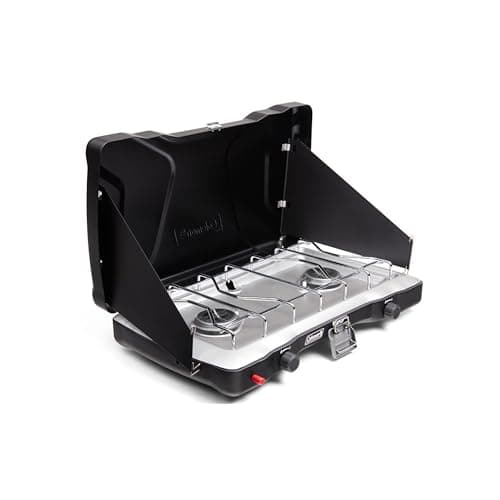
Coleman
Buy the stove first. A griddle or grill is the thing you add to it, not instead of it.
#ad how this is funded · price as of October 23, 2026
A griddle for most campers, because camp food skews to breakfast, groups and small items. Blackstone publishes 362 sq in against Weber's 189, and eggs, pancakes and diced vegetables cannot be cooked on a grate at all. Choose the grill if you mainly cook steaks, chops and sausages.
Yes, and it sears well on 24,000 BTU across two zones, but the fat stays in contact with the meat instead of dripping away. You get crust without char or smoke. For that specific result a grate is better.
They will if you put them away wet. Rolled carbon steel is bare metal and needs seasoning like a cast iron pan: heat it, wipe on a thin layer of high-smoke-point oil, repeat, and re-oil lightly after every clean. Porcelain-enameled grill grates need none of this.
Considerably more than a small grill. The Blackstone 22 publishes 24,000 BTU across two burners against 8,500 for the Weber Q 1200, so running both zones empties disposable cylinders quickly. Blackstone publishes a bulk adapter hose for a 20 lb tank, which is much cheaper per hour.
Every figure on this page comes from a published source. We have not tested this gear, so the numbers are the manufacturer's or the standard body's, not ours. How we research.