How to Clean and Season Cast Iron at Camp, With Almost No Water
Cast iron is the easiest cookware to look after at home and the most misunderstood at a campsite, because the two things it hates are the two things a campsite has plenty of: standing water and time in a damp bag.
Trail & Tarp earns a commission from qualifying purchases made through links on this page, at no extra cost to you. Full disclosure.
What seasoning actually is
The short answer
Seasoning is not oil sitting on the metal. It is polymerized oil — fat heated past its smoke point until it chemically bonds to the iron as a hard, slick, plastic-like layer. That is why a well-seasoned pan is non-stick and why washing it does not remove the seasoning, but leaving it wet does. The enemy is water sitting on bare iron, not soap.
Two myths worth discarding. Soap does not strip seasoning — modern washing-up liquid is a detergent, not the lye-based soap that gave the rule its origin. And a pan does not need to look black to work; an even bronze film is a functioning seasoning.
What genuinely damages it: prolonged soaking, boiling acidic food such as tomato sauce for a long time, aggressive scouring down to grey metal, and putting the pan away damp. Three of those four are campsite behaviours.
The campsite cleaning routine
The whole point is to use as little water as possible, which happens to be the right thing for the water budget as well as for the pan.
Clean it while it is still warm. Food releases from warm iron and welds itself to cold iron. This single habit does most of the work.
Scrape and wipe first. A wooden or silicone scraper and a paper towel take off almost everything before water is involved.
Deglaze if it is stubborn. A splash of water in the warm pan, a quick boil, and the stuck-on food lifts. This uses a fraction of the water a soak would.
Scrub with chainmail or a stiff brush, not steel wool. A chainmail scrubber takes off food without cutting into the seasoning.
Dry it on the heat. Back on the stove for a minute until it steams dry. This is the non-negotiable step at a campsite, because air-drying in a damp tent does not happen.
Wipe a thin film of oil over the whole surface while it is warm, then wipe most of it back off. Thin is the operative word: a thick coat goes sticky.
Strain the food solids out of any wash water and bag them rather than tipping them out; the greywater rules are in how to wash dishes at a campsite.
Griddles are cast iron in a different shape
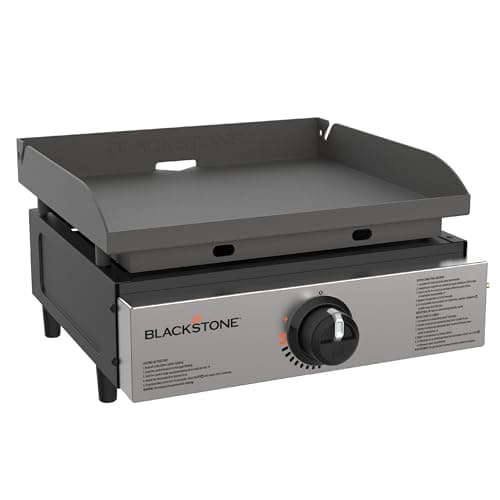
A flat-top griddle such as the Blackstone 17 in. is rolled steel with the same chemistry: scrape while warm, wipe, dry on the burner, oil thinly. Its published rear grease management system does the collection part; the drying and oiling are still yours. A griddle put away wet after a weekend will have surface rust by the next trip, and the same rescue below applies.
Re-seasoning on a camp stove
Seasoning at home means an hour in an oven. At a campsite you do it in layers on a burner, which works fine for maintenance even if it is less even than an oven.
Step
What to do
Why
1
Heat the dry pan until water flicked on it beads and skitters
Drives off all moisture; the metal must be hot
2
Add about half a teaspoon of high-smoke-point oil
Grapeseed, canola or flaxseed; olive oil smokes too low
3
Spread it over every surface with a paper towel, then wipe it back off
You want a film you can barely see
4
Keep it on the heat until it stops smoking
That is the polymerization happening
5
Repeat two or three times
Thin layers bond; one thick layer goes tacky
6
Cool, wipe, store dry
Seasoning cures further with use
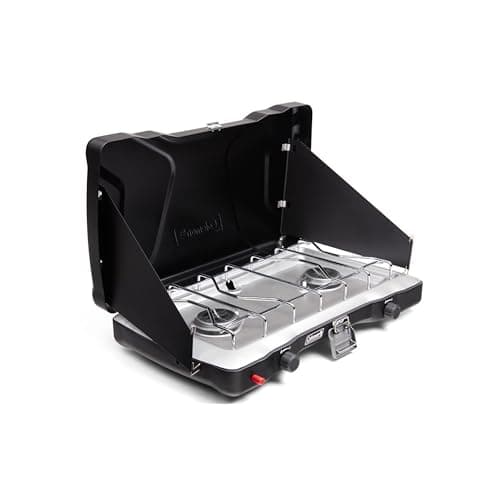
The camp-stove version. A 22,000 BTU two-burner stove has more than enough heat for this.
A Coleman Triton+ publishes 20,000 BTU across two independently adjustable burners, which is ample. Do this outdoors and expect smoke; that is the process working, not a mistake.
Rescuing a rusted pan
Surface rust looks alarming and is entirely reversible. Scour the rust off with steel wool or a stiff brush, back to clean grey metal if you have to. Wash, dry immediately on heat, then re-season using the layers above — three or four thin coats rather than one.
The only genuinely dead cast iron is cracked cast iron, or a pan with deep pitting that has eaten through the cooking surface. Everything else is a half-hour job, which is why cast iron is one of the safest things to buy secondhand, per how to buy used camping gear.
Storing and transporting it
Bone dry, with a paper towel between the pan and its lid so trapped moisture cannot sit against the surface. Never store cast iron in a sealed plastic bag or a damp bin; a rigid box with a paper layer is right, and the storage system is in best gear storage bins.
In transit, keep it away from anything it can chip. Cast iron is hard and heavy and it will crack an enamel mug or dent a pot lid without noticing. Put it at the bottom of the kitchen box, per how to pack a car for camping.
When not to bring cast iron at all
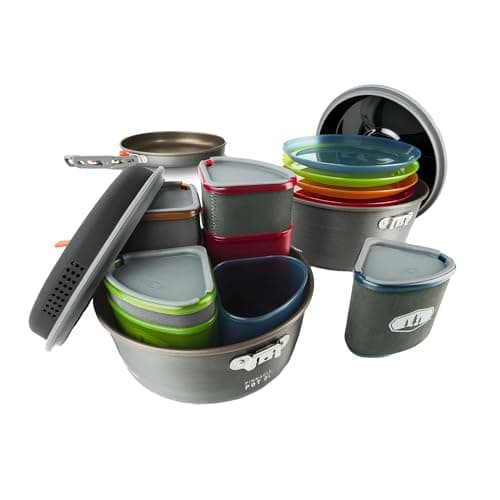
Weight. A cast-iron skillet is several pounds for one pan, which is irrelevant beside a car and disqualifying in a pack. For anything carried, the answer is anodized aluminum or stainless: a MSR Trail Lite Duo publishes 1 lb 5.8 oz for a complete two-person set, and a GSI Pinnacle Ceramic Camper publishes 3 lb 10.1 oz for four people including tableware.
Cast iron earns its place at a car campsite because it holds heat through a cold morning and goes straight on a fire grate, neither of which thin aluminum does. That is the trade: a few pounds for heat retention and indestructibility. The rest of the cookware decision is in best camping cookware sets.
The gear this page points to
Blackstone Original 17 in. Tabletop Griddle
Blackstone
267 sq in of rolled steel with rear grease management. Same chemistry as cast iron: scrape warm, dry on the burner, oil thinly.
Yes. Seasoning is polymerized oil chemically bonded to the iron, and modern washing-up liquid is a detergent rather than the lye-based soap that started the myth. What genuinely damages seasoning is prolonged soaking, aggressive scouring and putting the pan away damp.
QHow do you clean cast iron at a campsite?
While it is still warm: scrape and wipe first, deglaze with a splash of water if food is stuck, scrub with chainmail rather than steel wool, then dry it on the burner and wipe on a thin film of oil. Drying on heat is the step you cannot skip outdoors.
QCan you season cast iron on a camp stove?
Yes. Heat the dry pan until water beads and skitters, add half a teaspoon of high-smoke-point oil, spread it and wipe most of it back off, then keep it on the heat until it stops smoking. Repeat two or three times; thin layers bond and thick ones go tacky.
QIs a rusted cast iron pan ruined?
Almost never. Scour the rust back to clean grey metal, wash, dry immediately on heat, and re-season with three or four thin coats. Only a cracked pan, or one pitted through the cooking surface, is genuinely finished.
Sources
Every figure on this page comes from a published source. We have not tested this gear, so the numbers are the manufacturer's or the standard body's, not ours. How we research.