How to Buy Used Camping Gear Without Inheriting Someone Else's Problem
Camping gear is unusually good to buy used, because most of it is used a handful of nights a year by people who then stop. The trick is knowing which three things to refuse.
Trail & Tarp earns a commission from qualifying purchases made through links on this page, at no extra cost to you. Full disclosure.
The short list
The short answer
Buy used: tents, chairs, tables, coolers, stoves, cookware, lanterns, storage bins, duffels and packs. Buy new: sleeping pads with air in them, down sleeping bags, water filters, and anything with a safety function. Inspect carefully either way. The dividing line is whether a failure is visible. A cracked chair frame announces itself; a hydrolyzed tent coating and a frozen water filter do not.
The reason this matters is arithmetic. Outfitting a household for camping is a several-hundred dollar decision before the first night out, which is why most people who intend to start camping never do. Buying the bulky, durable half of the kit secondhand cuts that number enormously and puts the saved money where it actually changes the experience.
Item
Buy used?
The check that matters
Tent
Yes, with care
Feel the fly for stickiness; count the poles and stakes
Camp chair, table
Yes
Sit on it. Open and close it twice
Cooler
Yes
Gasket intact, hinges and latches working, no cracks
Camp stove
Yes
Run it. Check the regulator and hose for cracks
Cookware
Yes
Warping on the base; coating condition if non-stick
Lanterns and headlamps
Yes
Battery compartment corrosion
Backpack
Yes
Frame straightness, hip belt padding, zip teeth
Foam sleeping pad
Yes
Compression set; it should still spring back
Air or self-inflating pad
No
Pinhole leaks are invisible and common
Down sleeping bag
No
Lost loft cannot be judged in five minutes
Water filter
Never
Freezing damage is invisible and disables it
Our assessment, based on whether the common failure mode of each item can be spotted before you buy.
The tent check: hydrolysis
This is the single most important thing on the page. Polyurethane coatings on tent flies and floors hydrolyze over time — the polymer breaks down in the presence of moisture, especially if the tent was stored damp — and the result is a fly that feels sticky or tacky, smells faintly sour, and flakes when rubbed. A hydrolyzed tent is finished. It cannot be repaired, reproofed or saved, and it will leak.
The test takes ten seconds: unroll the fly, rub the coated side between finger and thumb, and smell it. Clean, slick and odorless is fine. Tacky, or a smell like old library books, means walk away. Do the same on the floor, which is coated too and often worse because it lives against damp ground.
Then count things. Poles, pole sections, stakes and guy lines all go missing, and a tent missing a pole section is a repair job. Ask the seller to pitch it if you can — and if they cannot, that tells you something too. Storage practice is what determines a used tent's condition, and the correct practice is in how to clean and store a tent.
Three things to never buy used
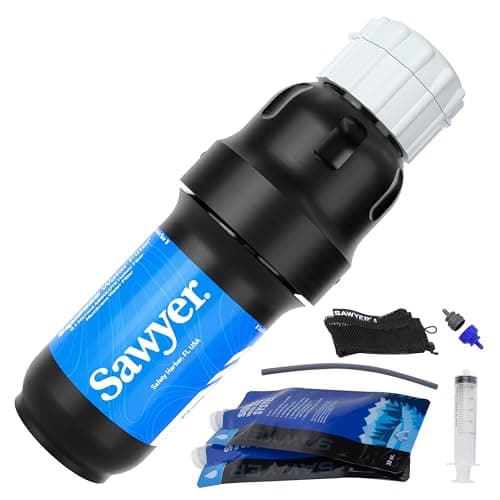
Water filters. Freezing cracks the hollow fibers invisibly, and a damaged filter looks and flows completely normally while passing what it was meant to stop. There is no field test. This is a health item, so buy it new — the options are in the filter roundup.
Inflatable sleeping pads. Pinhole leaks are extremely common, hard to find, and only reveal themselves at 3am. If you must, inflate it hard and leave it overnight before money changes hands.
Anything with a safety function. Helmets, climbing gear, carbon monoxide alarms, and any stove with a damaged hose or regulator.
Sleeping bags, and the loft test
A sleeping bag's warmth comes from loft, and loft is what a badly stored bag loses. A bag kept compressed in its stuff sack for years — which is how most of them are stored — comes out permanently thinner, and its ISO rating no longer describes it.
Down is the risky purchase and synthetic is the safer one, which is the opposite of the new market. Down recovers from compression far better than synthetic in principle, but you cannot tell in a driveway whether a down bag has been washed with the wrong detergent, stored damp, or simply worn out. Synthetic bags are cheaper new, so the saving is smaller and the risk is lower.
If you do look at one: shake it out and let it sit for twenty minutes, then look at it sideways. It should be visibly puffy and even. Feel for cold spots where fill has migrated, check the zip runs the full length, and smell it. The ISO rating on the label is only meaningful if the bag still lofts.
Where to look
Local marketplace listings. The best source for bulky items nobody wants to post: tents, coolers, chairs, tables and bins. Prices are low precisely because shipping is impractical.
End-of-season and post-holiday. September and January are when people who camped twice decide they are done. The listings are better and the sellers are motivated.
Retailer used programs. Several outdoor retailers run their own resale schemes with inspection and a return window, which removes most of the risk at some cost in price.
Gear swaps and club sales. Often run by outdoor clubs, and the sellers usually know what they have.
What to ask a seller
How many nights has it been used? “Twice” and “a season” are very different objects.
How was it stored? The answer you want is loose, dry and indoors. A garage or a loft is where tents hydrolyze and bags flatten.
Is everything with it? Poles, stakes, guy lines, stuff sacks, footprint, instructions, regulator, hose.
Has it been washed, and with what? Relevant for bags and shells — household detergent on a technical fabric does lasting damage, per how to wash and reproof a rain jacket.
Why are you selling it? The honest answers — moved, kids grew up, stopped camping — are the ones you want to hear.
Budget the repairs in
A used tent will usually want new stakes, and often new guy lines — both are cheap and both are upgrades over what most tents ship with anyway. Budget for a set of proper stakes and guy line with tensioners as part of the purchase price, not as a disappointment afterward.
The same logic covers a used bag that wants washing, a used pack that wants a new hip belt, and a used stove that wants a new regulator. If the repair is cheap and the item is sound, the purchase is still good. If the repair is a pole section for a discontinued tent, it is not.
What to buy new anyway
Beyond the safety list, three things are worth buying new even though they could be used: socks and base layers, for obvious reasons; a closed-cell foam pad, because they are cheap new and take a compression set when stored rolled; and boots, because fit is everything and a used boot has already molded to somebody else's foot. The fit argument is in how to break in hiking boots.
Everything else — the bulky, durable, occasionally-used two thirds of a camping kit — is a genuinely good secondhand buy, and it is the fastest route from “we should try camping” to actually going. What to buy in what order is in start here, and denier and the other spec words you will meet in listings are defined in the glossary.
The gear this page points to
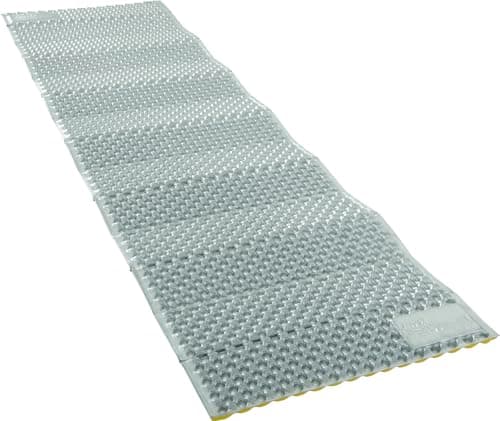
Therm-a-Rest Z Lite Sol
Therm-a-Rest
One of the few things worth buying new anyway: cheap, and closed-cell foam takes a permanent compression set when stored rolled for years.
Tents, chairs, tables, coolers, stoves, cookware, lanterns, storage bins, duffels, packs and closed-cell foam pads. All of them fail in ways you can see or test in a few minutes, which is the test for whether something is safe to buy secondhand.
QWhat camping gear should you never buy used?
Water filters, because freezing cracks the fibers invisibly and there is no field test. Inflatable sleeping pads, because pinhole leaks are common and only show up at 3am. And anything with a safety function, including stoves with damaged hoses or regulators.
QHow do I check a used tent before buying it?
Rub the coated side of the fly and floor between finger and thumb. If it feels tacky or smells sour, the polyurethane coating has hydrolyzed and the tent is finished. Then count poles, pole sections, stakes and guy lines, and ask the seller to pitch it.
QIs it worth buying a used sleeping bag?
A synthetic one, sometimes. A down one, rarely. Warmth comes from loft, and a bag stored compressed for years is permanently thinner than its rating suggests. Shake it out, let it sit twenty minutes, and look at it sideways: it should be visibly puffy and even.
Sources
Every figure on this page comes from a published source. We have not tested this gear, so the numbers are the manufacturer's or the standard body's, not ours. How we research.