Trail & Tarp earns a commission from qualifying purchases made through links on this page, at no extra cost to you. Full disclosure.
Wetting out is not leaking
The short answer
When the outer face fabric absorbs water instead of beading it, the jacket stops breathing. Your sweat can no longer pass out through the membrane, so it condenses on the inside and you feel wet. The membrane is still waterproof. The finish on the outside has worn off. That finish is a DWR — a durable water repellent — and it is a consumable, like brake pads.
The diagnostic is easy: hold the jacket under a tap. If water beads and rolls off, the DWR is alive. If the fabric darkens and the water soaks in, it has wetted out — and that is what needs fixing, not the jacket.
A genuine leak is different in character. It appears in one place, usually at a seam, a zipper or a point of heavy abrasion such as under a pack strap, and it gets worse in rain rather than during exertion. Wetting out is uniform, appears across the shoulders and back, and is worst when you are working hard.
Symptom
Wetting out
Leaking
Where
Broadly, shoulders and back
One spot, usually a seam or zip
When
Worst when you are working hard
Worst in heavy rain
Outer face
Dark and saturated
Still beading elsewhere
Fix
Wash and reproof
Seam sealer, or replace the garment
Two different failures that feel identical from inside the jacket.
Dirt is what kills DWR, not age
Body oils, sunscreen, campfire smoke and general grime all coat the face fabric and hold water against it. That is why a jacket that has been worn hard for a season stops beading while an identical one in a wardrobe still works, and it is why the first fix is always a wash rather than a reproof.
Household detergent makes it worse. Detergents leave surfactant residues designed to attract water — the exact opposite of what a DWR does — and fabric softener coats the fibers and blocks the membrane outright. Use a technical wash made for waterproof fabrics instead, and run an empty rinse cycle first if your machine usually sees normal detergent.
The routine
Empty the pockets, close every zip including pit zips, and fasten the Velcro cuffs and storm flap so they do not abrade the fabric.
Wash warm on a gentle cycle with technical wash, following the dose on the bottle. No detergent, no softener, no bleach.
Rinse twice. Residue is the enemy, and one rinse rarely clears it.
Check the beading. Many jackets recover here and need nothing more, because the original DWR was only masked by dirt.
If it still wets out, reproof. Wash-in for unlined or two-layer garments, spray-on for anything with a mesh or fabric liner — a wash-in treats the inside too, which reduces breathability on a lined shell.
Apply heat to cure it. Tumble dry on low for 20 minutes, or press with a warm iron through a cloth. Most DWR chemistries need heat to bond, and skipping this step is the single most common reason a reproof appears not to work.
Check the label before the dryer
Almost every modern shell tolerates a low tumble dry and most manufacturers recommend it, but a few do not, and a membrane laminate can delaminate at high heat. Read the care label and follow it over anything on this page. If tumble drying is out, a warm iron on a low setting through a tea towel does the same job, and so does hanging the jacket in a warm room for a day — more slowly.
How often, and what it costs
Wash a shell when it stops beading, not on a schedule. For someone camping eight to fifteen nights a year, that is realistically once a season. Reproofing is less frequent still — usually every second or third wash, because most washes restore the original finish rather than needing to replace it.
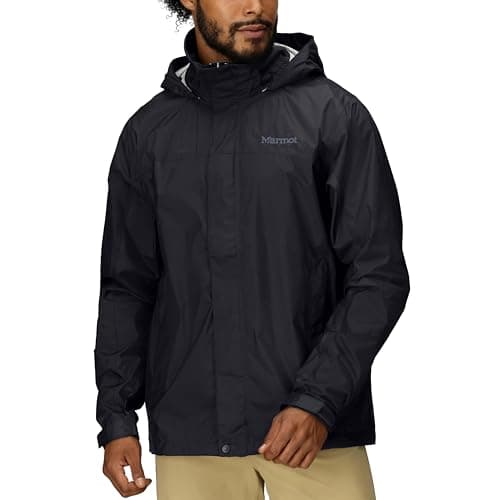
A bottle of technical wash and a bottle of reproofer together cost a small fraction of a jacket and treat several garments several times. Compared with replacing a Marmot PreCip Eco — published at 10.1 oz with a 10,000 mm waterproof rating and 17,000 g/m2/24hr breathability on 2.5-layer NanoPro Eco — it is the clearest maintenance-versus-replacement argument in the whole kit.
What the ratings mean, and why reproofing does not change them
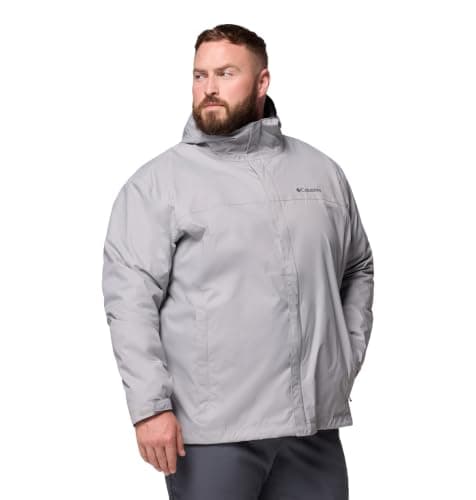
A jacket's waterproof rating is a hydrostatic head figure measured on the membrane or coating, the same test as tent fabric. Marmot publishes 10,000 mm for the PreCip Eco. Columbia publishes fully seam-sealed 2-layer Omni-Tech for the Watertight II at 13.7 oz.
Reproofing does not touch that number. The membrane keeps its rating for the life of the garment unless it is physically damaged; what wears out is the surface treatment on the fabric in front of it. That distinction is the whole reason washing a jacket makes it feel waterproof again, and it is unpacked further in the rain jacket roundup and in tent waterproof ratings explained.
The exception: coated shells and ponchos
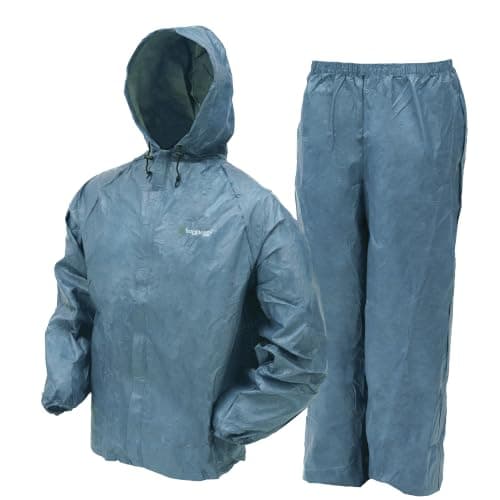
Not every waterproof is a membrane. Cheap shells and emergency ponchos use a polyurethane coating on the inside of the fabric, and a Frogg Toggs Ultra-Lite 2 is a non-woven laminate rather than either. These do not wet out in the same way, because they barely breathe to begin with, and they cannot usefully be reproofed. When a PU coating starts to flake or go tacky, the garment is finished.
That is worth knowing before you spend money on treatment: the wash-and-reproof routine is for breathable membrane shells. For everything else, wash it gently and accept its limits.
Storage, and the two things that ruin a shell
Hang it, do not stuff it. A jacket compressed in a stuff sack for a year develops permanent creases in the membrane at the fold lines, and those become the first places that leak.
And keep it out of prolonged direct sun. UV degrades both polyurethane coatings and the face fabric, which is why a jacket left on a car parcel shelf all summer fails long before one that lived in a wardrobe. The same rule applies to tents, which is half the argument in how to clean and store a tent.
The gear this page points to
Marmot PreCip Eco Jacket
Marmot
10.1 oz, 10,000 mm waterproof and 17,000 g/m2/24hr breathability on 2.5-layer NanoPro Eco. A membrane shell, which is exactly what the reproof routine is for.
Almost always wetting out rather than leaking. When the outer face fabric absorbs water instead of beading it, the jacket stops breathing, so your own sweat condenses on the inside. The membrane is still waterproof; the water repellent finish on the outside has worn off.
QHow do I know if my rain jacket needs reproofing?
Hold it under a tap. If water beads and rolls off, the finish is fine. If the fabric darkens and soaks in, it has wetted out. Wash it first with a technical wash, because dirt and body oils cause most of it, and only reproof if it still does not bead afterwards.
QCan I wash a rain jacket with normal detergent?
No. Detergents leave surfactant residues that attract water, which is the opposite of what a water repellent finish does, and fabric softener coats the fibers and blocks the membrane. Use a technical wash designed for waterproof fabrics.
QDo you need to tumble dry a jacket after reproofing?
Usually yes. Most DWR chemistries need heat to bond, and skipping the heat step is the most common reason a reproof appears not to work. Tumble dry on low for about 20 minutes, or press with a warm iron through a cloth, but check the care label first.
Sources
Every figure on this page comes from a published source. We have not tested this gear, so the numbers are the manufacturer's or the standard body's, not ours. How we research.