Tent Waterproof Ratings Explained: What 1200mm Actually Measures
Every tent lists a number in millimeters. Here is the test that produces it, what it does and does not promise, and the three things that keep rain out that the number never mentions.
Trail & Tarp earns a commission from qualifying purchases made through links on this page, at no extra cost to you. Full disclosure.
What does a tent's mm rating mean?
The short answer
The millimeter figure is a hydrostatic head rating: the height of a column of water the fabric holds back before water is forced through it. A 1200 mm fabric withstands the pressure of a 1200 mm (about 4 ft) column of water standing on it. It is a test of the fabric only, under laboratory pressure, and it says nothing about the seams, the zippers or how far the rainfly reaches down the tent.
The governing standard is ISO 811, currently ISO 811:2018, Textiles — Determination of resistance to water penetration — Hydrostatic pressure test. A fabric sample is clamped over a chamber and water pressure beneath it is raised continuously, at a standard rate of about 10 cm of water per minute, until droplets appear on the far side. The pressure at that moment, expressed as a water column height in millimeters, is the hydrostatic head.
So hydrostatic head is a real, reproducible measurement, and that is exactly why it needs qualifying: it measures a clamped patch of new fabric under steady pressure, not a pitched tent in wind after two seasons of UV.
What the numbers correspond to
Rating
Commonly described as
What it covers
1,000-1,500 mm
The usual minimum for calling fabric waterproof
Showers and short spells of rain
1,200 mm
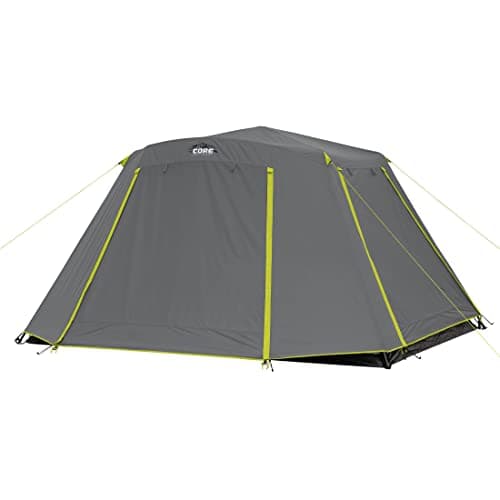
Typical family tent fabric (both CORE tents we list)
Ordinary campground rain
1,500-3,000 mm
Standard for hiking tents
Sustained rain, more margin as fabric ages
3,000 mm and up
Marketed for severe weather
Long exposure and pressure from wind-driven rain
Bands as commonly published by manufacturers and outdoor retailers; ISO 811 is the test behind the figure.
Tent floors are usually rated higher than flies, and for a good reason: a fly sheds water that runs off it, while a floor has your body weight pressing it into a puddle. Kneeling on a wet floor generates far more localized pressure than rain ever does, which is the whole argument for a footprint on soft, wet ground.
The three things that keep you dry that the rating does not measure
Seam sealing. A needle makes holes. Unless those seam lines are taped or sealed, water enters through stitching at a fraction of the pressure the fabric withstands. CORE lists “fully taped, full-coverage rainfly with sealed seams” for its instant cabins, and that sentence is worth more than the 1200 mm next to it.
Fly coverage. A partial fly that stops at the top of the tent leaves mesh and inner fabric exposed to wind-driven rain. A full-coverage fly that reaches near the ground protects the walls, the door and the gear in the vestibule. This is the single biggest difference between two tents with the same fabric rating.
Pitch and tension. Fabric touching the inner tent wicks water through by contact, no matter what its rating is. A slack fly in wind will do this all night. Guy the fly out properly and this problem disappears.
Condensation is not a leak
Four people breathing overnight put a surprising amount of water into the air inside a tent, and it condenses on the coldest surface it can find, which is the fly. Waking up to a damp inner wall usually means poor ventilation, not a failed waterproof coating. Opening a vent, even in rain, fixes far more damp mornings than a higher mm rating does.
How much rating do you actually need?
For campground camping in a normal forecast, a 1200 to 1500 mm fly with taped seams and full coverage is adequate, which is why so many family tents sit exactly there. Push higher if you camp in a region with long sustained rain, if the tent will be pitched for a week at a time, or if it will spend years outdoors, since coatings degrade with UV exposure and repeated packing.
What none of this fixes is where you pitch. A 5,000 mm tent in a shallow depression will take on water from below when the ground saturates. Pitch on a slight rise, and never in the flattest, most inviting hollow on the site.
For campground camping, 1,200 to 1,500 mm hydrostatic head on the fly, with taped seams and full fly coverage, is adequate for ordinary rain. Hiking tents commonly run 1,500 to 3,000 mm. Floors are usually rated higher because body weight presses them into standing water.
QIs 1200mm waterproof enough for a tent?
Yes for typical campground use in normal rain, which is why many family tents ship at exactly 1,200 mm. In sustained heavy rain, seam taping and how far the rainfly reaches down the tent matter more than raising that number.
QDoes a tent protect you from rain?
A pitched tent with a taped, full-coverage rainfly, correctly tensioned so the fly does not touch the inner wall, keeps rain out. Most reported leaks are either condensation, contact wicking where a slack fly touches the inner, or water entering through unsealed seams.
QHow is a tent's waterproof rating tested?
Under ISO 811, a fabric sample is clamped and water pressure is raised beneath it at a standard rate, about 10 cm of water column per minute, until droplets appear on the other side. The pressure at that point, as a water column height in mm, is the hydrostatic head.
Sources
Every figure on this page comes from a published source. We have not tested this gear, so the numbers are the manufacturer's or the standard body's, not ours. How we research.