A 4-season tent is built to stand up under wind and snow load, not to be warmer. It gets there with more poles, steeper walls that shed snow, solid rather than mesh inner fabric, and a fly that reaches the ground. The cost is ventilation, weight and price. Nothing about a 4-season tent raises the temperature inside it by more than a couple of degrees.
This is the misunderstanding that sells the most unnecessary tents. People camping in cold weather buy a 4-season tent expecting warmth, and the warmth they were missing was in the sleeping pad. Body weight crushes the insulation under you flat, so the ground is where the heat goes — R-value explained covers the arithmetic, and why you get cold in a sleeping bag covers what people usually blame instead.
The solid inner fabric does trap a little more warmth than mesh. It also traps a great deal more moisture, which is why 4-season tents condense heavily and why every one of them has closable vents you are supposed to keep open.
Compared on published numbers
Tent
Sleeps
Floor area
Weight
Poles
Fabric
OneTigris Stella 2
2
about 28-29 sq ft
4.4 lb listed
7001 aluminum, spider plus cross pole
3,000 mm fly
MSR Access 2
2
about 29 sq ft
about 4 lb 1 oz packed
one Easton Syclone composite pole
20D fly at 1,200 mm, 30D floor
Naturehike Cloud Peak 2
2
274 x 210 cm pitched
about 4.76 lb
7001 aluminum, three-pole cross
20D silicone nylon, 4,000 mm
Figures as published by each manufacturer.
Note how differently the three describe themselves. OneTigris publishes almost nothing first-party, MSR publishes deniers, a coating figure and a named pole, and Naturehike publishes a single high hydrostatic head number. Naturehike's 4,000 mm and MSR's 1,200 mm sit on the same 20D fabric and are not a ranking — MSR is engineering for snow load and pole recovery rather than for a spec-sheet number, which is why tent waterproof ratings explained argues for reading denier alongside the millimeters.
Who genuinely needs one
Anyone camping above the treeline in winter. Wind with nothing to break it is the case a 4-season tent is built for.
Anyone expecting real snow load. Snow accumulating on a shallow-angled three-season fly will collapse it, and steep walls plus extra poles are the answer.
Anyone camping in sustained high wind in exposed country, in any season.
And who does not: campers who are cold at 25 F in a sheltered campground, campers who want a tent that handles heavy rain, and campers who camp in early spring and late autumn on established sites. A well-pitched three-season tent handles all of that, and the ones that do it best are in best tents for rain.
A 4-season tent in summer is genuinely unpleasant
The features that make these tents strong — solid inner fabric, a full-coverage fly to the ground, small vents you can close — also stop air moving through. In warm weather that means a hot tent and heavy condensation on the inner wall by morning. If you own one tent and you camp in summer, do not make it this one. The heat management options are in how to stay cool camping in hot weather and the moisture side in how to stop tent condensation.
Pitching one in winter is a different job
Standard stakes do nothing in snow. The technique is to bury something with surface area sideways and let the snow set around it — a snow stake, a stuff sack full of snow, or a stick buried horizontally as a deadman anchor. Stamp the platform flat and let it harden for ten or fifteen minutes before pitching, or you will wake up in a body-shaped trough.
Guy out every point. A 4-season tent achieves most of its wind performance through guy lines rather than through the poles alone, and a tent pitched with four stakes and no guys is a three-season tent that weighs more. The general technique is in how to pitch a tent in wind.
What to carry with it
A whisk or small brush for clearing spindrift out of the vestibule, and a set of snow stakes if you expect to pitch on snow. Beyond that, the sleep system matters more than the shelter: a pad with a high R-value, and the warmth arithmetic in sleeping bag temperature ratings explained. The wider winter context is in winter camping for beginners.
Which to buy
Buy the MSR Access 2 if you carry your winter tent and want the best-made option here — it is the only one with a composite pole and properly published numbers behind it. Buy the Naturehike Cloud Peak 2 if you are carrying it a long way in shoulder-season conditions and you will pitch it carefully. Buy the OneTigris Stella 2 only if the budget is genuinely the constraint, and go in knowing its 4-season billing is disputed and its figures are not manufacturer-published. One honest caveat on all three: none is an expedition tent, so if you are planning alpine camps in weather that could flatten a shelter, shop outside this page.
1. Best budget option, with a real caveat about the season rating
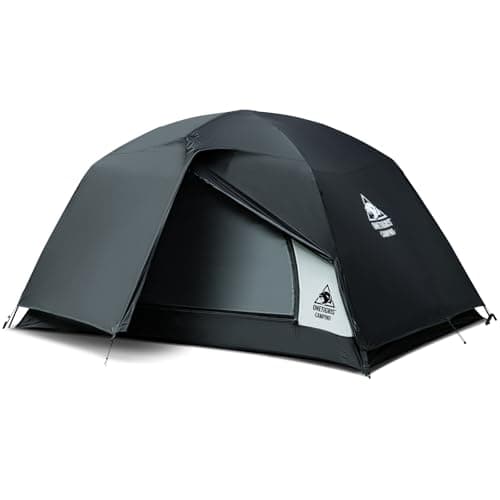
OneTigris Stella 2-Person
OneTigris
About 28 to 29 sq ft at a listed 4.4 lb, on 7001 aluminum poles in a spider-plus-cross-pole layout, under a 20D fly rated 3,000 mm.
The published figures are a 2-person capacity, roughly 28 to 29 sq ft of inner floor, inner dimensions of 82.7 by 51.2 in, a 45.3 in peak, a 4.4 lb listed weight, a 19.7 by 5.9 in packed size, a 20D silicone-coated nylon fly rated 3,000 mm, a 40D silicone-coated nylon bathtub floor, and 7001 aluminum poles in one spider pole plus a short bracing cross pole.
The cross pole is the part worth understanding, and it is why this earns a place here at all. A two-pole dome deforms under a side load; a pole running across the structure resists exactly that, which is what wind and settling snow do to a tent. The geometry is therefore right even though the fabric is light.
Be clear about what the low price costs you, because it is not only fabric. Everything above is the listing's or a reviewer's number rather than a manufacturer spec sheet, and the pole material in particular is confirmed by an independent review rather than by OneTigris. Where the other two tents on this page publish figures you can hold them to, this one does not.
The drawback
The weakest sourcing on this page by a distance. OneTigris publishes no reachable spec sheet, so the figures come from its listing and independent reviews, and those disagree: 4.4 lb against a measured 4.8 lb, and 28.29 against 29 sq ft. Reviewers also dispute the listing's 4-season claim, and a 20D fly is light for genuine winter. Treat it as a cheap winter-capable lightweight, not a mountaineering tent.
Published specs
Capacity
2
Floor area
about 28 to 29 sq ft; sources differ
Inner dimensions
82.7 x 51.2 in
Peak height
45.3 in
Total weight
4.4 lb per the listing; one independent review measured 4.8 lb
Packed size
19.7 x 5.9 in
Fly
20D silicone-coated nylon, 3,000 mm
Floor
40D silicone-coated nylon, bathtub cut
Poles
7001 aluminum, one spider pole plus a short bracing cross pole
Note
OneTigris publishes no reachable first-party spec sheet for this tent, so every figure here comes from the Amazon listing or independent reviews, and reviewers dispute the listing's 4-season claim
2. Best made, and the most winter-capable of these three
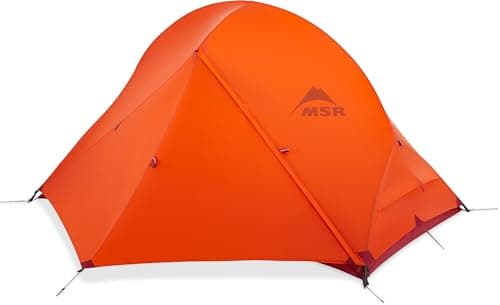
MSR Access 2
MSR
About 29 sq ft plus a 17.5 sq ft vestibule at roughly 4 lb packed, on a single Easton Syclone composite pole.
MSR publishes a 2-person capacity, about 29 sq ft of floor plus a 17.5 sq ft vestibule, an 84 by 50 in floor, a 42 in peak, a minimum weight of about 3 lb 10 oz and a packed weight of about 4 lb 1 oz, an 18 by 6 in packed size, one 9.3 mm Easton Syclone composite pole, a 20D ripstop fly with a 1,200 mm XtremeShield coating and a hydrostatic head of 3,000 mm on its 30D ripstop floor.
The pole is what you are paying for. Easton Syclone is a composite rather than aluminum, and its selling point is that it flexes and returns instead of taking a permanent bend the way an alloy pole does when a gust overloads it. On a 4 lb tent that is a more useful kind of toughness than thick fabric would be.
Be clear about what the 1,200 mm fly rating means, because it is low for a winter tent. Snow sitting on fabric is not the same load as wind-driven rain, and MSR is explicitly building a winter touring tent rather than a basecamp one. That is a reasonable engineering choice and a real limit. Retailer figures also vary slightly on packed weight, from 3.63 to 4.06 lb, with one listing the floor as 20D rather than 30D.
The drawback
Read the class change honestly: this replaced an expedition tent and is not one. MSR rates it 3 to 4 season and markets it for winter touring, the fly is 20D at 1,200 mm rather than 70D at 2,000, and it stands on one pole. It is also by far the most expensive tent here. If you need a shelter for weather that could genuinely flatten a tent, nothing on this page qualifies any more.
Published specs
Capacity
2
Floor area
about 29 sq ft, plus a 17.5 sq ft vestibule
Floor dimensions
84 x 50 in
Peak height
42 in
Minimum weight
about 3 lb 10 oz / 1.64 kg
Packed weight
about 4 lb 1 oz / 1.86 kg
Packed size
about 18 x 6 in
Poles
one 9.3 mm Easton Syclone composite pole
Fly
20D ripstop nylon, 1,200 mm XtremeShield
Floor
30D ripstop nylon, 3,000 mm
Season rating
3 to 4 season, marketed for winter touring rather than expedition use
Note
retailer figures vary slightly on packed weight (3.63 to 4.06 lb) and one lists the floor as 20D rather than 30D, so those two are approximate
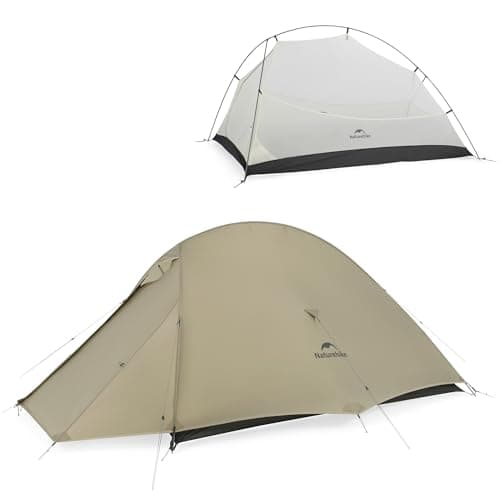
About 4.76 lb with 20D silicone-coated nylon rated to 4,000 mm on a three-pole 7001 aluminum cross structure.
Naturehike publishes a weight of about 2.16 kg / 4.76 lb, a pitched size of 274 by 210 by 105 cm, 20D silicone-coated nylon on both fly and floor, a 4,000 mm hydrostatic head, 7001 aluminum alloy poles in a three-pole cross structure, double-wall construction and a four-season rating.
The three-pole cross structure is a genuine four-season geometry at a weight that no other tent here approaches. Read the fabric weight as the limit on where you take it: this is a tent for cold, wind and moderate snow on ground you have chosen carefully, not for a glacier.
The drawback
20D fabric is thin for a tent sold as four-season. A high hydrostatic head figure does not change the fact that thin nylon abrades and tears more easily than heavier deniers do, and no tent on this page now uses a fly heavier than 20D.
It resists wind and snow load. More poles, steeper walls, solid rather than mesh inner fabric and a fly that reaches the ground. It is not a warmer tent; the temperature inside is barely different, and warmth in cold weather comes from the sleeping pad.
QDo I need a 4-season tent for winter camping?
Only if you camp above the treeline, expect real snow accumulation on the fly, or face sustained high wind in exposed country. A well-pitched three-season tent handles cold, rain and light snow on established sites perfectly well.
QAre 4-season tents warmer?
Marginally. Solid inner fabric traps slightly more warm air than mesh, and it also traps far more moisture, which is why these tents condense heavily. If you are cold at night, the fix is a higher R-value sleeping pad, not a different tent.
QCan you use a 4-season tent in summer?
You can, and it is unpleasant. Solid inner walls, a full-coverage fly and small closable vents all restrict airflow, so the tent runs hot and condenses. If you own one tent and camp in summer, buy a three-season tent instead.
How we picked
Everyone else in this category will tell you they tested twenty of these. We have not tested any of them, and we would rather say so than pretend. There is no gear closet here and no test lab.
What we did instead: pulled the published specifications from each manufacturer's own spec sheet or manual, named the standard behind every rating so you can check what it actually promises, did the arithmetic that turns a spec into a decision, and pulled today's real retail price rather than quoting one from memory. Every pick states a drawback, because a list where nothing is wrong with anything is an advert.
The limits of that method, stated plainly: published specs do not capture zipper quality, seam durability, or how a tent behaves at 2am in a storm. Where that matters, we say so on the pick. The full method is here.