No photo
Exped MegaMat 10
Exped
If you are cold in a good bag, this is usually the fix: the ground is what takes the heat, and R-value is what stops it.
Almost nobody who is cold at night has the wrong sleeping bag. Here are the causes in the order they actually occur, and the fixes, most of which are free.

Trail & Tarp earns a commission from qualifying purchases made through links on this page, at no extra cost to you. Full disclosure.
The short answer
Your weight crushes the insulation beneath you flat, so the bottom of the bag does almost nothing while the ground draws heat out of you all night. The spec that fixes this is R-value, and it is measured the same way across every brand under ASTM F3340.
Rough guide: R 1 to 2 is summer only, R 3 to 4 is three-season, R 5 and up handles frozen ground. If you are cold in a rated bag in fall on an R 1.3 pad, the pad is your answer. And because R-values stack, the cheapest fix is often a foam pad underneath what you already own.
Under ISO 23537, bags get a comfort rating and a limit rating, and the name of the bag is usually the limit. Kelty's Cosmic Down 20 publishes comfort 31 F and limit 21 F; Marmot's Trestles Elite Eco 20 publishes comfort 32.2 F and limit 21.6 F. Both are “20 degree bags” that are comfortable in the low thirties. Full detail in sleeping bag temperature ratings explained.
Insulation is passive. If you climb in after sitting still in the dark for two hours, you are asking the bag to trap heat you no longer have. Fixes, all free: move briskly for a few minutes before bed, eat something before turning in, and get changed inside the bag rather than standing in the cold.
Every cubic inch of air inside the bag is air your body heats. A 90 by 39 in rectangular bag contains a lot more of it than a mummy. That extra room is exactly why some people sleep better in a big bag, so this is a trade rather than a mistake — but if you are cold in a roomy bag, stuffing spare clothing into the foot and along your sides genuinely helps.
Wet insulation does not loft, and loft is the whole mechanism. Three sources: sweat from overdressing at bedtime, condensation dripping from a tent fly that is touching the inner wall or not vented, and a down bag that has been stored compressed for months. Air the bag out at home, store it uncompressed in the big sack it came with, and vent the tent even in rain.
A thin hat is worth several degrees. Cinching the hood so only your face is exposed is worth several more. If your feet are always the cold part, they may be pressing against the end of a bag that is slightly short for you, which compresses the fill exactly where you need it — a bag one size longer, or a pair of dedicated dry sleep socks, is the fix.
Try these before you buy anything
If you are still cold after all five, then buy: a warmer pad first, a warmer bag second.
Children lose heat faster than adults and are much worse at telling you they are cold until they are miserable. Two practical things: put them on a real pad with a decent R-value rather than a thin foam mat, and check that their bag is not enormously oversized, which is the usual result of buying an adult bag to grow into. More on that in family camping with kids.
Exped
If you are cold in a good bag, this is usually the fix: the ground is what takes the heat, and R-value is what stops it.
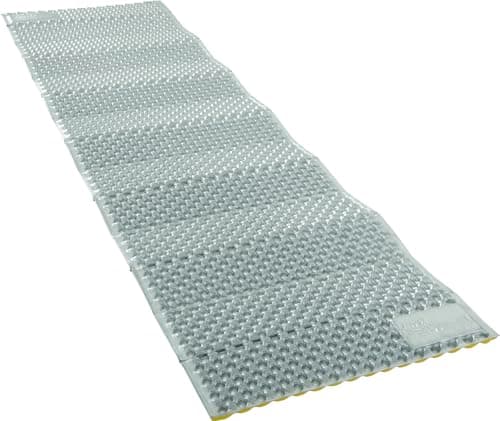
Therm-a-Rest
Stack it under another pad. R-values add, and foam is the cheapest R-value you can buy.
#ad how this is funded · price as of October 23, 2026
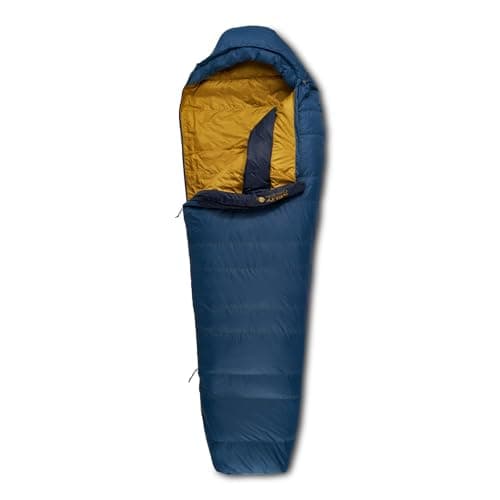
Kelty
A bag with published ISO comfort and limit figures, so you can match the rating to the night rather than the season.
#ad how this is funded · price as of October 23, 2026
The most likely cause is the pad underneath you rather than the bag itself. Your weight compresses the insulation beneath you until it stops working, so a low R-value pad lets the ground draw heat out of you all night no matter how good the bag is.
Usually because they are pressed against the end of a bag that is slightly short, compressing the fill exactly where you need it, or because your feet were already cold when you got in. Dry socks kept only for sleeping and a bag with a little length to spare both help.
Up to a point, yes: a hat and dry socks are worth several degrees. Wearing so much that you compress the bag's insulation from the inside, or clothing damp from the day, both work against you.
There is no thermal advantage, and it is a persistent myth. A dry base layer plus a hat traps more heat than bare skin does, as long as the clothing is not damp and not so bulky that it compresses the bag's loft.
Every figure on this page comes from a published source. We have not tested this gear, so the numbers are the manufacturer's or the standard body's, not ours. How we research.