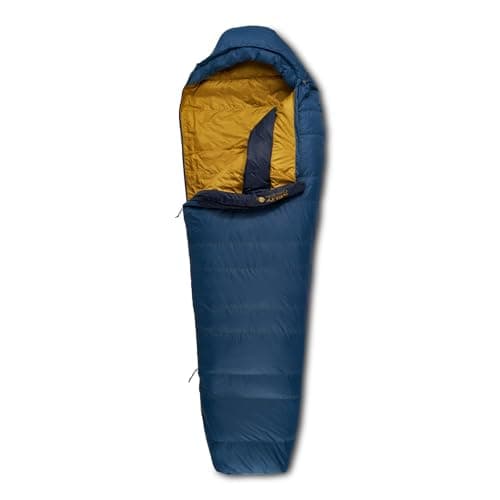
Kelty Cosmic Down 20
Kelty
Publishes both ISO comfort and limit figures, which is exactly what this page argues you should be shopping on.
$184.57 · Check price on Amazon
#ad how this is funded · price as of October 23, 2026
The number on the label is usually a survival figure, not a comfort figure. Here is the standard behind it, what the two ratings mean, and which one to buy on.
Trail & Tarp earns a commission from qualifying purchases made through links on this page, at no extra cost to you. Full disclosure.
The short answer
A bag's headline rating is normally its limit rating, which is a survival-adjacent figure, not a comfort one. Under ISO 23537 a bag is given a comfort rating (a standardized cold sleeper sleeps comfortably) and a limit rating (a standardized warm sleeper gets through the night curled up). A bag sold as a “20 degree bag” usually has a comfort rating nearer 30 F. Buy on the comfort number.
| Rating | What it describes | Use it for |
|---|---|---|
| Comfort | A standardized cold sleeper is comfortable in a relaxed position | This is the number to plan your trip around |
| Limit | A standardized warm sleeper gets through the night curled up | Usually the number printed in the product name |
| Extreme | Survival only, at risk of cold injury | Never a planning figure. Ignore it entirely |
The current standard is ISO 23537-1:2022. ISO published 23537 in 2016 to replace EN 13537, the earlier European standard, and you will still see EN 13537 figures on packaging because a lot of stock and a lot of catalog copy predates the change. For a shopper the important thing is that both use the same method.
A heated manikin fitted with multiple temperature sensors is dressed in a standard base layer, placed in the bag on a standardized mat, and put in a climate-controlled room. The heat needed to hold the manikin at a stable temperature at various room temperatures gives the thermal performance of the bag, which is converted into the comfort and limit figures.
Two consequences worth knowing. First, the test uses a standardized mat, so the published rating already assumes you are sleeping on adequate insulation from the ground — if your pad's R-value is low, the bag will underperform its rating and that is not the bag's fault. Second, a manikin does not sweat, eat dinner, or go to bed dehydrated, and you do.
Two of the bags we recommend publish both ISO figures:
Both are named “20” and both are comfortable in the low thirties. That is the pattern across the industry, and it is roughly a ten-degree gap.
Plenty of camping bags publish no ISO figures at all. Coleman lists the Brazos as 20 F and TETON lists the Celsius XXL as 0 F, with no comfort and limit pair given. Those are manufacturer estimates. They are not necessarily wrong, but nothing standardized stands behind them, so leave yourself a wider margin.
The rule that keeps beginners warm
Buy a bag whose comfort rating is at or below the coldest night you expect. If no comfort rating is published, subtract 10 to 15 degrees from the headline number and treat that as the comfort figure. Being over-bagged is a minor nuisance you can vent your way out of; being under-bagged ends the trip.
If you are already cold in a bag that should be warm enough, work through why you get cold in a sleeping bag before buying anything. Nine times out of ten the fix costs nothing.
Ready to choose? The bags are in best sleeping bags for camping.
Kelty
Publishes both ISO comfort and limit figures, which is exactly what this page argues you should be shopping on.
#ad how this is funded · price as of October 23, 2026
Marmot
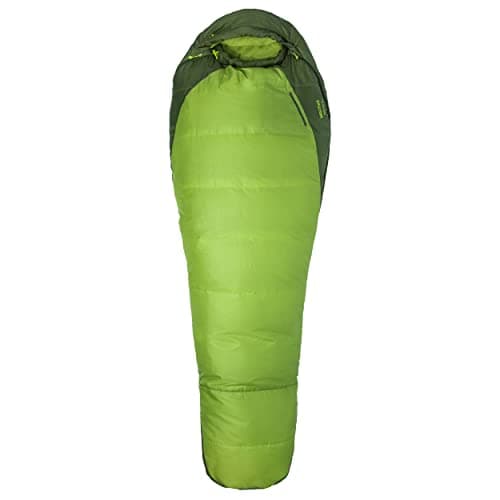
Synthetic fill with published ratings, and far more forgiving of damp than down.
#ad how this is funded · price as of October 23, 2026
Coleman
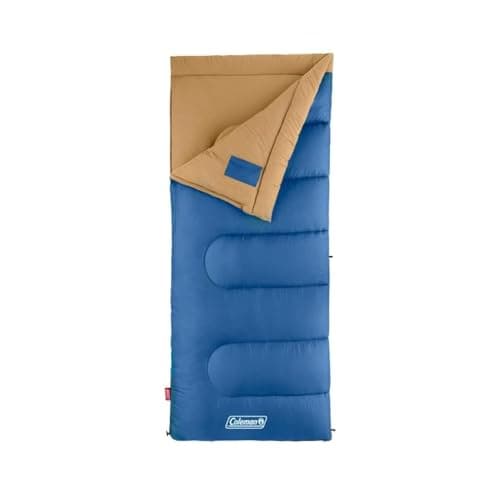
A budget bag whose rating is a survival-style number rather than an ISO comfort one: useful as the contrast case.
#ad how this is funded · price as of October 23, 2026
It is the output of a standardized laboratory test, ISO 23537, using a heated manikin on a standard mat in a climate-controlled room. The comfort rating is the temperature a standardized cold sleeper sleeps comfortably at; the limit rating is where a standardized warm sleeper can get through the night curled up.
Pick the coldest night you realistically expect and buy a bag whose ISO comfort rating is at or below it. If the bag publishes no comfort rating, subtract 10 to 15 degrees from its headline number before deciding.
Comfort assumes a standardized cold sleeper resting in a relaxed position. Limit assumes a standardized warm sleeper curled up, generating more heat and getting through the night rather than enjoying it. Most bag names use the limit figure.
They are the same family of test. ISO 23537 was published in 2016 to replace the earlier European EN 13537 standard, and both use a heated manikin with multiple sensors on a standardized mat. You will still see EN 13537 figures on packaging.
Every figure on this page comes from a published source. We have not tested this gear, so the numbers are the manufacturer's or the standard body's, not ours. How we research.