No photo
Exped MegaMat 10
Exped
R 8.1 and 3.9 in thick. The single change that makes below-freezing camping comfortable, and the one people skip in favor of a warmer bag.
Cold camping is not summer camping with a warmer sleeping bag. Four systems change at once, and the one people ignore is the one under them.
Trail & Tarp earns a commission from qualifying purchases made through links on this page, at no extra cost to you. Full disclosure.
The short answer
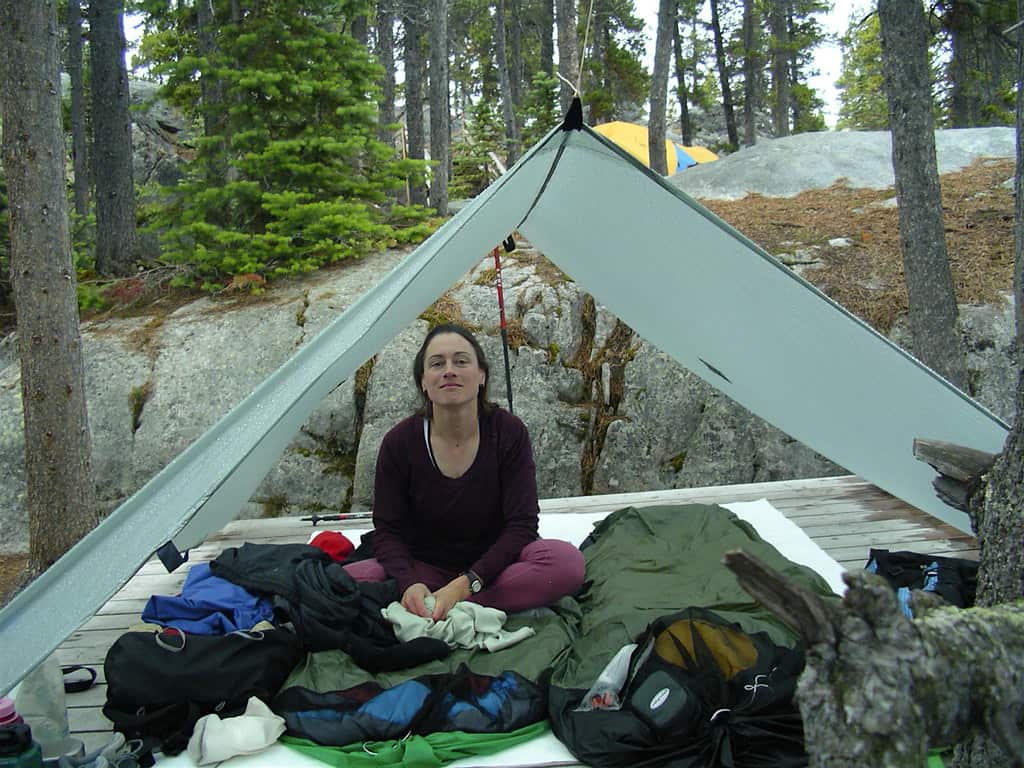
Below freezing you need an insulated pad, not a warmer bag. Body weight crushes the sleeping bag's fill flat underneath you, so the ground takes heat straight out of you through the compressed side. Aim for an R-value of 5 or more on frozen ground, measured under ASTM F3340. A 0 F bag on an R 1.3 pad is a cold night; a 20 F bag on an R 7 pad is a warm one.
R-values are additive, which is the cheapest way into winter camping. Stacking a closed-cell foam pad under an inflatable sums the two: a Therm-a-Rest Z Lite Sol at R 2.0 under a Klymit Static V Base at R 1.3 gets you to R 3.3 for the price of one extra pad and 14 oz.
For car camping the simpler answer is one thick pad. A MegaMat 10 publishes R 8.1 at 3.9 in and a MondoKing 3D publishes R 7.0 at 4.25 in, both of which are genuinely winter-capable without stacking. The full explanation is in R-value explained.
| System | What changes below freezing | What to do |
|---|---|---|
| Sleeping | Ground conduction dominates | R 5+ pad, or stack two; bag rated below the forecast |
| Condensation | Warm breath meets a very cold fly | Ventilate hard; expect frost inside the fly by morning |
| Batteries | Lithium capacity falls with temperature | Sleep with batteries; carry lithium primary AA as backup |
| Fuel | Butane loses pressure near freezing | Propane, or an inverted-canister liquid feed stove |
Sleeping bags rated under ISO 23537 publish two figures: comfort, at which a standardized cold sleeper is comfortable, and limit, at which a standardized warm sleeper gets through the night curled up. The number in a bag's name is usually the limit, roughly ten degrees below the comfort figure.
Plan around comfort, not limit. A Kelty Cosmic Down 20 publishes ISO comfort 31 F and ISO limit 21 F, so it is a bag for nights near freezing rather than well below. A TETON Celsius XXL 0F is rated by the maker rather than to a standard, which is worth knowing when comparing it. The distinction is in sleeping bag temperature ratings explained.
Dry sleep clothes are free warmth
Carry a set of base layers, socks and a hat that never get worn during the day and live in a dry bag. Damp fabric moves heat away from skin roughly twenty times faster than dry fabric, so changing at bedtime is worth more than a bag upgrade and costs nothing. A 235 g/m2 midweight merino crew is the standard choice, and the reasoning is in best base layers for camping.
Two people breathing overnight put roughly a liter of water vapor into a tent. In summer that condenses on the fly and drips; below freezing it forms frost on the inside of the fly, and it falls on you as ice crystals the moment anyone brushes the fabric.
The fix is the same and needs more discipline: open every vent even though it is cold, keep the fly tensioned clear of the inner, and never cook or run a stove inside, which adds water vapor directly as well as being the most serious risk in camping — see carbon monoxide and stove safety when camping. The mechanism is in how to stop tent condensation.
Lithium-ion capacity falls as temperature drops, which affects headlamps, power banks and phones. BioLite publishes an operating range of -4 F to 104 F for the Charge 80 PD, which is the sort of figure worth checking. Keep batteries in the sleeping bag overnight, and carry disposable lithium primary AA or AAA cells as backup, because they are the best cold performers of anything available — the comparison is in rechargeable vs battery camping lights.
For fuel, propane keeps working well below freezing where butane canisters lose pressure and output falls off. A Coleman Triton+ on 16.4 oz propane cylinders is the straightforward car camping answer, and the reasoning is in propane vs butane camp stoves. Plan on longer boil times and more fuel than summer, because you are also melting or heating very cold water.
A full water container left outside overnight will freeze solid, and a frozen filter is permanently destroyed — ice crystals crack the hollow fibers invisibly and there is no field test for it. Sleep with the filter, and keep one container of water inside the tent or the vehicle.
Store bottles upside down where you can, because water freezes from the top and an inverted bottle keeps the drinking end liquid longest. The filter point is covered in water filter vs purifier vs tablets.
One night, at a developed campground, within an easy drive of home, with a vehicle on the pitch. That combination means every failure is an inconvenience rather than an emergency: if the sleeping system turns out to be inadequate, you get in the car.
Take more insulation than you think, a thermometer so you learn what the numbers actually feel like, and a blanket to lay over the bag rather than inside it. Check the forecast the morning you leave rather than the week before, and tell somebody your plan. Then scale up from there — the same one-night-close-to-home approach that works for every other new kind of camping, per the weekend camping trip.
Two things to leave for later: snow camping above the treeline, and any trip where the plan depends on a stove working. Both are real skills rather than gear purchases, and neither is a first cold-weather night. The packing list is in the winter camping checklist.
Exped
R 8.1 and 3.9 in thick. The single change that makes below-freezing camping comfortable, and the one people skip in favor of a warmer bag.
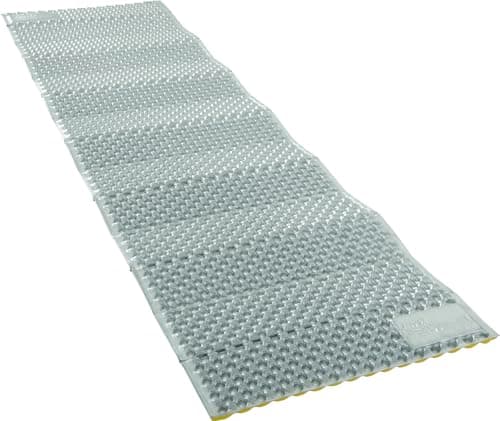
Therm-a-Rest
R 2.0 at 14 oz of closed-cell foam. Stacked under an inflatable, R-values add - the cheapest route into winter camping.
#ad how this is funded · price as of October 23, 2026
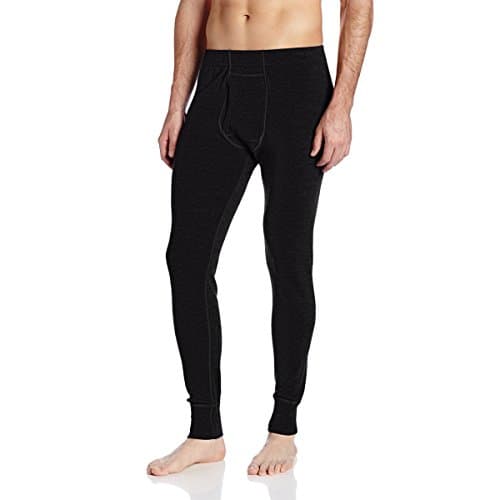
Minus33
235 g/m2 of 100% merino. A dedicated sleep set that never gets worn during the day is free warmth.
#ad how this is funded · price as of October 23, 2026
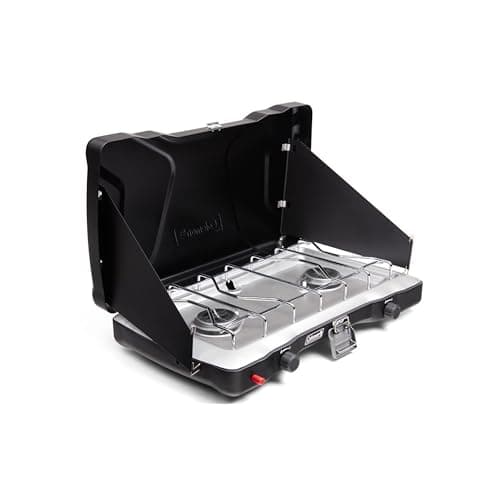
Coleman
22,000 BTU on 16.4 oz propane, which keeps working below freezing where butane loses canister pressure.
#ad how this is funded · price as of October 23, 2026
R 5 or more on frozen ground. R-values are measured under ASTM F3340 and are additive, so stacking a closed-cell foam pad under an inflatable sums them - an R 2.0 foam pad under an R 1.3 inflatable gets you to R 3.3 for 14 oz.
A bag rated below the forecast, yes, but the pad matters more. Body weight crushes the bag's fill flat underneath you, so the ground takes heat out through the compressed side. A 0 F bag on an R 1.3 pad is a cold night.
If it runs on butane, canister pressure falls near freezing and output drops with it. Propane keeps working well below freezing, which is why it is the default for US camping. Expect longer boil times and more fuel use in winter regardless.
One night, at a developed campground, within an easy drive of home, with the vehicle on the pitch. That way every failure is an inconvenience rather than an emergency. Take a thermometer so you learn what the numbers actually feel like.
Every figure on this page comes from a published source. We have not tested this gear, so the numbers are the manufacturer's or the standard body's, not ours. How we research.