Every stove, lantern, grill and heater that burns fuel produces carbon monoxide. Outdoors that is irrelevant. Inside a tent or an awning it is the most serious risk in camping.
Trail & Tarp earns a commission from qualifying purchases made through links on this page, at no extra cost to you. Full disclosure.
The one rule
The short answer
Never operate a fuel-burning stove, lantern, grill or heater inside a tent, a vestibule, an awning, a camper or a vehicle. The CDC and CPSC both make this point unambiguously about portable fuel-burning equipment, because carbon monoxide is colorless, odorless and builds to dangerous levels faster than people expect in an enclosed space. This is the one piece of camping guidance with no exceptions and no clever workaround.
The reason it catches people out is that the failure mode is invisible. There is no smoke, no smell and no obvious warning; early symptoms — headache, dizziness, nausea, confusion — look like tiredness or altitude or a bad night's sleep. And in a cold tent the temptation to bring the stove just inside the door is at its strongest exactly when ventilation is at its worst.
We do not publish medical guidance. The CDC and CPSC pages linked at the bottom are the authority on symptoms and what to do; this page is about how to arrange a campsite so the situation does not arise.
Which appliances produce it
Appliance
Produces CO
Where it belongs
Propane or butane stove
Yes
Outside, on a stable surface, clear of fabric
Charcoal grill
Yes, and heavily
Outside, well clear of everything; never in an enclosure
Liquid fuel stove
Yes
Outside
Gas or liquid fuel lantern
Yes
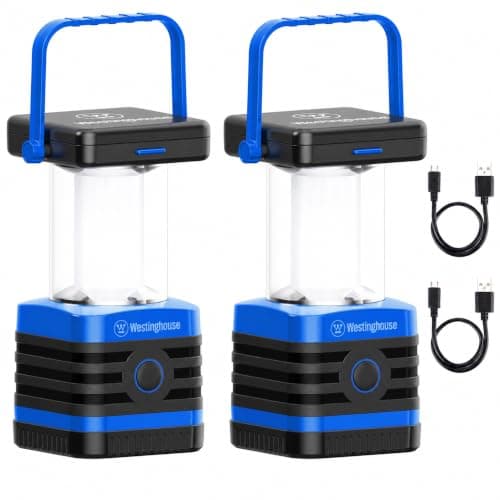
Outside; use a battery lantern in a tent
Portable propane heater
Yes
Follow the maker's instructions exactly; many are not for tents
Battery or rechargeable lantern
No
Anywhere
Anything that burns fuel produces carbon monoxide. The only appliances safe inside a tent are the ones that do not burn anything.
Charcoal deserves a specific mention because it is the classic case. A charcoal grill continues to produce carbon monoxide long after the flames have gone and while it looks merely warm, and bringing a “finished” grill into a tent or awning for warmth has killed people. If you use one — see best portable grills for camping — it stays outside from lighting to cold ash.
Where to cook instead
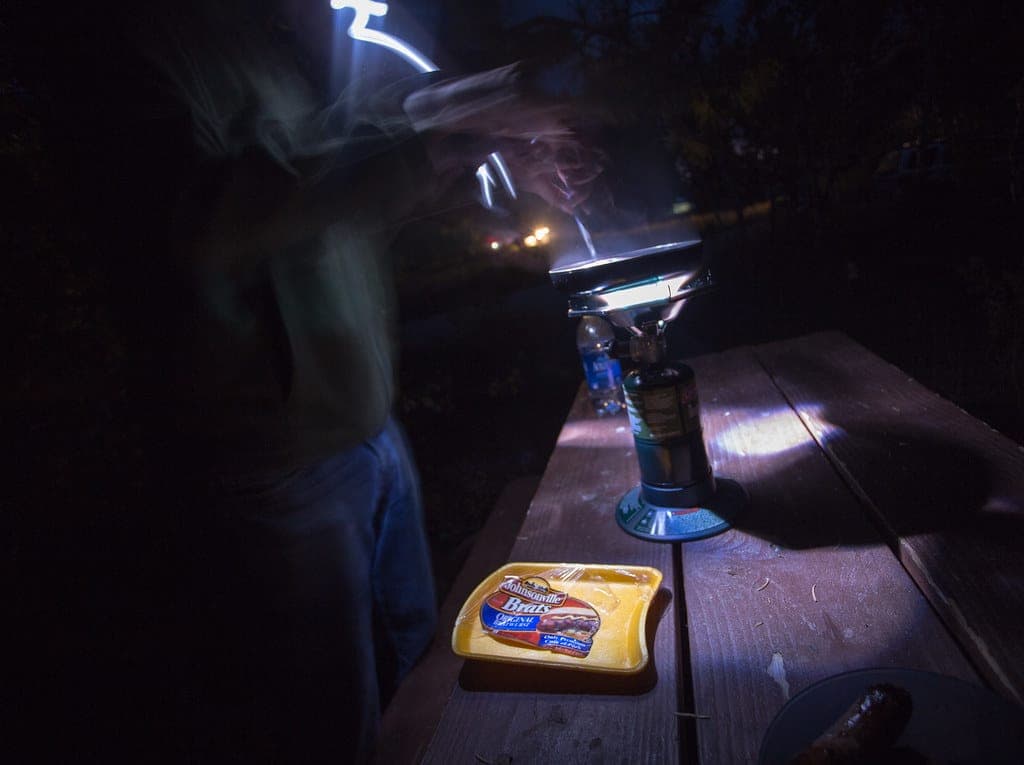
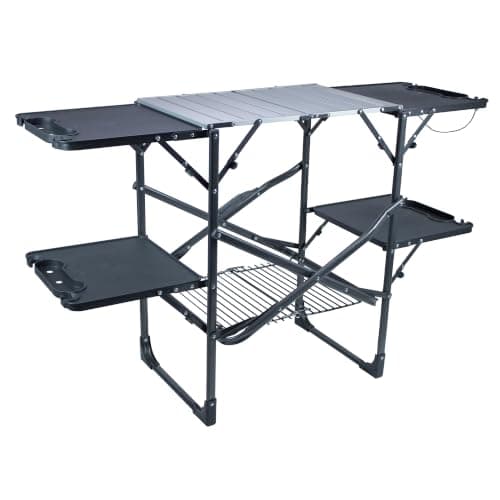
Set the stove up on a stable, level surface, clear of tent fabric, guy lines and anything overhanging. A camp table is ideal because it puts the stove at a height where nobody trips over it and pans cannot be knocked off. A dedicated cook station is better still, because it is designed for the load and does not wobble.
Under a tarp or canopy, cook at an open edge with airflow on at least two sides — never under a closed corner. That is a compromise, not an endorsement: covered cooking is safer than cooking in a doorway and less safe than cooking in the open. The pitching detail is in how to use a tarp at a campsite.
A CO alarm is a few dollars and a few ounces
If you camp in a camper, van, RV, or any enclosed space with a fuel appliance, a battery carbon monoxide alarm is standard equipment and belongs in the same category as a smoke alarm at home. Look for one certified to UL 2034 for residential use, test it before every trip, and mount it at the height the manufacturer specifies. This is not a substitute for keeping appliances outside; it is the backstop for the times something goes wrong anyway.
Checking the fuel system
The other stove risk is a leak, and it is entirely preventable with a two-minute check at the start of each trip.
Inspect the hose along its whole length for cracks, splits, stiffness or perishing, especially near the fittings. Replace a suspect hose rather than nursing it.
Check the O-ring or gasket in the regulator or canister fitting. A missing or flattened seal is the most common cause of a leak.
Connect and leak-test with soapy water. Brush a soapy solution onto every joint with the gas on and the burner off; bubbles mean a leak. Never use a flame to test.
Light with the lid open, on a two-burner stove, and stand to the side rather than over it.
Disconnect the canister when the stove is packed away, and store fuel upright, out of the sun, and never in the tent.
Store canisters upright, below about 120 F, out of direct sunlight, and never inside a tent. A canister in a car on a hot day gets far hotter than the air outside, which is why the boot in shade is better than a parcel shelf.
Do not puncture, incinerate or bury empty canisters. Many outdoor retailers and household hazardous waste facilities take them, and some manufacturers publish specific recycling instructions. Half-used canisters travel home with you rather than being left at a site.
The burns nobody plans for
Carbon monoxide is the serious risk; burns are the common one. Three habits prevent most of them: keep a defined no-go zone around the stove that children and dogs know about, turn pan handles inward so nobody catches one walking past, and use a proper pot grab rather than a folded tea towel.
Cast iron and a stainless cookset both stay hot far longer than they look, and a rechargeable lantern at 1,000 lm on high means you can see what you are doing after dark — most campsite burns happen in poor light. Blister and burn treatment is the part of a first aid kit that actually gets used.
And the fire
Everything above is about appliances. Open fires have their own rules — fire bans, ring use, and the fact that a fire ring holds usable heat for many hours after it looks out — and those are in campfire safety basics. The one overlap worth repeating here: never bring anything that has been burning into a tent, for any reason, including warmth.
The gear this page points to
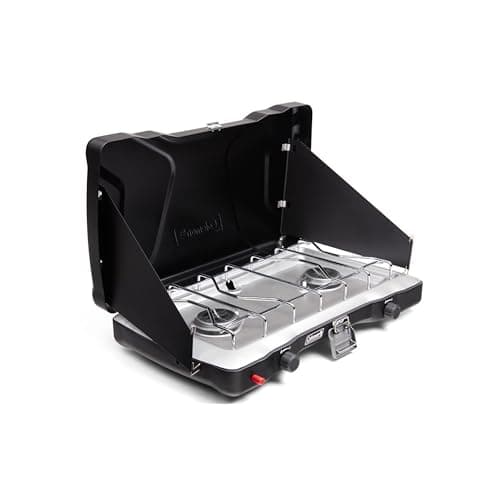
Coleman Triton+ 2-Burner Propane Stove
Coleman
22,000 BTU across two burners on a 16.4 oz cylinder. Leak-test every joint with soapy water at the start of each trip, never with a flame.
No. Every fuel-burning stove, lantern, grill and heater produces carbon monoxide, which is colorless and odorless and builds up quickly in an enclosed space. The CDC and CPSC are unambiguous about portable fuel-burning equipment in tents, campers and vehicles.
QIs a charcoal grill safe near a tent once the flames are out?
No. Charcoal continues producing carbon monoxide long after the flames have gone and while it still looks merely warm. A grill stays outside from lighting until the ash is cold, and never goes into a tent, awning or vehicle for warmth.
QHow do you check a camping stove for gas leaks?
Inspect the hose along its length for cracks or perishing, check the O-ring or gasket in the fitting, then brush soapy water onto every joint with the gas on and the burner off. Bubbles mean a leak. Never test with a flame.
QDo I need a carbon monoxide alarm for camping?
In a tent with no fuel appliance inside it, no. In a camper, van or RV, or any enclosed space with a fuel appliance, yes - a battery alarm certified to UL 2034 is standard equipment. It is a backstop, not a substitute for keeping appliances outside.
Sources
Every figure on this page comes from a published source. We have not tested this gear, so the numbers are the manufacturer's or the standard body's, not ours. How we research.