The Best Fire Extinguishers for Camping, and What the Letters Mean
The rating on an extinguisher is two numbers and up to three letters, and the letters are the part that decides whether it will work on the fire in front of you.
UL fire extinguisher ratings use letters for the fire class and numbers for relative capacity. A is ordinary combustibles like wood, paper and fabric. B is flammable liquids including propane, white gas and cooking oil. C means the agent is safe on live electrical equipment. A 1-A:10-B:C unit covers all three; a 5-B:C unit covers only the last two.
The numbers are comparative rather than absolute. A 10-B rating means the unit was tested against roughly twice the area of flammable liquid fire that a 5-B unit was. There is no number before C, because C only indicates that the agent will not conduct electricity back to you.
For a campsite, all three letters are relevant: a wood fire is A, a stove or fuel bottle is B, and a generator or power station is C. That is the case for one multi-purpose unit rather than a specialist one.
Compared on published ratings
Extinguisher
UL rating
Covers
Rechargeable
Mount
First Alert HOME1
1-A:10-B:C
wood and paper, flammable liquids, electrical
yes
not published
First Alert AUTO5
5-B:C
flammable liquids, electrical
not published
bracket and strap included
Figures as published by First Alert. Neither product page publishes a weight.
Water is still the right answer for a campfire
An extinguisher is for a fire that is out of control or in the wrong place. The routine end to a campfire is water, stirred through the ashes, repeated until the ashes are cold to the back of your hand — and that is what the campground expects, not a burst of dry chemical.
Dry chemical extinguishers also make an enormous mess and the residue is mildly corrosive, which is a reason not to reach for one first when a bucket of water would do. The full routine is in campfire safety basics.
Never put water on a fuel or grease fire
Water on burning cooking oil or liquid fuel does not extinguish it; it flashes to steam under the burning layer and throws flaming liquid outward. This is the single most dangerous instinct at a camp kitchen. For a pan fire, cut the fuel and smother it with a lid or a fire blanket. For a propane appliance, shut the valve off if you can reach it safely, and if you cannot, leave and let it burn out at a distance. The stove-specific hazards are in carbon monoxide and stove safety when camping.
Using one, in the four seconds you get
A handheld extinguisher of this size discharges in roughly ten seconds and you will not get a second attempt. The standard sequence is worth knowing before you need it: pull the pin, aim at the base of the flames rather than the top, squeeze the handle, and sweep side to side.
Aiming at the base is the part people get wrong. Spraying into the flame does nothing, because the flame is the product rather than the fuel. And before any of that: decide whether the fire is small enough to fight at all. If it is above waist height, spreading, or between you and your way out, the correct action is to get everybody away and call for help.
Where it lives matters as much as which one
Mounted, not loose. In the vehicle, on a bracket, within reach of the driver's door. Under a pile of bins it does not exist.
Away from the thing likeliest to burn. An extinguisher stored next to the stove is unreachable in a stove fire.
Somewhere everyone knows. Tell the group where it is on arrival, in the same breath as where the first aid kit is.
Checked. Look at the gauge before every trip. A unit that has lost pressure looks exactly like one that has not.
What else belongs in the kit
A fire blanket, which is the right tool for a pan fire and for a person whose clothing has caught, and which makes no mess. A bucket, because for wood fires water in quantity is what actually works. And a fire blanket is inexpensive enough that there is no reason not to have one at the camp kitchen.
Then the detector, because the more likely campsite emergency is not flame but carbon monoxide from a stove or generator run somewhere enclosed — see best carbon monoxide detectors for camping.
Which to buy
Buy the First Alert HOME1 at 1-A:10-B:C as the campsite extinguisher, because the A rating is what covers the wood fire you actually light. Add the AUTO5 on its bracket in the vehicle for fuel and electrical fires where you need something compact and mounted.
And check the fire restrictions before the trip, because in high fire danger the correct extinguisher is not lighting the fire at all — see best firestarters for camping for how quickly those rules change.
The picks in full
1. Best overall
First Alert HOME1 Rechargeable Extinguisher
First Alert
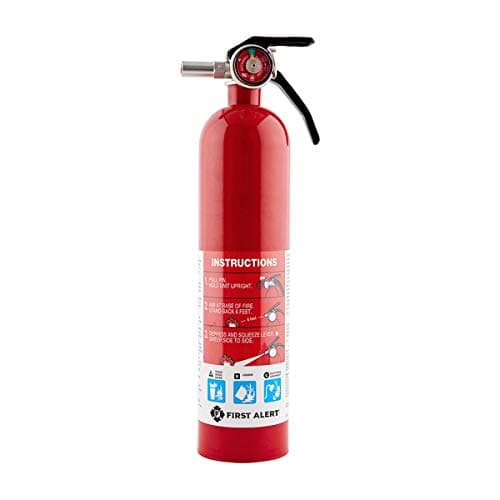
UL rated 1-A:10-B:C, so it covers ordinary combustibles as well as flammable liquids and electrical, and it is rechargeable.
First Alert publishes a UL rating of 1-A:10-B:C, coverage of wood and paper, flammable liquid and electrical fires, and rechargeable construction. First Alert does not publish a weight figure on the product page.
The A in that rating is the reason this is the pick for camping specifically. Campsites have wood fires, and a B:C-only extinguisher does not carry a rating for ordinary combustibles. Being rechargeable also matters: a discharged disposable unit is landfill, and a rechargeable one gets serviced.
The drawback
First Alert does not publish a weight for it, and a unit large enough to carry an A rating is a noticeably bigger object than a compact vehicle extinguisher.
Published specs
UL rating
1-A:10-B:C
Handles
wood and paper, flammable liquid, and electrical fires
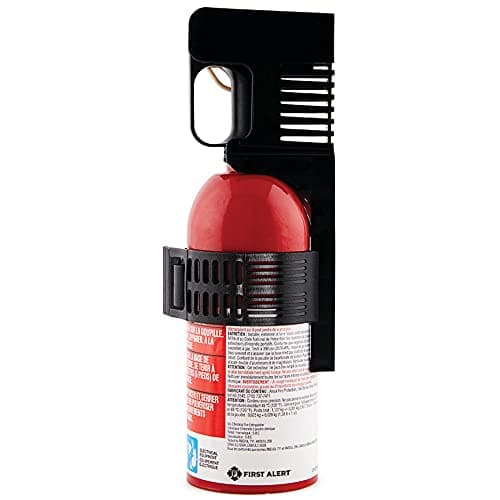
UL rated 5-B:C in a compact body, with a mounting bracket and strap included.
First Alert publishes a UL rating of 5-B:C, coverage of flammable liquids and electrical fires, a compact size intended for vehicle storage and an included mounting bracket and strap. First Alert does not publish a weight figure on the product page.
The bracket is the part that makes it useful. An extinguisher rolling loose in a trunk under the camping gear is not accessible in the ten seconds when it would have mattered; one mounted where you can grab it is.
The drawback
No A rating. It is designed for flammable liquids and electrical fires, which is the right choice for a vehicle and the wrong one as your only campsite extinguisher.
QWhat fire extinguisher rating do I need for camping?
One that includes A, because campsites have wood fires. First Alert publishes 1-A:10-B:C for its HOME1 unit, covering ordinary combustibles, flammable liquids and electrical. A 5-B:C vehicle extinguisher does not carry an A rating.
QWhat do the letters on a fire extinguisher mean?
A is ordinary combustibles such as wood, paper and fabric. B is flammable liquids including propane, white gas and cooking oil. C means the agent is safe on live electrical equipment. The numbers are comparative capacity, so 10-B covers roughly twice the area of 5-B.
QCan I use water on a camp stove fire?
No. Water on burning cooking oil or liquid fuel flashes to steam under the burning layer and throws flaming liquid outward. Cut the fuel supply and smother it with a lid or a fire blanket instead. Water is the right answer for a wood campfire.
QHow do you use a fire extinguisher?
Pull the pin, aim at the base of the flames rather than the top, squeeze the handle and sweep side to side. You get roughly ten seconds. If the fire is above waist height, spreading, or between you and your exit, do not fight it: get everyone away and call for help.
How we picked
Everyone else in this category will tell you they tested twenty of these. We have not tested any of them, and we would rather say so than pretend. There is no gear closet here and no test lab.
What we did instead: pulled the published specifications from each manufacturer's own spec sheet or manual, named the standard behind every rating so you can check what it actually promises, did the arithmetic that turns a spec into a decision, and pulled today's real retail price rather than quoting one from memory. Every pick states a drawback, because a list where nothing is wrong with anything is an advert.
The limits of that method, stated plainly: published specs do not capture zipper quality, seam durability, or how a tent behaves at 2am in a storm. Where that matters, we say so on the pick. The full method is here.