No photo
Kelty Noah's Tarp 12
Kelty
144 sq ft flat at 2 lb 9 oz, 68D polyester at 800 mm with taped seams and multiple reinforced guyout points. Poles sold separately.
A tarp is the cheapest square footage in camping and the least self-explanatory. Learn two pitches and it becomes the most useful thing in the car.
Trail & Tarp earns a commission from qualifying purchases made through links on this page, at no extra cost to you. Full disclosure.
The short answer
A tarp gives you covered outdoor space: somewhere to cook, eat and sit that is neither the tent nor the rain. It weighs a fraction of a canopy, packs into a stuff sack, and can be pitched at any angle, at any height, in any shape the site allows. Kelty publishes 144 sq ft flat for the Noah's Tarp 12 at 2 lb 9 oz packaged, which is more covered area than a 10 by 10 canopy for a tenth of the weight.
The catch is that a canopy has one shape and a tarp has infinite ones, so a tarp requires a decision every time. That is why most people buy a tarp, pitch it badly once, and leave it in the boot. Two pitches solve almost every campsite, and both take five minutes once you have done them.
A tarp on its own is a sheet. The kit that makes it a shelter is small and cheap:
| Pitch | How it works | Best for | Weakness |
|---|---|---|---|
| A-frame / ridgeline | Cord between two trees, tarp over it, four corners staked | Rain; the default pitch | Low headroom under the eaves |
| Lean-to | One edge high on a ridgeline, the opposite edge staked to the ground | Wind and driven rain from one direction | Only covers from one side |
| Flat / dining fly | Four corners raised on poles or lines, slight tilt for runoff | Shade and light rain over a table | Pools water if pitched level; poor in wind |
| Diamond / plough point | One corner high on a pole, the opposite corner staked low | Small sites, awkward corners, solo shelter | Least usable floor area |
The single most important rule across all four: never pitch a tarp level. Even a flat dining fly needs a few inches of drop to one corner. A level tarp collects water, the pool gets heavier, the fabric stretches, and at some point several gallons arrive on the table at once.
The ridgeline does the work
Run a taut cord between two anchors first, then hang the tarp on it. A tarp thrown over a slack line sags in the middle and funnels water to exactly the wrong place. Get the ridgeline drum-tight before the tarp touches it, tie it at a height you can walk under, and everything else becomes adjustment rather than rescue. If you can only remember one thing from this page, that is it.
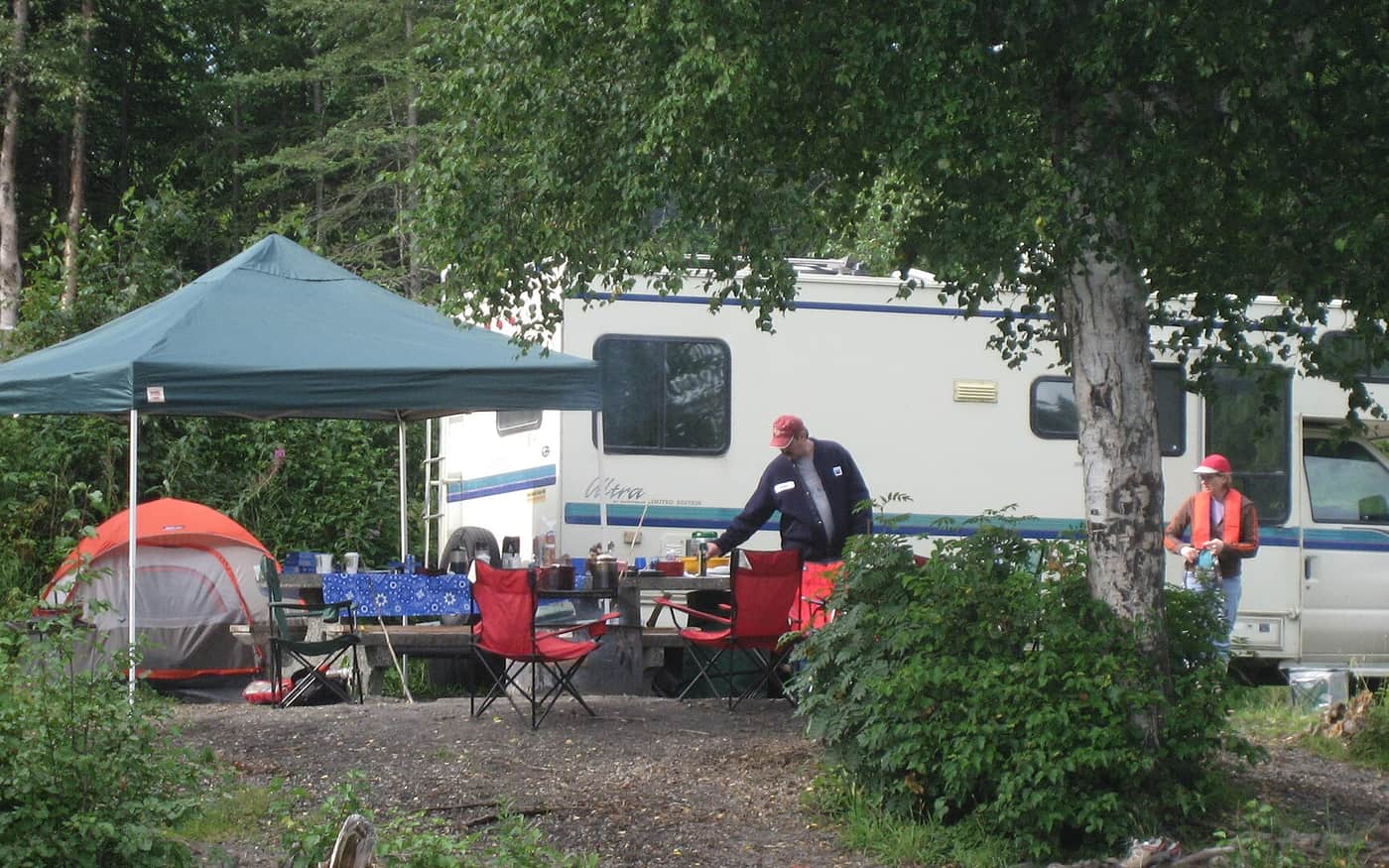
Over the table and the stove, not over the tent. A tent already has a fly; the thing that has no shelter is the space where people cook and sit, which is exactly the space that decides whether a wet afternoon is bearable.
Two placement rules. Keep the tarp edge away from the tent door so runoff does not land in the entrance. And keep the stove at the open edge, never under a closed corner — cooking under fabric is a fire risk and a carbon monoxide risk, which is covered in carbon monoxide and stove safety when camping.
Both do the same job and they fail differently. A 10 by 10 pop-up canopy publishes 100 sq ft of cover at a 6 ft 6 in valance clearance and goes up in minutes with no skill. A Kelty Noah's Tarp 12 publishes 144 sq ft at 2 lb 9 oz and packs to 12 by 10 by 3 in.
Choose the canopy for convenience and a fixed shape you will use every trip. Choose the tarp for weight, packability, wind, and sites where a 10 by 10 footprint simply will not fit. In real wind the tarp is safer, because you can drop one edge to the ground and turn it into a wedge, while a canopy is a rigid sail with legs. The full canopy comparison is in best shade canopies for camping.
Pitch low and steep. A tarp pitched high and flat is a wing; the same tarp pitched at a sharp angle with one edge near the ground sheds wind rather than catching it. Put the low edge into the prevailing wind and guy every attachment point, not just the corners.
Attachment points are also where tarps tear. If yours has grommets rather than reinforced loops, spread the load with a small object — a pebble or a ball of fabric bunched into the tarp and tied around — rather than pulling on a single metal ring. Kelty publishes multiple reinforced guyout points on the Noah's Tarp for exactly this reason. The staking technique is the same as for a tent, in how to pitch a tent in wind.
A tarp is not only a roof. Laid on the ground it is a clean surface for sorting gear, a groundsheet under a tent footprint, a wind wall staked vertically beside a stove, a sun screen on the west side of a site in the afternoon, and a way of carrying an armful of firewood in one trip.
That versatility is why it is worth owning even if you already have a canopy, and why it is one of the cheapest genuinely useful purchases in camping. Fabric and rating still matter: Kelty publishes 68D polyester at 800 mm with fully taped seams, which is a shower-and-shade rating rather than a storm rating — the numbers are explained in tent waterproof ratings explained.
Shake it, wipe the worst off, and dry it before storage exactly like a tent. A tarp packed wet for a fortnight grows mould and the coating begins to break down, which is the same failure described in how to clean and store a tent. Fold along different lines each time so the creases do not become permanent wear lines, and keep the cord in its own bag so it cannot tangle around everything else.
Kelty
144 sq ft flat at 2 lb 9 oz, 68D polyester at 800 mm with taped seams and multiple reinforced guyout points. Poles sold separately.
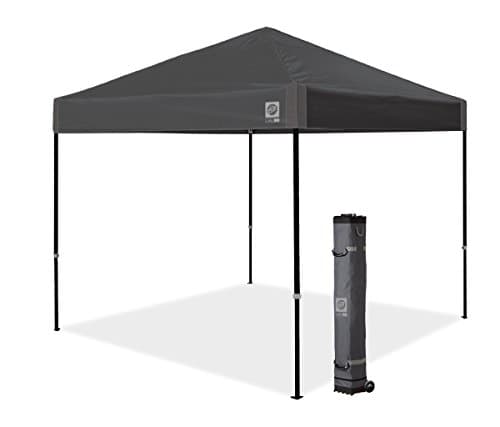
E-Z UP
100 sq ft with 6 ft 6 in of valance clearance. The convenient fixed-shape alternative when weight and packing do not matter.
#ad how this is funded · price as of October 23, 2026
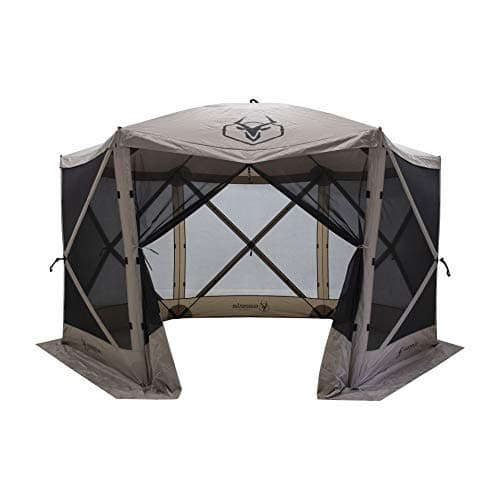
Gazelle Tents
92 sq ft with walls and a waterproof 210D UV50+ shell. What to buy instead when the problem is insects rather than rain.
#ad how this is funded · price as of October 23, 2026
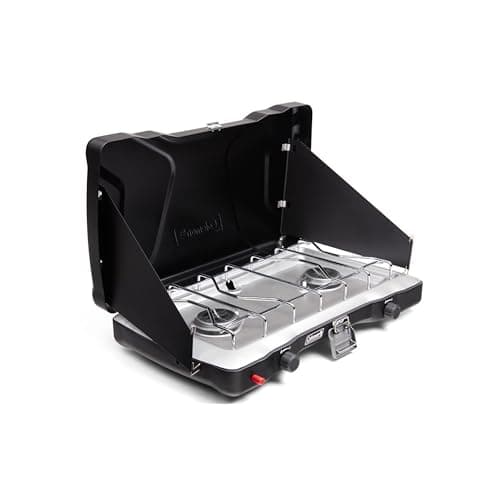
Coleman
22,000 BTU across two burners. Keep it at the open edge of a tarp, never under a closed corner.
#ad how this is funded · price as of October 23, 2026
Run a taut ridgeline between two anchors first, then hang the tarp over it and stake the corners. A tarp thrown over a slack line sags and funnels water into the middle. Never pitch it level - always give it a few inches of drop so water runs off.
The A-frame: a ridgeline between two trees with the tarp over it and four corners staked. For driven rain from one direction, use a lean-to with one edge high on the ridgeline and the opposite edge staked to the ground.
A tarp is lighter, packs smaller, covers more area for the weight and is safer in wind because you can drop one edge to the ground. A canopy is faster and needs no skill. Kelty publishes 144 sq ft at 2 lb 9 oz for the Noah's Tarp 12; a 10 by 10 canopy gives 100 sq ft and weighs many times more.
Over the table and stove, not over the tent - the tent already has a fly. Keep the tarp edge clear of the tent door so runoff does not land in the entrance, and keep the stove at an open edge rather than under a closed corner.
Every figure on this page comes from a published source. We have not tested this gear, so the numbers are the manufacturer's or the standard body's, not ours. How we research.