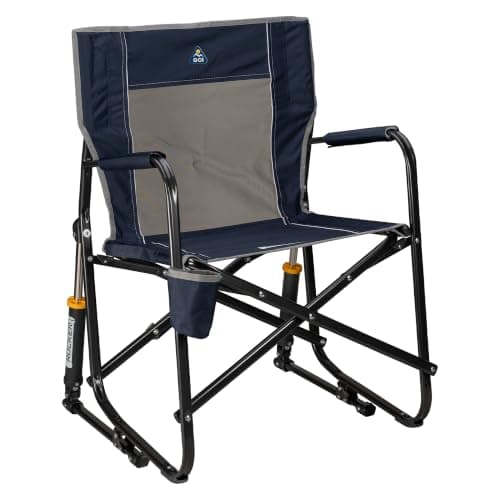
GCI Outdoor Freestyle Rocker
GCI Outdoor
Real back support, which is what decides whether people sit outside after dinner or go to bed at eight.
$80.00 · Check price on Amazon
#ad how this is funded · price as of October 23, 2026
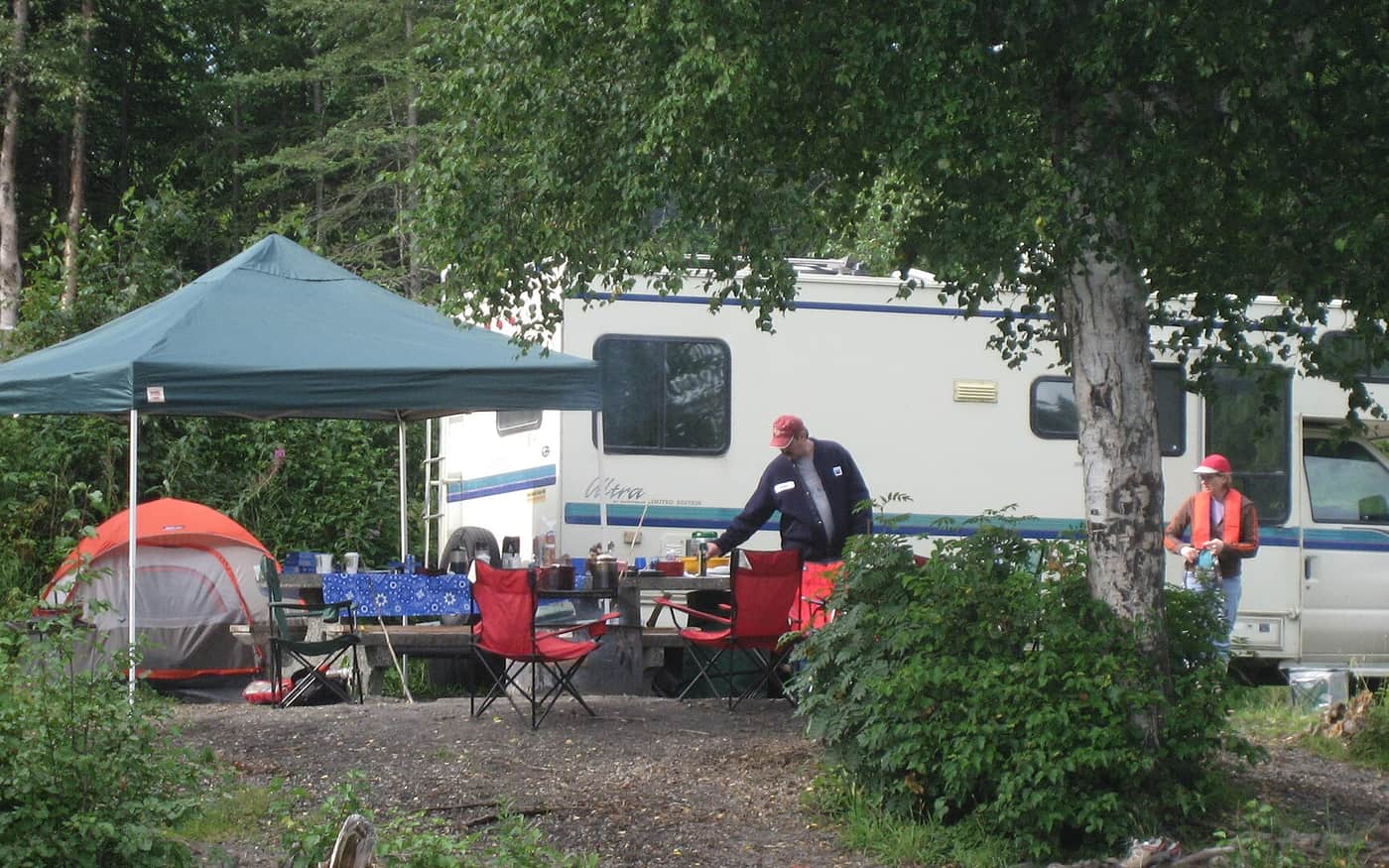
A campsite is a small house with no walls, and the same rules apply: the kitchen should not be in the bedroom, and nobody should have to walk through the fire to get to bed.
Trail & Tarp earns a commission from qualifying purchases made through links on this page, at no extra cost to you. Full disclosure.
The short answer
Sleeping, cooking, sitting, and everything wet or dirty. Site the tent first because it is the fussiest about ground, then put the kitchen downwind of it, the fire downwind of both, and the seating between the fire and the kitchen where the people are. Nearly every awkward campsite is one where the layout was decided by the order things came out of the car.
Walk the pitch before you unload anything. Look at where the sun sets, where the wind is coming from, where the ground slopes, and where you will walk to the toilets in the dark. Five minutes of that saves a weekend of shuffling around a tent you pitched in the one wet hollow on the site.
The tent is the only thing that genuinely cannot be moved once it is up, so it chooses first. Look for slightly raised ground rather than the flattest patch, because the flattest patch is usually the hollow that water runs into. Clear stones and sticks, and check what is above you — dead branches are a real hazard and the reason experienced campers look up before they look down.
Point the door away from the prevailing wind, and if you can, so it catches early sun. A tent with morning light on it dries its own condensation while you have breakfast, which is the difference between packing a dry tent and dealing with a damp one at home. Sleeping heads uphill on any slope you cannot avoid, always.
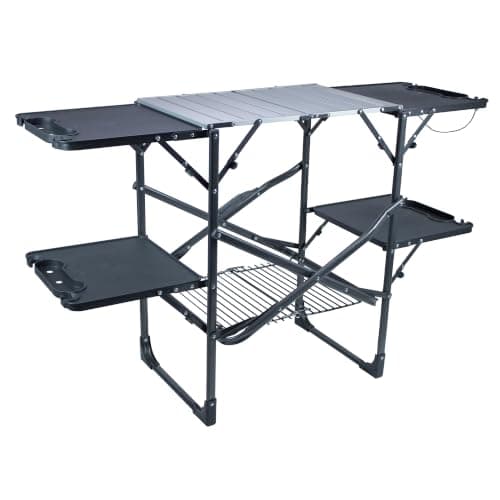
Downwind of the tent, so cooking smells and smoke do not blow into it, and at least a short walk away, because food near a tent is what attracts animals to a tent. Use the site's picnic table if there is one, and if there is not, a folding cook station gives you the working surface that a stove on the ground never will.
Set it up as a station rather than a pile: stove at one end, prep space in the middle, washing-up at the far end, bin bag hanging off the side. It sounds fussy and it is the difference between cooking dinner and hunting for the tongs. The camp kitchen setup guide has the full layout, and washing up is a great deal easier when its place is decided in daylight.
The fire goes in the provided ring, and everything else arranges itself around it. Set chairs in a horseshoe rather than a closed circle: a closed circle means somebody has to climb over a chair or step near the fire to get out, and that is the movement that causes accidents. The open side faces the tent, which is where people walk.
Leave a clear path from the seating to the tents and to the site exit, and keep it clear of guy lines. Guy lines at ankle height in the dark are the most common camping trip hazard there is, and a strip of reflective line or a few clip-on markers fixes it for almost nothing. The rest of the fire practice is in campfire safety basics.
Every campsite needs a designated place for boots, waterproofs, wet towels and the muddy dog, and if you do not choose one, the choice gets made for you and it is the inside of the tent. A vestibule, a tarp corner or a groundsheet by the tent door all work. The rule that makes it stick: nothing wet goes through the tent door.
A line of cord between two trees or from the tent to the car takes towels and damp layers, and a length of line with clips weighs nothing and lives permanently in the camp bin.
Covered space is the upgrade nobody plans for
One tarp or canopy over the kitchen and table changes a weekend more than any other single item, and it works in both directions: shade in July, a dry place to cook and eat in October. A tent is where you sleep. A covered outdoor space is where the trip actually happens, and without one a rainy afternoon means four people sitting in a tent or leaving early.
| Item | What it changes | Worth the space? |
|---|---|---|
| A chair with back support | Whether you sit outside after dinner or go to bed at 8pm | Always |
| A table or cook station | Cooking standing up instead of crouching | Always, if the site has no picnic table |
| A tarp or canopy | Whether rain ends the day | Always |
| A rug or mat at the tent door | How much dirt gets inside | Yes, and it costs almost nothing |
| A lantern at head height | Whether the site is lit or just spotlit | Yes |
| A hammock | An hour of the afternoon | If there are two solid trees |
The chair is the one people underrate. A cheap folding chair with no back support quietly ends the evening early, because sitting in it is worse than lying down, and everyone drifts to their tent at eight o'clock. A chair you can sit in for three hours is the difference between a campsite and a place to sleep. The full comparison is in best camping chairs.
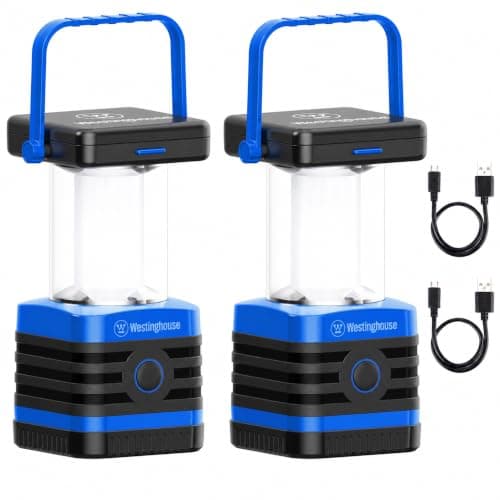
A single bright lantern in the middle of a table blinds everyone looking at it and leaves everything beyond it black. Two or three softer lights placed around the edges — one over the kitchen, one hanging at the tent door, one low near the seating — light the space properly and let your eyes stay adapted.
Hang lanterns at head height or above rather than putting them on a table; light falling downward looks natural and light shining upward does not. Everyone still needs their own headlamp for the walk to the toilets, and a small light left on at the tent door is how you find your tent among forty identical ones at midnight. The lantern options are in best camping lanterns.
Put the food away and the bin bag in the site bins. Fold the chairs or tip them forward so they do not fill with dew. Put anything that must stay dry inside or under cover, because dew is heavier than people expect and a chair left flat is a wet chair at breakfast. Close the tent properly — an open door is an invitation to every insect on the site — and leave a bottle of water and a headlamp inside the door.
Then put the fire out properly, which takes ten minutes and is the one job on this page that cannot be left until morning. Drown it, stir it, drown it again, and check the ashes are cool to the touch.
GCI Outdoor
Real back support, which is what decides whether people sit outside after dinner or go to bed at eight.
#ad how this is funded · price as of October 23, 2026
GCI Outdoor
A working surface at standing height, which is the single biggest improvement to cooking on a site with no picnic table.
#ad how this is funded · price as of October 23, 2026
Coleman
Hang it at head height over the kitchen: 1,000 lumens on high and 50 on low, so it lights the space rather than blinding the table.
#ad how this is funded · price as of October 23, 2026
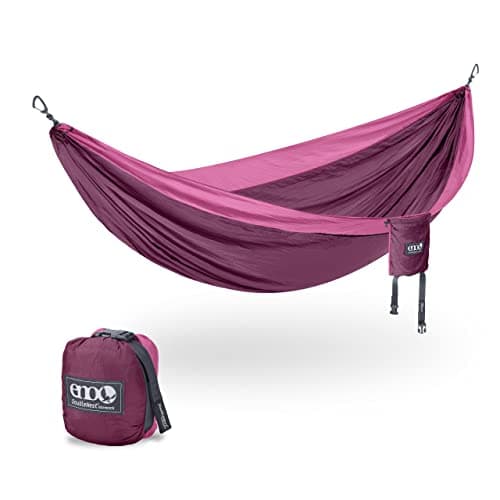
ENO
For the afternoon, if the pitch has two solid trees about 12 to 15 ft apart.
#ad how this is funded · price as of October 23, 2026
Site the tent first on slightly raised ground with the door out of the wind, then put the kitchen downwind and a short walk away, the fire in the provided ring downwind of both, and the seating between them in a horseshoe with an open side facing the tents.
On slightly raised ground rather than the flattest hollow, cleared of stones and sticks, with nothing dead overhanging it, the door away from the prevailing wind, and if possible facing morning sun so the tent dries its own condensation.
Far enough that cooking smells and smoke do not blow into it, and downwind. Food near a tent is what draws animals to a tent, so a short walk away is better than convenient. In bear country, follow the site's food storage rules exactly.
Covered outdoor space, chairs with real back support, a working surface at standing height, and several soft lights rather than one bright one. Those four decide whether people spend the evening outside or retreat to a tent.
Every figure on this page comes from a published source. We have not tested this gear, so the numbers are the manufacturer's or the standard body's, not ours. How we research.