Skip to content
Trail & Tarp

Lighting & power

The Best Camping Lanterns, Compared on Lumens and Runtime

Brightness is the number on the box and runtime is the number that matters at 10pm. Here is what each lantern publishes for both, and which job each one is for.

By Sawyer V.Published September 3, 2026Last updated September 3, 2026How we research
A camping lantern lighting a campsite at night

Trail & Tarp earns a commission from qualifying purchases made through links on this page, at no extra cost to you. Full disclosure.

Quick picks

#ProductBest forPrice
1
No photo

Best for lighting a whole site

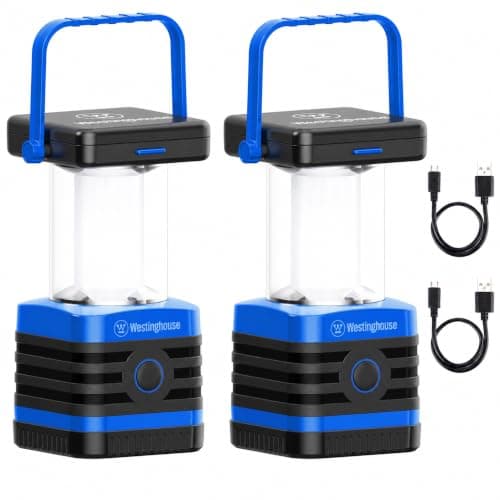
Coleman OneSource 1000-Lumen Rechargeable Lantern

1,000 lumens on high with a 4,800 mAh rechargeable battery, and up to 100 hours on its 50 lumen low setting.

Family campsites, cooking after dark
2
No photo

Best for emergencies

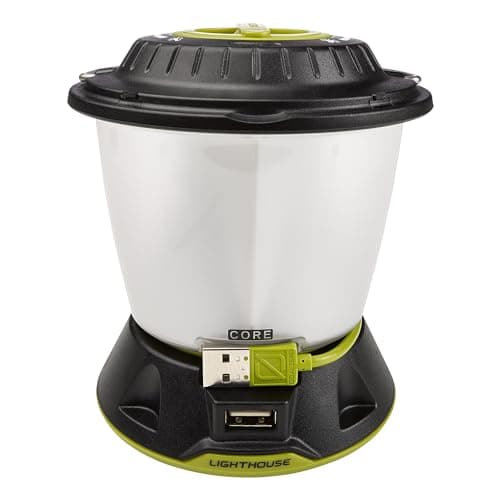
Goal Zero Lighthouse 600

Up to 600 lumens, a USB output for charging a phone, and a hand crank that gives 10 minutes of low light per minute of cranking.

Power outages as well as camping
3
No photo

Best on disposable batteries

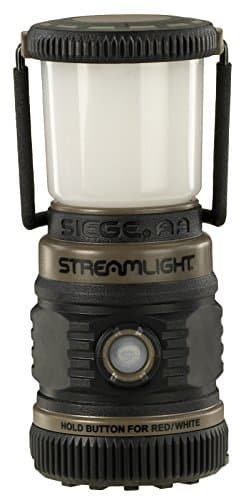
Streamlight Siege AA Lantern

200, 100 or 50 lumens for 7, 15.5 or 37 hours on three AA batteries, and IPX7 waterproof to 1 m.

Glovebox, emergency kit, campers who hate charging things
4
No photo

Best inside a tent

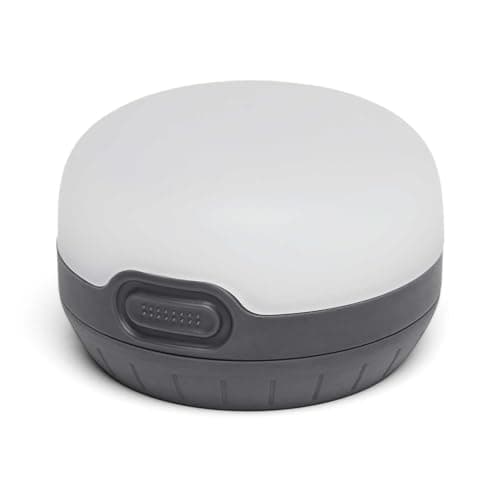
Black Diamond Moji+ Lantern

200 lumens from 140 g, with 100 hours of runtime on low and a frosted globe that does not dazzle.

Tent light, reading, kids

How many lumens do you need?

The short answer

About 100 to 200 lumens inside a tent, 300 to 600 over a table, and 1,000 only in bursts for setting up or cooking. Lumens are total light output; runtime falls sharply as output rises. Coleman's OneSource lantern publishes two hours at 1,000 lumens and up to 100 hours at 50, which is the shape of every rechargeable lantern on the market.

LanternOutputRuntimePowerWater rating
Coleman OneSource 10001,000 / 50 lm2 h high, up to 100 h low4,800 mAh rechargeableIPX4
Goal Zero Lighthouse 600up to 600 lm2.5 h both sides high, 320 h one side lowrechargeable, USB, hand cranknot published
Streamlight Siege AA200 / 100 / 50 lm7 / 15.5 / 37 h3x AAIPX7
Black Diamond Moji+200 lm5.5 h high, 100 h low3x AAA or BD 1500IPX4
All figures as published by the manufacturers.

Two lanterns, not one

The standard family setup is one bright lantern for the cooking and eating area and one small diffused light per tent. They are genuinely different products: the first needs output and a way to hang it high, the second needs to be soft, light and unable to blind a child at close range.

Add a headlamp per person for anything that involves walking, and the lighting problem is solved. Headlamps are for moving; lanterns are for staying still.

Hang it high, and diffuse it

A lantern on a table lights the underside of everyone's face and casts shadows into every pan. The same lantern hung from a tree branch or an awning pole above head height lights the whole area evenly. Bring a carabiner and a short length of cord, and check the lantern has a hook — most do, and it is the cheapest lighting upgrade there is.

Rechargeable or disposable batteries?

What the specs do not say

Light quality is not captured by a lumen figure. A bare LED at 1,000 lumens is unpleasant to sit near; the same output behind a frosted globe is comfortable. Color temperature matters too: warm light is easier to sit under for hours, cold white light is better for cooking and for finding things.

We have not run these lanterns down to compare real-world runtimes against their published figures. Everything above is what the manufacturers publish. What we can tell you is how to read those numbers, and that the runtime at your usual brightness matters far more than the headline lumens.

The picks in full

1. Best for lighting a whole site

Coleman OneSource 1000-Lumen Rechargeable Lantern

Coleman

1,000 lumens on high with a 4,800 mAh rechargeable battery, and up to 100 hours on its 50 lumen low setting.

Coleman publishes 1,000 lumens on high and 50 on low, a 4,800 mAh lithium-ion battery, a runtime of two hours at full output and up to 100 hours on low, and an IPX4 water resistance rating.

The two numbers together are the story of every rechargeable lantern: the headline brightness is a short-duration figure, and the useful all-evening setting is a small fraction of it. A lantern that does both well, from one battery, is what you want over a camp kitchen.

The drawback

Two hours at full output. Treat 1,000 lumens as a burst for setting up or cooking, not a setting you leave on.
No product photo: we don't take our own

Published specs

Output
1,000 lm high / 50 lm low
Runtime
2 h high, up to 100 h low
Battery
4,800 mAh lithium-ion
Water resistance
IPX4

Specs: Coleman OneSource lantern published specs

2. Best for emergencies

Goal Zero Lighthouse 600

Goal Zero

Up to 600 lumens, a USB output for charging a phone, and a hand crank that gives 10 minutes of low light per minute of cranking.

Goal Zero publishes up to 600 lumens, runtimes from 2.5 hours (both sides, high) to 320 hours (one side, low), a 1 W hand crank at 120 rpm where one minute of cranking yields ten minutes of light on low, a 5 V USB output up to 7.5 W, and a 1.1 lb weight.

Being able to light one side only is more useful than it sounds: half the lantern pointed at the table doubles the runtime and stops it dazzling everyone.

The drawback

2.5 hours with both sides on high, and 1.1 lb. The crank is a genuine backup, not a primary power source.

No product photo: we don't take our own

Published specs

Output
up to 600 lm
Runtime
2.5 h both sides high, 320 h one side low
Hand crank
1 min crank = 10 min on low
USB out
5 V, up to 7.5 W
Weight
1.1 lb

Specs: Goal Zero product page

3. Best on disposable batteries

Streamlight Siege AA Lantern

Streamlight

200, 100 or 50 lumens for 7, 15.5 or 37 hours on three AA batteries, and IPX7 waterproof to 1 m.

Streamlight publishes 200 / 100 / 50 lumens with runtimes of 7 / 15.5 / 37 hours on three AA cells, IPX7 waterproofing rated for 1 m submersion, and a weight around 8.8 oz.

IPX7 is a meaningful step up from the IPX4 rating on most camping lanterns: 4 means splash resistant, 7 means it survives being dropped in a puddle. For a lantern that lives outside in weather, that is the spec to look for.

The drawback

200 lumens will not light a whole site, and AA batteries are a running cost. It is a workhorse, not a centerpiece.

No product photo: we don't take our own

Published specs

Output
200 / 100 / 50 lm
Runtime
7 h / 15.5 h / 37 h
Water resistance
IPX7, 1 m submersion
Power
3x AA
Weight
about 8.8 oz

Specs: Streamlight product page

4. Best inside a tent

Black Diamond Moji+ Lantern

Black Diamond

200 lumens from 140 g, with 100 hours of runtime on low and a frosted globe that does not dazzle.

Black Diamond publishes 200 lumens, 5.5 hours on high and 100 hours on low, a 140 g weight, IPX4 water resistance, and power from three AAA cells or a BD 1500 rechargeable battery.

The frosted globe is the point. Inside a tent, a bright directional light creates hard shadows and blinds whoever is facing it; a diffused 200 lumens fills the tent evenly. One per tent is the right number.

The drawback

200 lumens is a tent light, not a campsite light, and it takes AAA batteries unless you buy the rechargeable version.

No product photo: we don't take our own

Published specs

Output
200 lm
Runtime
5.5 h high, 100 h low
Weight
140 g
Water resistance
IPX4
Power
3x AAA or BD 1500 battery

Specs: Black Diamond product page

Questions people actually ask

QHow many lumens do you need for camping?

Around 100 to 200 lumens is right inside a tent, 300 to 600 lights a table and cooking area, and 1,000 lumens is a burst setting for pitching or cooking rather than something you run all evening. Runtime drops sharply at maximum output.

QWhat is the best camping lantern for a family?

A rechargeable lantern of 600 to 1,000 lumens hung above the cooking area, plus a small diffused 200 lumen light in each tent. The bright one handles the shared space, the small ones stop anyone being dazzled at close range in a tent.

QAre rechargeable lanterns better than battery ones?

Rechargeable lanterns are cheaper to run and usually brighter, but they are useless when flat unless you can charge them. Battery-powered lanterns using AA or AAA cells can be revived anywhere, which is why they are better in an emergency kit or on a long trip.

QWhat does IPX4 mean on a camping lantern?

IPX4 means the lantern is protected against splashing water from any direction, so rain and spray are fine. IPX7, like the Streamlight Siege AA, means it survives immersion in up to 1 m of water for 30 minutes, which is a meaningful step up for gear left outside.

How we picked

Everyone else in this category will tell you they tested twenty of these. We have not tested any of them, and we would rather say so than pretend. There is no gear closet here and no test lab.

What we did instead: pulled the published specifications from each manufacturer's own spec sheet or manual, named the standard behind every rating so you can check what it actually promises, did the arithmetic that turns a spec into a decision, and pulled today's real retail price rather than quoting one from memory. Every pick states a drawback, because a list where nothing is wrong with anything is an advert.

The limits of that method, stated plainly: published specs do not capture zipper quality, seam durability, or how a tent behaves at 2am in a storm. Where that matters, we say so on the pick. The full method is here.

Sources for this page