The Best Portable Power Stations for Camping, in Watt-Hours
Watt-hours is capacity and watts is speed, and mixing them up is how people buy the wrong one. Here is the arithmetic, done, for three 250 to 290 Wh stations.
Watt-hours (Wh) is how much energy is stored; watts (W) is how fast it can come out. For camping, 250 to 300 Wh covers phones, lights and a camera for a weekend. A phone battery is roughly 15 to 20 Wh, so a 288 Wh station holds somewhere around a dozen phone charges after conversion losses. What it will not do is run anything that heats: kettles, coffee makers and heaters all draw well over 300 W.
Station
Capacity
Output
Weight
Recharge
Chemistry
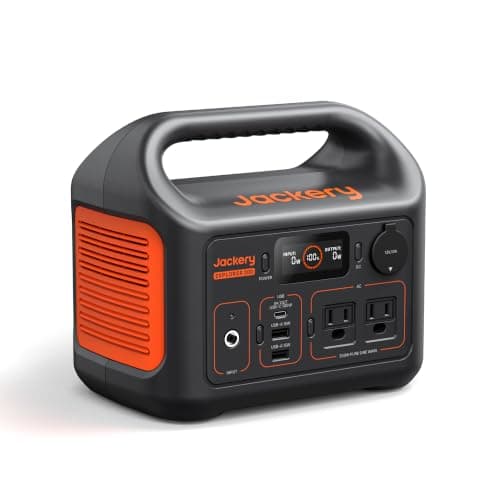
Jackery Explorer 300
292 Wh
300 W AC, 600 W peak
7.5 lb
not published
LiFePO4, 4,000+ cycles
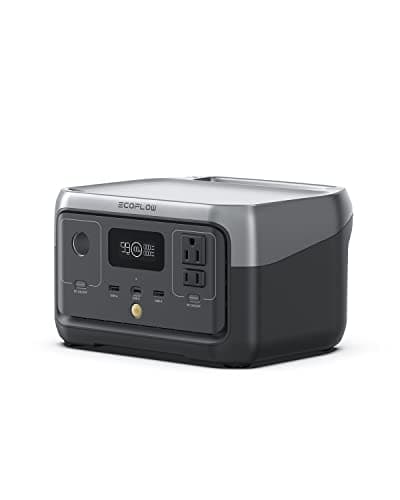
EcoFlow River 2 240
243 Wh
300 W, 600 W surge
7.7 lb
60 min
LiFePO4, 3,000 cycles
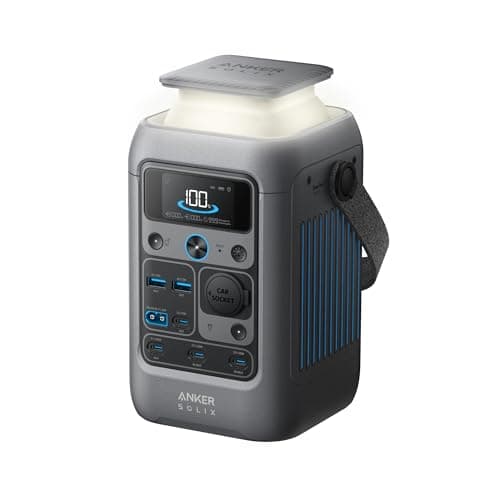
Anker SOLIX C300 DC
288 Wh
300 W, USB-C to 140 W
6.17 lb
not published here
LiFePO4
All figures as published by the manufacturers.
Work out your own number
Add up what you will charge in a weekend, in watt-hours:
Phone: about 15 to 20 Wh per full charge, so four people over two days is 120 to 160 Wh.
Rechargeable lantern: the Coleman OneSource battery is 4,800 mAh at nominal voltage, so a few tens of watt-hours.
Headlamp: a few watt-hours each.
Tablet: 25 to 40 Wh.
Laptop: 50 to 100 Wh.
A family weekend of phones, lights and one tablet lands comfortably inside 288 Wh. That is why this size class is the right one for camping, and why the 1,000 Wh stations sold alongside them are aimed at RVs and job sites rather than tents.
Two of the three picks above are the 300-class flagships of the two biggest names in this category, and they split on exactly one axis: Jackery vs EcoFlow for camping puts their published capacity, cycle ratings and recharge times side by side, and covers the solar compatibility warning Jackery prints on its own panel.
What a 300 W limit rules out
Anything that heats. An electric kettle is 1,200 to 1,500 W, a coffee maker similar, a hair dryer more, a portable heater more still. None of them will run from these stations, and a whole weekend of stored energy would boil roughly one kettle even if the output allowed it. Heat comes from a gas stove, not a battery.
Solar, honestly
Solar panels are sold alongside these stations and are genuinely useful on long trips, with two caveats. A 100 W panel produces 100 W only in ideal conditions pointed straight at midday sun; realistically expect meaningfully less, so a full recharge takes most of a clear day. And a panel is another large object in a car that is already full.
For a weekend, charge at home and top up from the car. Buy solar when you camp for a week or more away from power.
What we did not measure
We have not tested these stations, so the capacities, outputs and recharge times above are the manufacturers' published figures. The arithmetic converting watt-hours into phone charges is ours, it is approximate, and it deliberately allows for conversion losses — you never get the full nameplate capacity out of any battery.
292 Wh with a 300 W AC outlet, LiFePO4 cells rated for over 4,000 cycles, and a 100 W USB-C port.
Jackery publishes 288 Wh of capacity, 300 W of AC output with a 600 W peak, LiFePO4 chemistry rated to 3,000 cycles at 80% or better capacity, a USB-C output up to 100 W, a 7.5 lb weight, and solar recharge to 80% in about 2.8 hours on a 100 W panel.
The 3,000-cycle figure is the number worth noticing. LiFePO4 cells last several times longer than the older lithium-ion chemistry, which is the difference between a station that lasts a decade of weekends and one that fades in three years.
The drawback
Jackery publishes no AC recharge time for it, so you cannot plan a top-up between trips on paper, and a 300 W AC limit rules out anything with a heating element.
Published specs
Capacity
292 Wh
Output
300 W AC (600 W peak surge)
Battery
LiFePO4, over 4,000 cycles to 70%
Weight
7.5 lb
Ports
2 AC outlets, USB-C PD 100 W, 2x USB-A, 120 W car port
Solar recharge
to 80% in about 2.8 h on a 100 W panel, or 7.5 h on a 40 W panel
Note
the listing publishes no AC recharge time; the solar figures above are what it does publish
243 Wh and 300 W of output, recharging from empty to full in about 60 minutes.
EcoFlow publishes 243 Wh, 300 W output with a 600 W surge, LiFePO4 cells rated to 3,000 cycles, a 7.7 lb weight, six output ports and a full recharge in 60 minutes.
An hour to full changes how you use one of these. Top it up over lunch on a driving day and the capacity difference against the Jackery stops mattering.
The drawback
243 Wh is the smallest capacity here, so the fast charging is partly a function of having less to fill.
288 Wh at 6.17 lb, with four USB-C ports including 140 W two-way charging.
Anker publishes 288 Wh, 300 W output, LiFePO4 chemistry, a 6.17 lb weight, and a port set of four USB-C, two USB-A and a car socket, with USB-C up to 140 W.
For a camping trip where the load is phones, a camera, a tablet and a laptop, USB-C direct is more efficient than going through an AC inverter, and this is the lightest station here by 1.5 lb.
The drawback
The DC model has no AC wall outlet at all. Check which version you are buying if you need to plug in a normal power cord.
For a weekend of phones, lights and a camera, 250 to 300 Wh is ample. A phone charge is roughly 15 to 20 Wh, so a 288 Wh station covers a family comfortably. Larger stations exist for RVs and appliances, not for tents.
QCan a portable power station run a coffee maker?
Not at this size. Anything with a heating element draws 1,000 W or more, well beyond the 300 W output of these stations, and would drain a weekend's stored energy in minutes even if the output allowed it. Use a gas stove for anything that heats.
QHow many phone charges do you get from a 300 Wh power station?
Roughly a dozen, allowing for conversion losses. A typical phone battery holds about 15 to 20 Wh, so 288 Wh of storage covers around 12 to 15 full charges in practice rather than the theoretical maximum.
QIs LiFePO4 better for a camping power station?
For longevity, yes. Both the Jackery Explorer 300 and EcoFlow River 2 240 publish LiFePO4 cells - Jackery over 4,000 cycles to 70%, EcoFlow 3,000 to 80% - which is several times the cycle life of older lithium-ion chemistry.
How we picked
Everyone else in this category will tell you they tested twenty of these. We have not tested any of them, and we would rather say so than pretend. There is no gear closet here and no test lab.
What we did instead: pulled the published specifications from each manufacturer's own spec sheet or manual, named the standard behind every rating so you can check what it actually promises, did the arithmetic that turns a spec into a decision, and pulled today's real retail price rather than quoting one from memory. Every pick states a drawback, because a list where nothing is wrong with anything is an advert.
The limits of that method, stated plainly: published specs do not capture zipper quality, seam durability, or how a tent behaves at 2am in a storm. Where that matters, we say so on the pick. The full method is here.