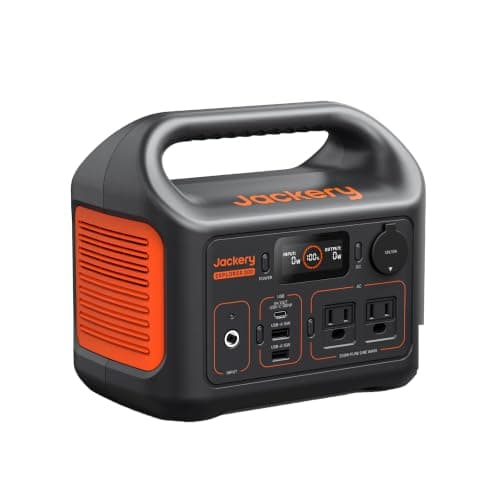
Jackery Explorer 300
Jackery
292 Wh and 300 W AC at 7.5 lb, silent and legal in every loop. Enough for phones, lights and a laptop.
$259.00 · Check price on Amazon
#ad how this is funded · price as of October 27, 2026
A gas generator makes power all day and needs fuel, permission and a place to put the noise. A battery is silent and finite. The question is how many watt-hours you actually need.

Trail & Tarp earns a commission from qualifying purchases made through links on this page, at no extra cost to you. Full disclosure.
The short answer
A “solar generator” is a lithium battery with an inverter, and its limit is stored energy: a 288 Wh unit holds 288 watt-hours and then stops until it is recharged. A gas generator is limited by fuel rather than capacity: 1,800 running watts for as long as you keep pouring gasoline in. If your daily need is under roughly 300 watt-hours, take the battery. Above about 1,000, or if anything has a motor in it, take the gas.
The term solar generator is marketing rather than engineering. Nothing about the box generates anything; it stores energy you put in from a wall socket, a car socket or a panel. Calling it a power station is more accurate and makes the comparison clearer.
| Unit | Type | Output | Capacity or run time | Weight | Noise |
|---|---|---|---|---|---|
| Jackery Explorer 300 | battery | 300 W AC, 600 W peak | 292 Wh | 7.5 lb | silent |
| EcoFlow River 2 240 | battery | 300 W, 600 W surge | 243 Wh | 7.7 lb | silent |
| Champion 201183 | gas or propane | 1,850 W running | 11.5 h gas, 34 h on a 20 lb tank | 39 lb | 53 dB(A) at 23 ft |
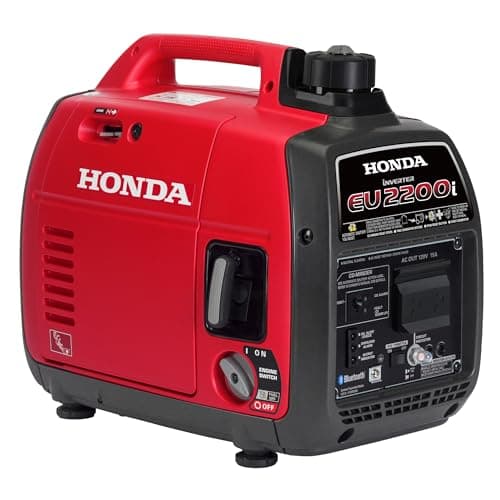
| Honda EU2200i | gasoline | 1,800 W running | up to 8.1 h at 25 percent load | 47.4 lb | 48 to 57 dB(A) |
Look at output rather than capacity first. Both batteries here cap at 300 watts continuous, which rules out a kettle, a microwave, a hair dryer and most coffee machines outright. The generators deliver six times that, which is the difference between charging things and running things.
This is the calculation that settles it, and it takes two minutes. Multiply what each device draws by the hours you run it, then add them up.
| Device | Typical draw | Hours per day | Watt-hours |
|---|---|---|---|
| Two phones | about 15 Wh each per charge | one charge each | about 30 |
| Headlamp and lantern top-ups | 10 to 20 Wh | once | about 20 |
| Laptop | 50 to 70 Wh per charge | one charge | about 60 |
| Camera batteries | 10 to 20 Wh each | two | about 30 |
| 12V fridge at 45 W, 30 percent duty | about 13.5 W average | 24 | about 324 |
| CPAP without humidifier | 30 to 60 W | 8 | 240 to 480 |
The first four lines add up to about 140 watt-hours, which a 288 Wh battery covers for two days. Add the fridge or the CPAP and you are past what either battery here holds in a single night, which is exactly where people discover the limit. The full method is in what size power station do I need.
Campground rules decide this more often than the arithmetic does
Most campgrounds that allow generators at all restrict them to set hours — commonly something like 8am to 10am and 4pm to 8pm — and many have generator-free loops or ban them outright. A battery is legal everywhere, at any hour, including the 2am CPAP cycle that a generator cannot cover regardless of its fuel tank. Check the specific campground before you buy, because the quietest generator in the world is useless in a loop that prohibits them. The options are in best camping generators.
The honest summary: a battery is a better product and a generator is a bigger one. Most campers reading this need the better product.
A battery on its own is a finite tank. A battery plus a panel is a system that refills, and that is what makes multi-day trips work without a generator.
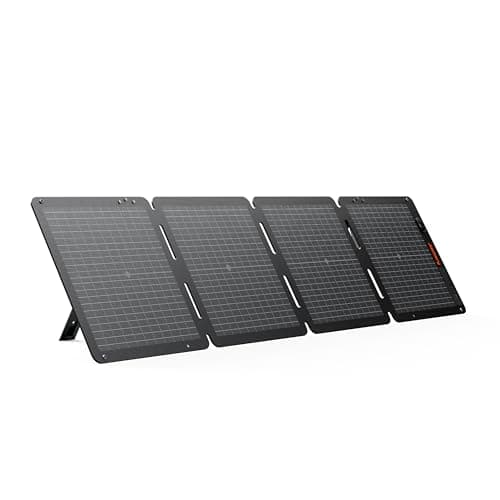
Be realistic about the rate. A 100 W panel does not deliver 100 W: angle, cloud, temperature and cable losses all take a share, and a good day might return 300 to 500 watt-hours into the battery. That covers the first four lines of the table above comfortably and does not keep up with a fridge. The honest figures are in best solar panels for camping.
A gas generator produces carbon monoxide continuously while running. It is odorless, and it kills people who put a generator under an awning, in a vestibule, in a covered truck bed or in an RV compartment. Run it outdoors only, at least 20 feet from anything you sleep in, with the exhaust pointing away.
Champion publishes a CO Shield automatic shutoff on the 201183, which is a feature worth paying for and not a substitute for placement. A battery has none of this exposure, which is the strongest argument for it if the load is small enough — see best carbon monoxide detectors for camping.
Per watt-hour delivered, gas is dramatically cheaper. A generator that outputs 1,800 watts for eight hours is producing on the order of fourteen kilowatt-hours from under a gallon of fuel; matching that in lithium storage would cost many times the generator's price.
That comparison only matters if you need that much energy. For a camper charging phones, lights and a laptop, the battery is both cheaper in absolute terms and sufficient, and the generator's cost advantage is theoretical.
| Your load | Buy |
|---|---|
| Phones, lights, cameras, a laptop | a 250 to 300 Wh battery; no generator |
| The same, on trips past four days | a battery plus a 100 W panel |
| A CPAP machine overnight | a larger battery, sized to the nameplate; not a generator, because of the hours |
| A 12V fridge continuously | a large battery plus solar, or a generator to top it up |
| A kettle, microwave or power tools | a gas generator; 300 W batteries cannot start them |
| An RV air conditioner | a gas generator at 3,700 running watts or more |
For most people camping in a tent, the answer is a battery and, if the trips are long, a panel. The units are in best portable power stations, and if the whole load is USB then even that is more than you need — see best power banks for camping. A 12V car charging cable is the cheapest way to refill a battery on a trip that involves any driving.
Jackery
292 Wh and 300 W AC at 7.5 lb, silent and legal in every loop. Enough for phones, lights and a laptop.
#ad how this is funded · price as of October 27, 2026
Champion Power Equipment
1,850 running watts at 53 dB(A) from 23 ft, 39 lb, with CO Shield shutoff. Six times the battery's output.
Honda
1,800 running watts at 48 to 57 dB(A). The quietest gas option, which is what neighbors actually notice.
#ad how this is funded · price as of October 27, 2026
Jackery
100 W of panel. What turns a finite battery into a system that refills on multi-day trips.
#ad how this is funded · price as of October 27, 2026
For most tent campers, yes. A battery is silent, legal in every campground loop at any hour, weighs 8 lb against 39, and needs no fuel or maintenance. A gas generator wins when you need sustained output above about 300 watts or anything with a motor in it.
Two phones, headlamp top-ups, a laptop charge and two camera batteries come to roughly 140 watt-hours a day, which a 288 Wh battery covers for two days. A 12V fridge adds about 324 Wh a day on its own, and a CPAP 240 to 480, which is where batteries run out.
A larger one can. A CPAP without a humidifier draws roughly 30 to 60 W, so eight hours is 240 to 480 watt-hours, which is at or past the capacity of a 288 Wh unit. Size it from your machine's nameplate, and turn the humidifier off, which roughly doubles consumption.
It is marketing rather than engineering. The box is a lithium battery with an inverter; it stores energy you put in from a wall socket, a car socket or a panel. Calling it a power station is more accurate and makes the comparison with a fuel-burning generator clearer.
Every figure on this page comes from a published source. We have not tested this gear, so the numbers are the manufacturer's or the standard body's, not ours. How we research.