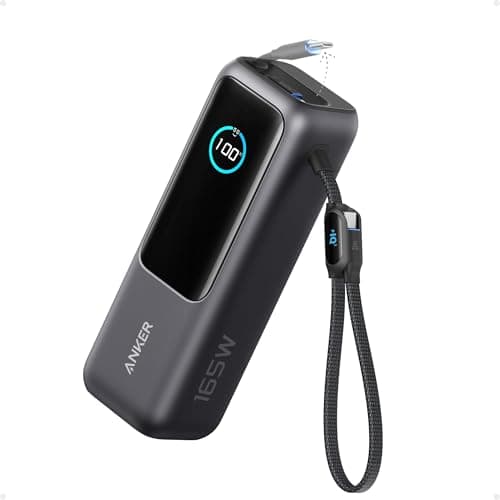
Anker Laptop Power Bank (25K, 165W)
Anker
25,000 mAh / 90 Wh, 165 W out and 100 W in over USB-C, at 595 g. Deliberately under the usual 100 Wh carry-on threshold.
$119.98 · Check price on Amazon
#ad how this is funded · price as of October 23, 2026
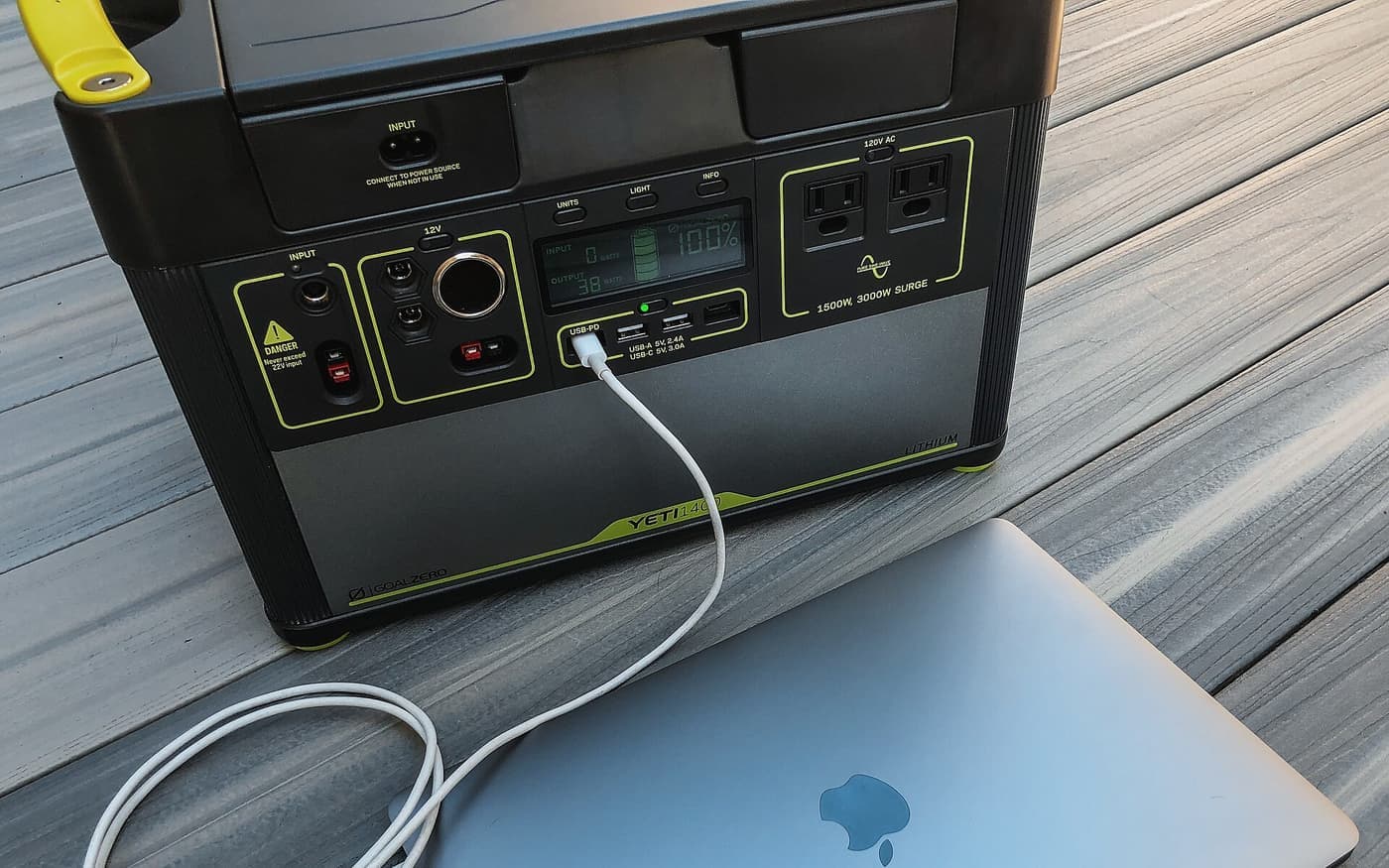
Most campers buy a power station and use it as an expensive power bank. The dividing line is not trip length — it is whether anything you own plugs into a wall socket.
Trail & Tarp earns a commission from qualifying purchases made through links on this page, at no extra cost to you. Full disclosure.
The short answer
Does anything you are taking need a wall socket? If everything charges over USB — phones, headlamps, lanterns, cameras, a tablet — a power bank does the job at a quarter of the weight. If you need AC output for a CPAP, a laptop brick, a fridge or a fan, you need a power station. Trip length is the second question, not the first.
| Power bank | Power station | |
|---|---|---|
| Typical capacity | 60-100 Wh | 250-1,500+ Wh |
| Output | USB only | USB, 12V DC, and AC wall sockets |
| Weight | 0.5-1.5 lb | 6-30 lb |
| Air travel | Usually fine under 100 Wh | Almost never permitted |
| Recharges from | Any USB charger | Wall, car 12V, or solar |
| Best for | Phones, lights, cameras, a weekend | AC devices, long trips, families, medical equipment |
A phone charge is roughly 15 to 20 watt-hours. A headlamp battery is a few Wh. A camera battery is a handful. A tablet is 30 to 40 Wh. So a family of four charging phones once a day for a weekend needs somewhere around 120 to 160 Wh in total, plus a margin.
An Anker Laptop Power Bank publishes 25,000 mAh / 90 Wh. A BioLite Charge 80 PD publishes 20,000 mAh. Two of either, or one plus a solar panel, covers that weekend comfortably — at a combined weight of around 2 lb rather than the 8 to 10 lb of a power station.
Power banks are advertised in milliamp-hours, power stations in watt-hours, and the two are not directly comparable unless you know the voltage. Watt-hours are mAh multiplied by the cell voltage, divided by 1,000; lithium cells are nominally 3.6 to 3.7 V.
Anker publishes both figures for this bank — 25,000 mAh and 90 Wh — which is the honest way to do it, and 90 Wh is also deliberately just under the 100 Wh threshold airlines generally allow in carry-on baggage without approval. When a maker publishes only mAh, do the conversion before comparing, or you will conclude a 20,000 mAh bank is a fifth of a 100,000 mAh station when it is closer to a fifth of a 250 Wh one.
Watt-hours are the only figure worth comparing
Convert everything to watt-hours before you shop, then compare capacity per pound. A Jackery Explorer 300 and an Anker SOLIX C300 sit at 292 Wh and 288 Wh; an EcoFlow RIVER 2 240 is in the same class. All of them are roughly three times the capacity of a large power bank and roughly ten times the weight, which is the trade in a single sentence. The sizing method is in what size power station do I need, and if you have settled on a station and are choosing between the two biggest brands, Jackery vs EcoFlow for camping compares them on published capacity, cycle life and recharge speed.
Both types lose capacity as temperature drops, and the effect is significant enough to plan around. BioLite publishes an operating range of -4 F to 104 F for the Charge 80 PD, which is the sort of figure worth checking on any battery you intend to use in autumn or winter.
The practical fix is the same for both: keep the battery warm rather than expecting it to perform cold. A power bank spends the night in the sleeping bag; a power station lives in the car or the tent rather than on the ground outside. The same principle applies to headlamp and lantern batteries, in rechargeable vs battery camping lights.
For campground weekends where the car is present: one large power bank per adult, and charge them from the car on the drive. That covers phones, lights and cameras indefinitely at almost no weight, and the car is the power station.
Buy the station when you have a specific AC or 12V load, when you camp for four nights or more without driving anywhere, or when you are pairing it with solar for genuinely off-grid trips. Buying one first, before you know the load, is how people end up with an 8 lb box that charges phones. The full lighting and power system is in the lantern roundup, and the string lights that draw almost nothing are in best camping string lights.
Anker
25,000 mAh / 90 Wh, 165 W out and 100 W in over USB-C, at 595 g. Deliberately under the usual 100 Wh carry-on threshold.
#ad how this is funded · price as of October 23, 2026
BioLite
20,000 mAh at 1 lb 1 oz, refilling in about 4 hours over USB-C PD, rated -4 F to 104 F. Pocket-sized and cold-tolerant.
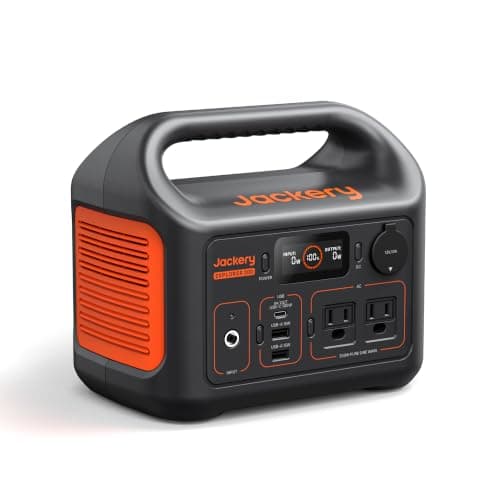
Jackery
The step up: AC sockets, 12V, and solar input. Buy it when you have a load that needs a wall plug, not before.
#ad how this is funded · price as of October 23, 2026
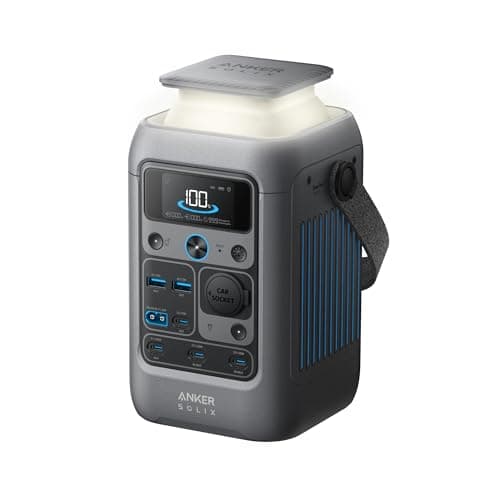
Anker
The same class from the other direction. Compare stations on watt-hours per pound, not on mAh.
#ad how this is funded · price as of October 23, 2026
Ask whether anything needs a wall socket. If everything charges over USB - phones, headlamps, lanterns, cameras - a power bank does it at a quarter of the weight. A power station is for AC output, 12V devices, a fridge, or medical equipment such as a CPAP.
A phone charge is roughly 15 to 20 Wh, so a family of four charging once a day for a weekend needs about 120 to 160 Wh plus a margin. Two large power banks cover that at around 2 lb, against 8 to 10 lb for a power station.
Multiply mAh by the cell voltage and divide by 1,000; lithium cells are nominally 3.6 to 3.7 V. Anker publishes both for its 25K laptop bank - 25,000 mAh and 90 Wh - which is why comparing an mAh figure directly against a station's watt-hours is misleading.
Power banks under 100 Wh generally travel in carry-on baggage; that is why several large banks are rated at 90 Wh or a little under. Power stations are far above the limit and essentially never permitted.
Every figure on this page comes from a published source. We have not tested this gear, so the numbers are the manufacturer's or the standard body's, not ours. How we research.