The Best Camping String Lights, Compared on Runtime at the Setting You Use
String lights are the only camp lighting nobody needs and everybody keeps. They are also the category where the headline lumen figure tells you the least.
Trail & Tarp earns a commission from qualifying purchases made through links on this page, at no extra cost to you. Full disclosure.
Quick picks
#
Product
Best for
Price
1
Best all-round camping string light
MPOWERD Luci Solar String Lights, 18 ft
18 ft and 20 warm-white LEDs across 10 nodes, 100 lm on high down to 15 lm on low, with a 2,000 mAh battery good for up to 20 hours and solar recharge in 16.
MPOWERD Luci Solar String Lights + Power Hub, 44 ft
44 ft of nylon-braided cord with 20 shatterproof bulbs and 40 LEDs, 140 lm high for 8 hours or 20 lm low for 40, on a detachable 4,000 mAh battery, rated IPX4.
Lighting a canopy, an awning or a whole family pitch
Ignore the peak lumen figure. Read the lowest setting and its runtime, because that is the setting you will actually use, and it is where the 20-, 24- and 40-hour numbers come from. Nobody runs string lights at maximum: 100 or 140 lumens spread over 18 or 44 feet is pleasant ambient light, and 15 to 20 lumens is what you want after everyone has eaten.
String
Length
Output range
Battery
Runtime
Weight
MPOWERD Luci 18 ft
18 ft, 10 nodes
15 - 100 lm
2,000 mAh built in
Up to 20 h
not published
MPOWERD Luci 44 ft
44 ft, 20 bulbs
20 - 140 lm
4,000 mAh, detachable
8 h high / 40 h low
745 g
BioLite SiteLight String
10 ft, 4 lights
150 lm
None; any USB source
Depends on the power bank
2.5 oz
All figures as published by the manufacturers. Where a maker does not publish a weight we have left it blank.
The three power models, and which suits a campsite
Built-in battery with solar. Self-contained, nothing to forget, and the solar panel is a slow trickle rather than a charging solution. The published solar recharge figures — 16 hours for the 18 ft, 20 hours for the 44 ft — are full-sun figures, which at a shaded campsite in October means several days. Treat solar as a top-up that stops the battery going flat in storage, and charge by USB before you leave home.
Detachable battery. The best of the three for a family site. You can charge the hub from a car socket or a power station over dinner while the string stays where it is, and a second battery makes the string effectively unlimited.
USB-powered, no battery. Lightest, cheapest, and completely dependent on something else. Perfect if you already carry a power bank or run a power station at camp.
Do the watt-hour math before you assume a power station is needed
String lights draw very little. A 4,000 mAh lithium battery at a nominal 3.7 V is about 14.8 watt-hours — roughly 5% of a 300 Wh power station. Running lights all weekend is not what drains your power; charging phones and running a fan is. The sizing arithmetic is in what size power station do I need.
Hanging them so they last
String lights fail at the cord and the connector, not the LEDs. Three habits:
Hang from a line, not from the string itself. Run a length of cord between two points and attach the lights to that with clips or twist ties. The light cord is not a structural member and tensioning it stresses every joint.
Keep the battery hub out of the weather. Splash ratings cover dew and drizzle. A hub sitting in a puddle under a table leg is a different test.
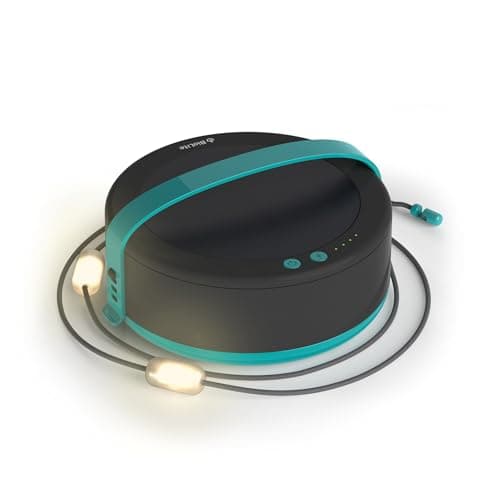
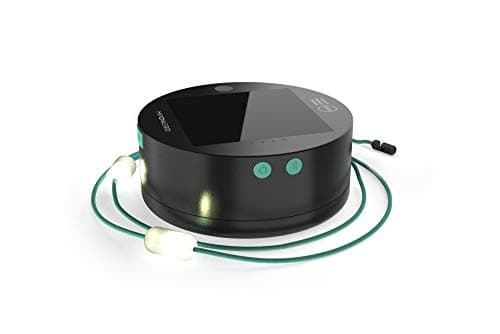
Wind them up on something. Most tangles happen because people stuff the cord into a bag in the dark. The 18 ft Luci winds into its own base, which is a genuine reason to prefer it.
What string lights replace, and what they do not
A string over the table means nobody needs a headlamp pointed at anybody's face, which is the main social improvement they buy. They do not replace a lantern for cooking, where you want directed light on a work surface, and they absolutely do not replace a headlamp for walking to the toilet block at 2am.
We have not measured the output or runtime of any of these, and lumen figures for string lights are not governed by a standard the way headlamp ANSI FL1 figures are, so cross-brand comparison is looser here than elsewhere on this site. Every number above is the manufacturer's published figure with a link. See how we research.
The picks in full
1. Best all-round camping string light
MPOWERD Luci Solar String Lights, 18 ft
MPOWERD
18 ft and 20 warm-white LEDs across 10 nodes, 100 lm on high down to 15 lm on low, with a 2,000 mAh battery good for up to 20 hours and solar recharge in 16.
MPOWERD publishes an 18 ft cord with 20 warm white LEDs across 10 nodes, three output modes at 100 lm high, 50 lm medium and 15 lm low, a 2,000 mAh lithium-ion battery, up to 20 hours of runtime, a 16 hour solar recharge or 6 to 8 hours by USB, a base unit measuring 5 in in diameter by 2 in, and mobile charging output from the hub.
The low setting is the one that matters. Fifteen lumens sounds like nothing and is exactly right for a string hung over a table at 10pm — enough to see faces and find a mug, not enough to blind anyone or annoy the neighbors. That is where the 20-hour figure comes from, and it means one charge covers a whole weekend of evenings.
The self-contained design is the practical advantage over anything that needs a power bank: it is one object, it winds back into its own base, and there is no cable to lose. The phone-charging output is a nice extra rather than a reason to buy — 2,000 mAh is well under half a modern phone battery. For real charging capacity, see power stations.
The drawback
16 hours of full sun to recharge from solar alone is two clear days at a campsite, so in practice you are USB charging it like everything else.
MPOWERD Luci Solar String Lights + Power Hub, 44 ft
MPOWERD
44 ft of nylon-braided cord with 20 shatterproof bulbs and 40 LEDs, 140 lm high for 8 hours or 20 lm low for 40, on a detachable 4,000 mAh battery, rated IPX4.
MPOWERD publishes a 44 ft nylon-braided cord with 20 shatterproof bulbs carrying 40 warm white LEDs, three modes at 140 lm for up to 8 hours, 70 lm for up to 24 hours and 20 lm for up to 40 hours, a detachable 4,000 mAh battery, a 20 hour solar or 3 to 5 hour USB recharge, an IPX4 water resistance rating and a 745 g weight.
Forty-four feet is enough to run the length of an awning, round a canopy, or from the tent to the table and back. That is a different job from the 18 ft version: this one lights a site rather than a table.
The detachable battery is the design decision worth noticing. It means you can charge the hub in the car while the string stays hung, and it means a dead battery does not strand the whole string. The IPX4 rating is splash resistance — fine for dew and a shower, not a claim about a sustained downpour.
The drawback
745 g and a lot of cord to wind up in the dark. IPX4 covers splashes, not a night left out in real rain.
No product photo: we don't take our own
Published specs
Cord length
44 ft, nylon braided
Bulbs
20 shatterproof bulbs, 40 warm white LEDs
Output
140 lm high (8 h), 70 lm medium (24 h), 20 lm low (40 h)
150 lumens over 10 ft and four lights, at 2.5 oz, running off any USB source and daisy-chaining to more strands.
BioLite publishes 150 lumens per string, a 10 ft cord with four lights spaced 21 in apart, a 2.5 oz weight, USB power with an included adapter, and a daisy-chain output for connecting further strands.
Two and a half ounces changes what this is for. The MPOWERD strings are campsite furniture; this is something you actually carry. Strung along the ridge of a tent it replaces the headlamp-in-the-face problem that makes evenings in a tent unpleasant, and it weighs less than a chocolate bar.
The trade is that it has no power of its own. Plugged into a phone-sized power bank it runs for a long time; plugged into nothing it does nothing. If you already carry a battery — and most people do — that is an advantage rather than a limitation, because you are not paying for a second battery you have to remember to charge.
The drawback
No battery of its own, so it is only as good as the power bank you plug it into, and 10 ft covers a tent rather than a site.
Far fewer than the box suggests. 100 to 150 lumens spread over 10 to 44 feet is comfortable ambient light for a table, and 15 to 20 lumens is enough once everyone has eaten. The low setting is where the long runtime figures come from.
QDo solar string lights actually charge at a campsite?
Slowly. MPOWERD publishes 16 hours of solar for the 18 ft string and 20 hours for the 44 ft, and those are full-sun figures. Treat solar as a top-up that keeps the battery alive in storage, and charge by USB before you leave.
QCan string lights run off a power bank?
Yes, and the BioLite SiteLight String has no battery of its own for exactly that reason: it runs off any USB source and weighs 2.5 oz. String lights draw very little, so a phone-sized power bank runs one for a long time.
QHow should I hang camping string lights?
Run a separate cord between two anchor points and clip the lights to it. The light cord itself is not structural, and tensioning it stresses every joint and connector, which is where these fail rather than at the LEDs.
How we picked
Everyone else in this category will tell you they tested twenty of these. We have not tested any of them, and we would rather say so than pretend. There is no gear closet here and no test lab.
What we did instead: pulled the published specifications from each manufacturer's own spec sheet or manual, named the standard behind every rating so you can check what it actually promises, did the arithmetic that turns a spec into a decision, and pulled today's real retail price rather than quoting one from memory. Every pick states a drawback, because a list where nothing is wrong with anything is an advert.
The limits of that method, stated plainly: published specs do not capture zipper quality, seam durability, or how a tent behaves at 2am in a storm. Where that matters, we say so on the pick. The full method is here.