The Best Headlamps for Camping, Rechargeable and Not
A headlamp is the one piece of camping gear everybody needs their own of. The specs that decide which one are runtime and waterproofing, not peak brightness.
Buy for the runtime at the setting you will actually use, which for most camp tasks is under 100 lumens. Every headlamp here runs 2 to 4 hours at maximum output and 60 to 200 hours on low. Walking to the toilet block, finding something in a tent and reading all happen at the low end, and the peak figure is a burst for looking down a trail.
Headlamp
Max output
Runtime high / low
Weight
Water rating
Power
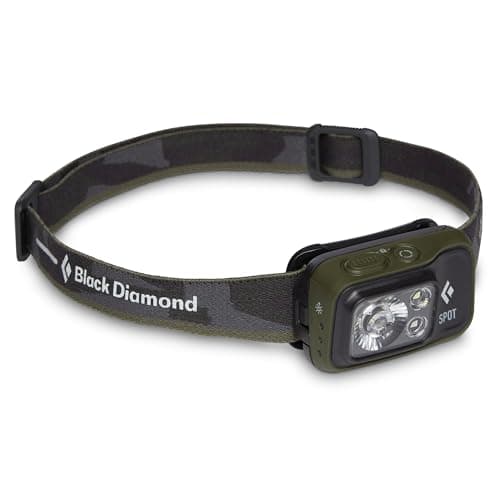
Black Diamond Spot 400
400 lm
2.5 h / 200 h
86 g
IPX8
3x AAA or BD 1500
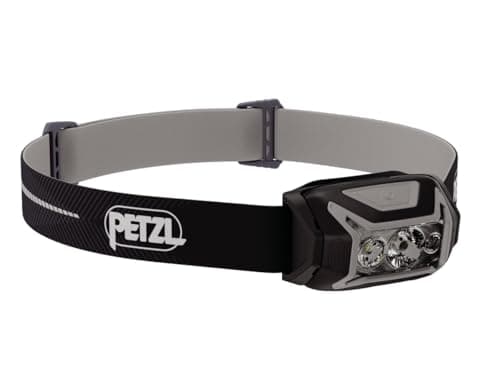
Petzl Actik Core
600 lm
2 h / up to 100 h
88 g
IPX4
CORE 1,250 mAh or 3x AAA
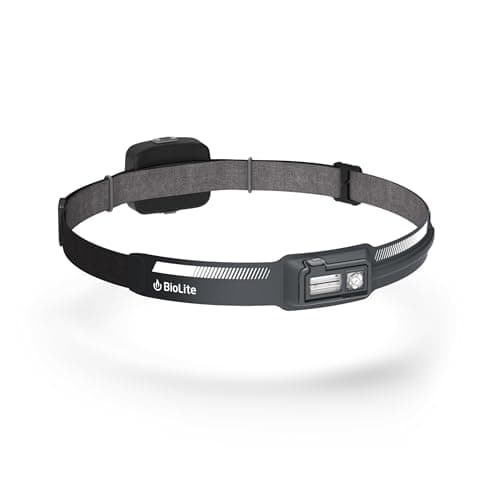
BioLite HeadLamp 425
425 lm
4 h / 60 h
78 g
IPX4
1,000 mAh, USB-C
All figures as published by the manufacturers.
Waterproof ratings, briefly
The IPX number describes water protection. IPX4 means splash resistant from any direction, which covers rain. IPX7 means immersion to 1 m for 30 minutes. IPX8 means immersion beyond that, and Black Diamond specifies at least 1.1 m for 30 minutes for the Spot 400.
For a lamp strapped to your head in weather, this is worth more attention than fifty extra lumens. Rain runs down a forehead directly onto the housing.
Red light is not a gimmick
Every lamp here has a red mode. Red light preserves night vision, so you can see a map or find a zipper without resetting your eyes to darkness for the next ten minutes. It also does not wake everybody else in the tent, and it attracts far fewer insects. Learn the button sequence that gets you into red mode before the trip — most lamps require a long press from off, and hunting for it at 2am defeats the purpose.
One per person, including children
Headlamps are the one item where sharing does not work: everybody needs to move around independently after dark, and a shared lamp means someone is standing in the dark. Cheap headlamps are fine for children, whose main requirement is that they can find the tent.
Two habits worth adopting: keep the batteries out or the lockout mode on in transit, because a lamp switched on in a bag arrives flat; and hang the headlamp inside the tent pointing up at the fabric, which turns it into a soft ceiling light.
Rechargeable, AAA or both?
Hybrid lamps like the Spot 400 and the Actik Core are the pragmatic answer: rechargeable for normal use, AAA cells as an emergency you can buy anywhere. A sealed rechargeable lamp is lighter and simpler, and it depends on you having power — which, if you are carrying a portable power station, you do.
For lighting the shared space rather than your own path, see best camping lanterns. Headlamps are for moving, lanterns are for sitting still, and a camp needs both.
The picks in full
1. Best overall
Black Diamond Spot 400 Headlamp
Black Diamond
400 lumens with an IPX8 rating, waterproof to 1.1 m for 30 minutes, and 200 hours on its 6 lumen low setting.
Black Diamond publishes 400 lumens on high and 6 on low, runtimes of 2.5 hours high and 200 hours low on AAA cells, IPX8 waterproofing to at least 1.1 m for 30 minutes, an 86 g weight with batteries, and dual-fuel operation from three AAA cells or a rechargeable BD 1500.
IPX8 is the strongest water rating here and the reason this is the pick: a headlamp is the item most likely to be worn in rain, dropped in a stream or left out overnight.
The drawback
2.5 hours at full output on AAA cells. Like every headlamp here, the headline number is a short-burst figure.
600 lumens from a 1,250 mAh rechargeable CORE battery, with AAA compatibility as a backup.
Petzl publishes 600 lumens, two hours at maximum and up to 100 hours at 7 lumens, an 88 g weight, a 1,250 mAh rechargeable CORE battery with a three-hour charge time, IPX4 water resistance, and the ability to fall back to three AAA cells.
The hybrid battery design is the useful part: charge it by USB normally, and drop AAAs in when you are three days from a socket.
The drawback
IPX4 only, so splash resistant rather than waterproof, and two hours at full 600 lumens.
425 lumens at 78 g, with a rear red light and a moisture-wicking band that sits flat.
BioLite publishes 425 lumens, four hours on high and 60 hours on low, a 1,000 mAh rechargeable battery charged over USB-C, 78 g of weight and IPX4 water resistance.
It is the lightest here, and the flat front profile is why people who dislike headlamps tend to like this one: it does not bounce, and lying down with it on is not uncomfortable.
The drawback
IPX4 and a sealed 1,000 mAh battery with no AAA fallback. When it is flat, it is flat until you can charge it.
Around 300 to 400 lumens on maximum is plenty for camping, and most of your use will be under 100 lumens. Runtime at the low settings matters far more: these lamps publish 60 to 200 hours on low against 2 to 4 hours at full output.
QAre rechargeable headlamps better than AAA ones?
Hybrid lamps are the best of both: the Black Diamond Spot 400 and Petzl Actik Core both run on a rechargeable cell or three AAA batteries. A sealed rechargeable lamp is lighter but leaves you with nothing when it is flat and there is no power.
QWhat does IPX8 mean on a headlamp?
It means the lamp is rated for continuous immersion beyond 1 m. Black Diamond specifies at least 1.1 m for 30 minutes for the Spot 400. IPX4, on the Petzl and BioLite lamps, means splash resistance rather than immersion.
QWhy do headlamps have a red light mode?
Red light preserves your night vision, so you can read a map or find gear without your eyes needing to readjust to the dark afterwards. It also disturbs other people in a tent far less and attracts fewer insects.
How we picked
Everyone else in this category will tell you they tested twenty of these. We have not tested any of them, and we would rather say so than pretend. There is no gear closet here and no test lab.
What we did instead: pulled the published specifications from each manufacturer's own spec sheet or manual, named the standard behind every rating so you can check what it actually promises, did the arithmetic that turns a spec into a decision, and pulled today's real retail price rather than quoting one from memory. Every pick states a drawback, because a list where nothing is wrong with anything is an advert.
The limits of that method, stated plainly: published specs do not capture zipper quality, seam durability, or how a tent behaves at 2am in a storm. Where that matters, we say so on the pick. The full method is here.