The Best Camping Tarps, and Which of the Three Jobs You Are Buying For
Tarp is one word for three unrelated products. Buy the wrong one and you will conclude tarps are useless, which is what most people who own one tarp have concluded.
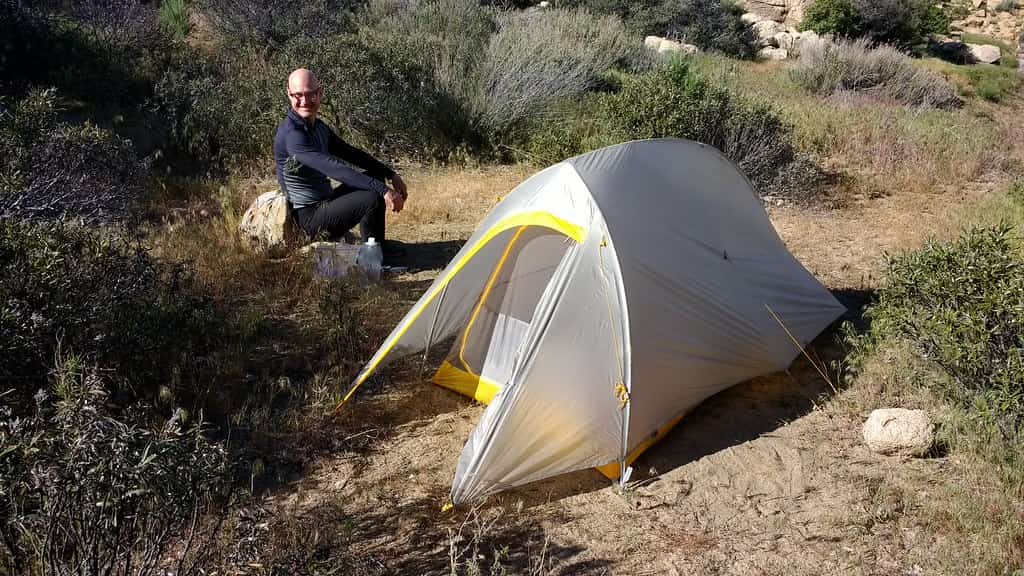
A tarp is either a roof over your living space, a rain fly over a hammock, or a sacrificial ground sheet under a tent. Those need different fabrics, different shapes and different prices, and a tarp bought for one is usually bad at the other two. Decide the job first.
The job
What it needs
What to buy
Roof over the table and kitchen
large square coverage, many guyout points, light enough to rig high
a 12 x 12 ft camping tarp
Rain fly over a hammock
ridgeline geometry, higher denier, tensioners
a shaped hammock tarp
Ground sheet under a tent
abrasion resistance and total waterproofing; weight irrelevant
a cheap heavy poly tarp, cut smaller than the floor
Our summary of what each use actually demands.
The third job is the one people get wrong most expensively. A nice nylon camping tarp under a tent is money wasted, because the ground does not care about denier and will abrade anything. A basic heavy poly tarp does it better for a fraction of the price — and whether you need one at all is argued in do you need a tent footprint.
Compared on published numbers
Tarp
Coverage
Weight
Fabric
Waterproof
Poles
Kelty Noah's Tarp 12
144 sq ft (144 x 144 in)
2 lb 9 oz packaged
68D polyester, taped seams
800 mm
sold separately
ENO ProFly
10 ft 6 in x 6 ft 4 in
22 oz / 640 g
70D ripstop nylon
1,000 mm PU
uses a hammock ridgeline
Figures as published by each manufacturer.
We are listing two rather than padding to three. The general-purpose tarp market beyond these is mostly unbranded poly sheeting with no published hydrostatic head, no stated denier and no seam treatment, and a third pick chosen on appearance would be a guess dressed as a recommendation. For the ground-sheet job, unbranded poly is genuinely the right answer, which is why it is a link above rather than a pick.
What the waterproof numbers mean here
Eight hundred and 1,000 mm are both modest figures next to a tent fly, and that is normal for tarps. The rating is the water column a fabric holds before it seeps, and a tarp does not face the same pressure a tent floor does — nobody kneels on a tarp roof.
Where the rating does bite is pooling. Water that collects in a sag sits under pressure, and that is exactly where an 800 mm fabric gives up. The fix is pitch angle rather than fabric: never rig a tarp flat, always give it a fall so water runs off one edge. The full explanation of the ratings is in tent waterproof ratings explained.
The tarp is only as good as what holds it up
Kelty does not include poles with the Noah's Tarp, and the guylines and pegs that come with most tarps are the first things to fail. Two adjustable poles, six proper stakes and 50 ft of paracord turn a sheet of fabric into a shelter, and they cost a fraction of the tarp. Trees are free when you have them; a pair of telescoping poles is what you need when you do not, which is most developed campgrounds.
Where a tarp beats a canopy, and where it does not
A pop-up canopy is faster, freestanding and taller, and if the only job is shade over a table at a campground it is usually the better purchase — those are in best shade canopies for camping.
A tarp wins on three things a canopy cannot match. It weighs 2 lb 9 oz rather than 30 lb and packs to the size of a loaf. It can be pitched at an angle against driving rain or wind, which a flat-roofed canopy cannot. And it works on uneven ground, over a slope, or strung between trees where no canopy would stand. On a windy beach or an exposed site, a low-pitched tarp survives conditions that fold a canopy — see beach camping guide.
What the specifications do not tell you
No manufacturer publishes a wind rating for a tarp, because the pitch determines it entirely. The same tarp is bombproof as a low lean-to and destroyed as a high flat roof, and no number can capture that.
Kelty publishes a packaged weight rather than a trail weight for the Noah's Tarp, so the 2 lb 9 oz figure includes the stuff sack and guylines. It is the honest number to carry in your head.
Which to buy
Buy the Kelty Noah's Tarp 12 if you want the thing that makes a rainy camping weekend tolerable: a roof over the table where everyone can stand, cook and eat. It is the single most underrated purchase in car camping.
Buy the ENO ProFly only if you sleep in a hammock. Buy a cheap poly tarp for under the tent. And if you buy the Kelty, buy poles and stakes at the same time, because a tarp with nothing to hold it up stays in the bag.
The picks in full
1. Best overall
Kelty Noah's Tarp 12
Kelty
144 sq ft of 68D polyester rated to 800 mm with taped seams, at 2 lb 9 oz packaged.
Kelty publishes 144 sq ft of flat coverage at 144 by 144 in, a packaged weight of 2 lb 9 oz, a 12 by 10 by 3 in packed size, 68D polyester with an 800 mm coating and fully taped seams, multiple reinforced guyout points and corner guylines. Poles are not included.
Twelve feet square is the size that matters. It covers a standard picnic table with enough overhang that rain does not blow onto the food, and it is the smallest tarp that comfortably shelters a cooking area and the people standing in it.
The reinforced guyout points across the body, rather than only at the corners, are what let you pitch this in a dozen configurations — a flat roof, a lean-to against wind, or a steep A-frame that sheds heavy rain. Those pitches are covered in how to use a tarp at a campsite.
The drawback
Poles are sold separately, and an 800 mm rating is modest — in sustained heavy rain a tarp at that rating will eventually wet through where water pools.
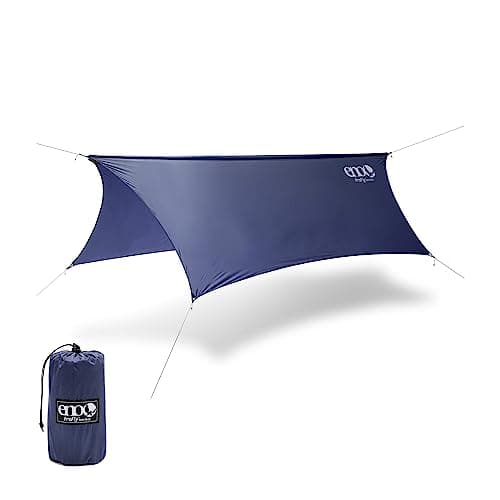
10 ft 6 in by 6 ft 4 in of 70D ripstop at 1,000 mm, with LineLoc tensioners, at 22 oz.
ENO publishes dimensions of 10 ft 6 in by 6 ft 4 in, a 22 oz / 640 g weight, an 8 by 4.5 by 4.5 in packed size, 70D ripstop nylon with a 1,000 mm PU coating, double-stitched waterproof seams, and LineLoc tensioners with aluminum ridgeline hooks.
The 70D fabric and 1,000 mm rating are both a step up from the Kelty, which is what you want directly above your face all night. The LineLoc tensioners matter more than they sound: a tarp that sags in the night funnels water, and being able to re-tension without untying knots in the rain is the difference between a dry night and a wet one.
12 by 12 ft for a living-space roof. Kelty's Noah's Tarp 12 publishes 144 sq ft, which covers a standard picnic table with enough overhang that rain does not blow onto the food and people can stand under it. Smaller tarps cover the table but not the people using it.
QCan you use a camping tarp as a tent footprint?
You can, but a cheap heavy poly tarp does the job better. The ground abrades anything, so paying for ripstop nylon under a tent is wasted money. Whichever you use, cut or fold it slightly smaller than the tent floor so rain running off the fly cannot collect on an exposed lip and run underneath.
QIs 800 mm waterproof enough for a tarp?
For a pitched roof, yes. The rating is the water column a fabric resists, and a tarp roof never faces the pressure a tent floor does. It fails where water pools in a sag, so the fix is pitch angle rather than fabric: always give a tarp a fall so water runs off one edge.
QTarp or pop-up canopy for camping?
A canopy for straightforward shade at a level campground, a tarp for weight, wind and awkward ground. A tarp packs to the size of a loaf at under 3 lb and can be pitched at an angle against driving rain, which a flat-roofed canopy cannot do.
How we picked
Everyone else in this category will tell you they tested twenty of these. We have not tested any of them, and we would rather say so than pretend. There is no gear closet here and no test lab.
What we did instead: pulled the published specifications from each manufacturer's own spec sheet or manual, named the standard behind every rating so you can check what it actually promises, did the arithmetic that turns a spec into a decision, and pulled today's real retail price rather than quoting one from memory. Every pick states a drawback, because a list where nothing is wrong with anything is an advert.
The limits of that method, stated plainly: published specs do not capture zipper quality, seam durability, or how a tent behaves at 2am in a storm. Where that matters, we say so on the pick. The full method is here.