Trail & Tarp earns a commission from qualifying purchases made through links on this page, at no extra cost to you. Full disclosure.
The order that matters
The short answer
Stake the upwind corner first, before the tent has any shape at all. Then work downwind. A tent that is anchored at one corner cannot become a kite, and a tent that is not anchored anywhere can leave in about four seconds. This single habit prevents most of what goes wrong, and it costs nothing.
The full sequence, which works for a dome, a cabin and a backpacking tent alike:
Read the wind before you unpack. Face into it, note which way the grass and trees are leaning, and pick your orientation now. It is much harder to rotate a tent later than to place it right the first time.
Lay the floor out and stake the upwind corner immediately. Not all four. One, hard, before anything else.
Stake the two adjacent corners, keeping the floor flat rather than stretched. Now the tent has a fixed footprint and cannot move.
Kneel on the fabric while threading or raising poles. Your body weight is the best temporary anchor you have.
Get the fly on before you tidy anything. A bare inner in wind flexes far more than a tensioned fly-and-inner sandwich, and the fly is the part that most wants to fly away.
Guy out every attachment point, not the four corners. This is the step most people skip and the one that matters most.
Orientation: which end into the wind?
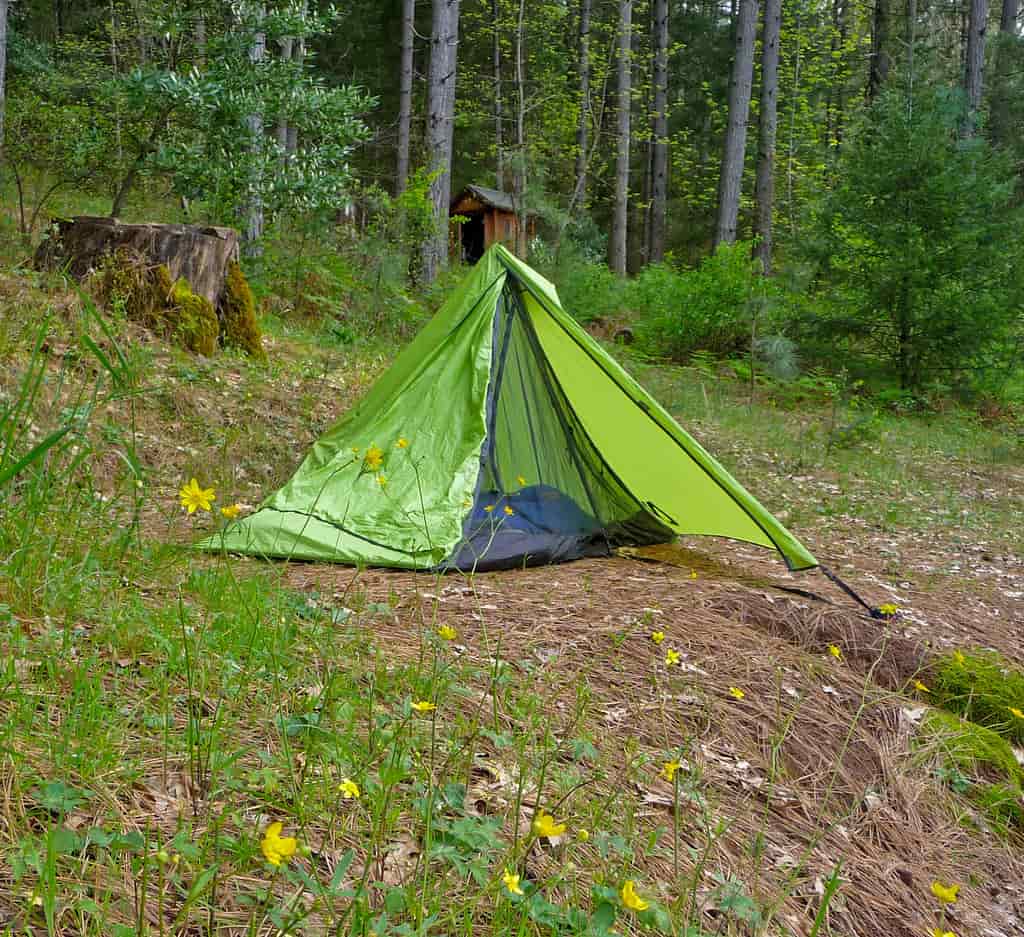
Put the narrowest, lowest end into the wind, and put a door on the downwind side if you have a choice. On a dome that means the short axis faces the wind. On a cabin tent with near-vertical walls it means whichever wall is shortest, because a flat vertical wall is a sail and there is no way around that beyond guying it hard.
The mistake to avoid is orienting for the view or the sunrise and accepting whatever the wind does. A tent broadside to a steady breeze booms all night, and the noise wakes people long before anything breaks. If the view genuinely matters more than the sleep, at least pitch the door away from the wind so opening it does not inflate the tent.
Tent shape
Wind behavior
What to do about it
Low dome
Sheds wind well from any angle
Short axis into the wind, guy the fly
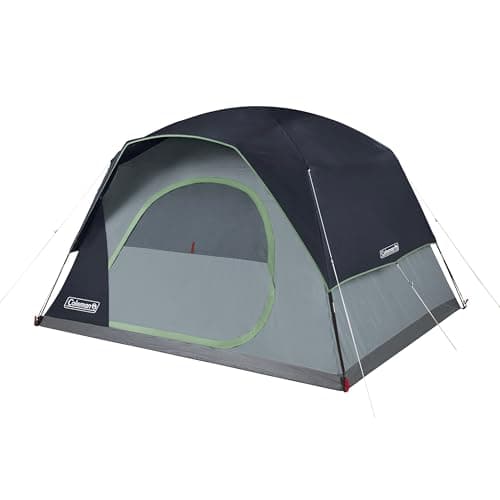
Tall cabin, vertical walls
Catches wind badly, flexes and booms
Shortest wall upwind, guy every point, use a hedge or vehicle as a break
Instant tent, pre-attached poles
Rigid but tall; hinges take the load
Guy from the roof loops, not just the corners
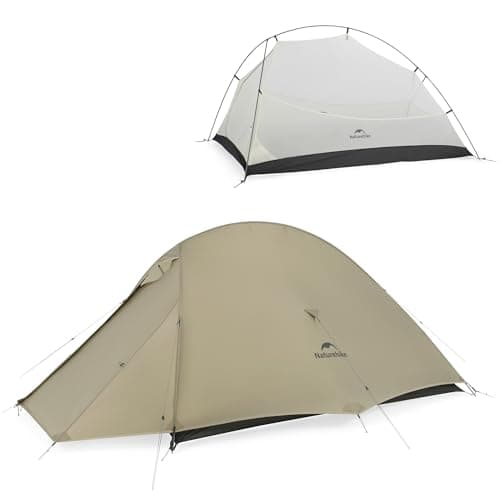
Backpacking dome
Excellent, if the fly is tensioned
Stake the fly out fully; a slack fly slaps and wears
How the shapes on this site behave, and the pitch adjustment each one wants.
The stakes are the weak point
Nearly every entry-level and mid-range tent ships with thin steel wire pins or short aluminum shepherd hooks. They are adequate on firm turf in still air and they are the first thing to fail in anything else: they bend, they pull, and in sand or loose soil they slice straight out.
Two fixes, both cheap. Drive every stake at roughly 45 degrees leaning away from the tent, so the load pulls against the length of the stake rather than levering it out; a stake driven straight down has a fraction of the holding power. And carry a set of proper stakes sized to your ground — longer aluminum Y-stakes or V-stakes for soft ground, thin steel for hard-packed sites. A set of aluminum Y-stakes is one of the highest-value upgrades available to a beginner and weighs almost nothing.
For sand or snow, no stake works. Bury something instead: a stuff sack filled with sand, a stick, or a purpose-made snow anchor, tied to the guy line and buried at 45 degrees. It holds far better than any stake in that ground, and it is free.
Guy lines are not optional above about 15 mph
Most tents ship with guy lines coiled and taped to the fly, and most people never untie them. They are the difference between a tent that flexes and a tent that stands. Run a line from every attachment point on the fly to a stake driven at 45 degrees, and tension each one until the fly is drum-tight and clear of the inner. If your tent came with two lines and has six attachment points, add more line and tensioners — it is a few dollars. The fly-off-the-inner requirement is also what keeps you dry, per how to stop tent condensation.
Site choice does more than technique
The best wind protection is something solid upwind of you: a hedge, a bank, a stand of trees, a wall, or your own vehicle parked broadside. A tent tucked behind a car in a campground sits in genuinely still air while the pitch twenty feet away is being hammered.
Two site traps to avoid. First, the top of a rise: it drains beautifully and it is where all the wind is. Second, a gap between two solid objects, which funnels and accelerates wind rather than blocking it. And avoid pitching directly under large branches in wind for reasons that have nothing to do with the tent.
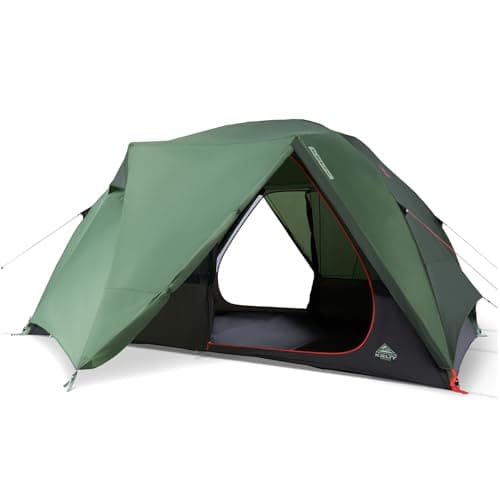
A tent with a large vestibule, like the Kelty Wireless 6 with its two 19.5 sq ft porches, gives you somewhere to stash everything loose before the wind picks up, which is half of what makes a windy evening manageable.
When the wind arrives after you are already pitched
You usually cannot re-site at 11pm, so work the levers you have, in this order:
Re-tension everything. Fabric stretches when it is damp and guy lines slacken. Two minutes with the tensioners changes the tent's behavior more than anything else on this list.
Add lines to any bare attachment point. Even paracord tied to a rock beats nothing.
Weight the inside corners. Water containers, the cooler, a pack in each corner. A tent with a low profile plus weighted corners rides out a lot.
Drop the height if you can. Some domes let you lower or remove a roof pole section. A shorter tent catches less.
Close the vents on the windward side, open them downwind. This keeps the tent from ballooning while still letting moist air out.
What breaks, and what to carry
In order of likelihood: a stake pulls, a guy line snaps or comes untied, a pole section splinters (fiberglass) or bends (aluminum), and finally the fabric tears at a seam or a pole sleeve. The first two are prevented by the advice above. For the third, every tent should travel with a pole repair splint — a short alloy tube that slides over a broken section and is taped in place. It weighs an ounce and it is the difference between a repaired tent and a ruined weekend.
Fiberglass poles, common on cheaper family tents, splinter rather than bend and the shards are sharp. Aluminum poles bend and can often be straightened by hand well enough to finish the trip. That is one of the few places where paying more genuinely buys resilience, which is the argument made across categories in is expensive camping gear worth it.
A tent that has been out in real weather also needs to be dried and stored properly afterward, or the coating that kept the wind and rain out starts failing on its own. That sequence is in how to clean and store a tent, and the fabric ratings behind it are in tent waterproof ratings explained.
The gear this page points to
Kelty Wireless 6
Kelty
Two 19.5 sq ft vestibules give you somewhere to stow everything loose before the wind gets up, and two doors means one is always on the sheltered side.
QHow do I stop my tent blowing away while I pitch it?
Stake the upwind corner before the tent has any shape at all, then the two adjacent corners, then raise the poles while kneeling on the fabric. A tent anchored at one corner cannot become a kite.
QWhich way should a tent face in wind?
Put the narrowest, lowest end into the wind and keep the door on the downwind side. On a dome that means the short axis upwind. Cabin tents with vertical walls catch wind badly whichever way you turn them, so guy them hard and use a hedge or vehicle as a windbreak.
QAt what wind speed should I use guy lines?
Any time it is breezy enough to notice, and definitely above about 15 mph. Run a line from every attachment point on the fly, not just the corners, and stake each one at 45 degrees leaning away from the tent.
QHow do I anchor a tent in sand?
Stakes do not hold in sand. Bury an anchor instead: fill a stuff sack with sand, tie the guy line to it, and bury it at 45 degrees. A stick or a purpose-made sand anchor works the same way and holds far better than any stake.
Sources
Every figure on this page comes from a published source. We have not tested this gear, so the numbers are the manufacturer's or the standard body's, not ours. How we research.