The Best Tents for Rain, Judged on Fly Coverage and Standing Room
In a downpour a tent has two jobs: keep the water out, and be somewhere you can bear to spend nine hours. Most wet-weather tent advice only addresses the first.
Fly coverage, seam sealing and pitch tension keep you dry. The millimeter rating on the box is mostly a floor, not a differentiator. Family tents typically publish 1,200 to 1,500 mm of hydrostatic head, measured under ISO 811 by raising water pressure against the fabric until it penetrates. Almost every tent leak a beginner experiences comes from somewhere else.
The four things that actually decide whether you wake up dry, in order:
How far the fly reaches down. A full-coverage fly that comes to within a few inches of the ground protects the mesh walls and the seams. A partial fly over the roof only is fine for a summer shower and useless in wind-driven rain.
Whether the seams are taped. Stitch holes are holes. Factory-taped seams are standard on decent tents and are the first thing that fails on old ones.
Whether the fly touches the inner. Contact wicks water through by capillary action, which produces the mysterious wet patch that appears without a hole anywhere. Tension every guy line so there is an air gap all the way round.
Where you pitched. The flattest, most inviting patch on a site is often a hollow, and a hollow is where the water goes. Pitch on a slight rise even if it means a less perfect floor.
Tent
Floor
Peak height
Vestibules
Weight
CORE 6P Instant Cabin
11 x 9 ft (99 sq ft)
72 in
Full fly, no listed vestibule area
27 lb
Eureka Copper Canyon LX 6
10 x 10 ft (100 sq ft)
7 ft
None listed
21 lb 15 oz
Kelty Wireless 6
117.5 x 10⁶ in (86.5 sq ft)
74 in
19.5 + 19.5 sq ft
19 lb
All figures as published by the manufacturers.
Condensation is not a leak, and it is the more common problem
Two people breathing overnight put roughly a liter of water vapor into a tent. When it meets a fly that is colder than the air inside, it condenses and drips, and in the morning it is indistinguishable from a leak. Sealing a tent more tightly makes it worse, not better.
The fix is airflow: open the vents even when it is raining, keep a gap under the fly, and never cook or run a stove inside. The full diagnosis is in how to stop tent condensation, and it is worth reading before you conclude a tent has failed.
The cheap upgrades that beat buying a new tent
A tent that leaks is usually a tent with a tired fly, and reproofing costs a fraction of replacement. Re-tape or seal the seams, refresh the fly's water repellency, replace the flimsy stakes it shipped with, and add guy lines to every attachment point rather than the four corners. A cheap tent pitched tight and guyed out stays drier than an expensive one pitched slack. The maintenance sequence is in how to clean and store a tent.
Living in the rain, not just surviving it
The unglamorous truth about wet-weather camping is that the tent is only part of it. Covered space outside the tent decides whether a rainy day is fun: a tarp or a canopy over the picnic table gives you somewhere to cook, eat and sit that is not a sleeping bag. A tent vestibule is for gear; a tarp is for people.
The other half is drying. Once everything inside a tent is damp it stays damp, so the rule is that wet things live in the vestibule and only dry things come inside. Dedicate a dry set of clothes that never leaves the sleeping bag, as set out in how to layer for camping, and keep a shell at the door rather than at the bottom of a bag.
Two things we deliberately did not do
We have not ranked these on their millimeter ratings, because the published figures across family tents are close enough that the ranking would be noise. And we have not tested any of them in rain or otherwise — every number here is the manufacturer's published figure with a source link, which is the only kind this site uses. See how we research, and tent waterproof ratings explained for what the numbers do mean.
The picks in full
1. Best all-round wet-weather family tent
CORE 6 Person Instant Cabin Tent
CORE Equipment
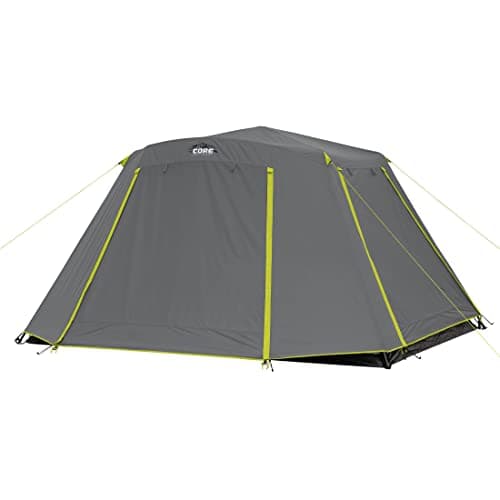
A full rainfly over 99 sq ft with a 72 in center height, pitched from 60 seconds because the poles never leave the tent.
CORE publishes an 11 by 9 ft floor, a 72 in center height, a stated capacity of 6 standard or 3 plus gear, 68D polyester at 1200 mm, a 27 lb weight and setup from 60 seconds, with a full rainfly.
Setup speed is a waterproofing feature, which sounds like a stretch until you have pitched a tent in rain. A conventional dome spends ten to fifteen minutes with an open inner exposed to the weather while you thread poles, and everything that goes into it afterward goes in damp. An instant tent that opens in a minute puts a roof over the floor before it gets soaked.
The full fly is the other half of it. Many cheaper family tents ship a partial fly that covers the roof and leaves the upper mesh walls exposed, which is fine in a shower and not fine in wind-driven rain. Full coverage down the sides is the single spec worth filtering on for a wet climate.
The drawback
27 lb and a long packed bag. Instant tents are heavy, and 1200 mm is a mid-range fabric rating rather than a high one.
100 sq ft of near-vertical wall at a 7 ft peak, which is the only tent here you can genuinely stand up and move around in.
Eureka publishes a 10 by 10 ft floor (100 sq ft), a 7 ft peak height, a 21 lb 15 oz weight, a steel and fiberglass frame and a single door.
Height is what makes a rained-off day tolerable. A dome tent slopes its walls inward, so the usable floor at head height is a fraction of the number on the box; at a 7 ft peak with near-vertical walls, almost the whole 100 sq ft is space adults can stand in. That is the difference between a family playing cards for four hours and a family sitting in a car.
The trade is honest and it is about wind, not water. Tall vertical walls present a large surface to a gust, and cabin tents flex and boom in weather that a low dome shrugs off. If your wet weather comes with wind, pitch the short axis into it and guy it properly, or take the CORE.
The drawback
21 lb 15 oz on a steel and fiberglass frame, one door, and cabin walls catch wind badly. This is a fair-weather-pitch, foul-weather-shelter tent.
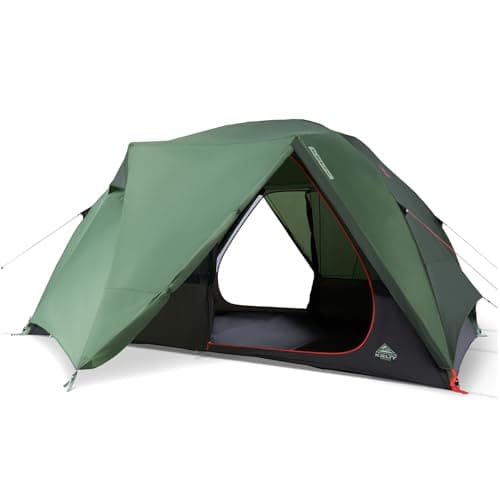
Two vestibules at 19.5 sq ft each, on an 86.5 sq ft floor with a 74 in peak, for 19 lb packed.
Kelty publishes a 117.5 by 106 in floor (86.5 sq ft), a 74 in peak height, a 19 lb packed weight, two vestibules of 19.5 sq ft each, and 12.5 mm fiberglass main poles.
Nearly 40 sq ft of covered space outside the inner tent is the specification that changes a wet trip. Everything that is wet — boots, waterproofs, the dog, packs — can live under cover and outside the sleeping area, which is what stops the inside of the tent slowly becoming as damp as the outside.
Two vestibules also means two doors, so nobody has to climb over anybody to get out at 2am. On a wet weekend where the tent is occupied far more than usual, that is worth more than it sounds. See the family tent roundup for how it compares on everything other than weather.
The drawback
Fiberglass poles, which are heavier and more prone to splintering than aluminum in sustained wind. 74 in is short of standing height for many adults.
A full-coverage rainfly that reaches close to the ground, taped seams, and enough guy lines to keep the fly from touching the inner tent. The hydrostatic head rating on the box matters much less, because most family tents publish similar figures.
QWhat hydrostatic head rating do I need for a tent?
Family tents typically publish 1,200 to 1,500 mm, measured under ISO 811. That is adequate for rain. Seam sealing, fly coverage and pitch tension decide whether you stay dry far more than the fabric figure does.
QWhy is my tent wet inside when it is not leaking?
Almost always condensation. Two people breathing overnight release around a liter of water vapor, which condenses on a fly colder than the air inside. Open vents even in rain, keep the fly from touching the inner, and never cook inside.
QShould I buy a cabin tent or a dome tent for rainy weather?
A cabin tent gives near-vertical walls and standing height, which makes a rained-off day far more bearable. A dome sheds wind better. If your wet weather is windy, take the dome and pitch its short axis into the wind.
How we picked
Everyone else in this category will tell you they tested twenty of these. We have not tested any of them, and we would rather say so than pretend. There is no gear closet here and no test lab.
What we did instead: pulled the published specifications from each manufacturer's own spec sheet or manual, named the standard behind every rating so you can check what it actually promises, did the arithmetic that turns a spec into a decision, and pulled today's real retail price rather than quoting one from memory. Every pick states a drawback, because a list where nothing is wrong with anything is an advert.
The limits of that method, stated plainly: published specs do not capture zipper quality, seam durability, or how a tent behaves at 2am in a storm. Where that matters, we say so on the pick. The full method is here.