No photo
Kelty Noah's Tarp 12
Kelty
144 sq ft of roof at 2 lb 9 oz. Put this up first, before the tent.
Rain does not ruin a camping trip. Wet bedding ruins a camping trip, and there are about six decisions between those two outcomes.
Trail & Tarp earns a commission from qualifying purchases made through links on this page, at no extra cost to you. Full disclosure.
The short answer
Pitch a tarp over the living space before you pitch the tent. Choose ground that water will run off rather than into. Keep one bag of clothing that never leaves the car dry. Everything else about rain camping is comfort; those three are the difference between a trip and an evacuation.
Most people who say they hate camping in the rain are describing a specific sequence: they arrived in rain, pitched a tent in rain, got the inside of the tent wet doing it, had nowhere dry to stand, cooked in a doorway, and went to bed damp. Every step of that is avoidable, and none of the fixes are expensive.
In dry weather a campsite is a flat patch. In rain it is a piece of drainage, and you are choosing whether to be upstream or downstream of it.
| Look for | Avoid | Why |
|---|---|---|
| A slight crown or rise | The lowest point in the loop | water finds the low ground within an hour of steady rain |
| Coarse or sandy soil, pine duff | Fine silt, hardpan, bare clay | compacted ground sheds water instead of absorbing it |
| Ground clear of runnels | Any channel, rut or tire groove | a dry runnel is a stream once it rains |
| Open canopy or clear sky | Directly under heavy branches | branches concentrate drips long after rain stops, and shed limbs |
| Above the flood line | Beaches, gravel bars, dry washes | desert washes flood from rain falling miles away |
Do not dig a trench around the tent. It was standard advice for decades, it damages the site badly, and most land managers now prohibit it. Choosing better ground is the modern answer and a better one — see dispersed camping for beginners for the Leave No Trace context.
This is the single change that improves a wet arrival most, and it costs nothing.
Practice the tent once in the garden before the trip. A pitch you know takes four minutes takes fifteen in the rain when you are reading instructions — how to set up a tent for the first time.
Condensation will convince you the tent leaks
On a wet night the inside of the fly gets soaked from your own breath, and drips land on the inner. People conclude the tent has failed and buy a new one. It has not: four people breathing overnight release roughly a liter of water each, and it has to go somewhere. Keep both vents open even though it is raining, do not seal yourself in, and keep bedding off the walls. The full mechanism is in how to stop tent condensation.
You can be wet all day and be fine. You cannot be wet all night. Everything about rain camping should be organized around one rule: the sleeping system stays dry, and nothing wet touches it.
With a tarp up, wet-weather camping becomes ordinary camping with a roof. Without one, the entire trip happens in a tent doorway, and that is where people cook indoors and hurt themselves.
Never run a stove inside the tent or in a zipped vestibule. Carbon monoxide is the reason, it is odorless, and rain is exactly the circumstance that tempts people into it — see carbon monoxide and stove safety when camping. Cook under the tarp, at the edge, with airflow on all sides.
Plan the menu for one pot. Wet weather is not the time for a three-pan meal and a pile of washing up in the dark — easy camping meals for beginners covers the simple end.
The failure here is a water-resistant jacket doing the job of a waterproof one. Sustained rain finds every seam, and once your midlayer is wet you are cold regardless of air temperature.
| Layer | Job in rain | What fails |
|---|---|---|
| Base | move sweat off skin | cotton, which holds water against you |
| Mid | insulate while damp | down, which collapses; fleece and synthetic keep working |
| Shell | keep the rain out, let vapor out | water-resistant treatments and untaped seams |
A proper shell is taped-seam and rated in millimeters, and it needs its DWR refreshed once it starts wetting out — how to wash and reproof a rain jacket is the maintenance nobody does, and best rain jackets for camping is the buying end. Add rain pants if the forecast is all-day rain; wet legs are what drives people into the tent at 3pm.
Your boots are going to get wet. Waterproof boots keep water out until water goes in over the top, and then the same membrane holds it in. That is not a defect, it is the trade, and it is covered in hiking boots vs trail shoes.
So plan for drying rather than for staying dry: a second pair of socks per day, camp shoes to change into, and newspaper or a boot dryer overnight. The method is in how to dry clothes and boots at camp, and the change-into option is camp shoes.
The practical failure mode of a wet trip is not hypothermia, it is four people in a tent at 4pm with nothing to do and nowhere to sit. The tarp fixes most of it by creating a dry outdoor room. A dry set of clothes fixes the rest.
Beyond that: bring cards and a book, set up a light so the space under the tarp works after dark — best camping lanterns — and do not treat going home early as a failure. A family that leaves on day two dry and cheerful comes camping again; one that stays and is miserable often does not. The rest of the family-specific advice is in family camping with kids.
Pack the tent wet if you have to; there is no alternative in rain. Bag it separately from everything dry, and then deal with it the day you get home, not the following weekend.
A tent left packed wet grows mildew within days, and mildew permanently destroys the polyurethane coating that makes it waterproof. Pitch it in the yard or hang it over a bannister until it is bone dry, then store it loose rather than compressed — how to clean and store a tent. That one habit is the difference between a tent lasting three seasons and fifteen.
Kelty
144 sq ft of roof at 2 lb 9 oz. Put this up first, before the tent.
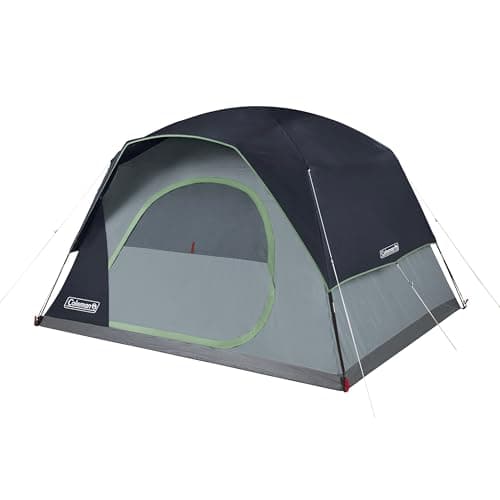
Coleman
85 sq ft and 6 ft of standing height, so a wet afternoon has somewhere to happen.
#ad how this is funded · price as of October 23, 2026
Exped
R-value 8.1 between you and a cold, damp tent floor.
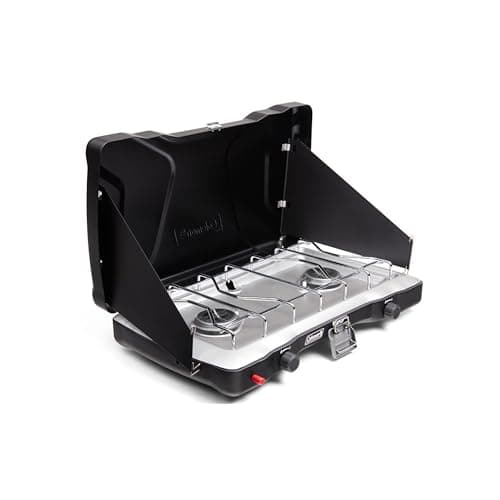
Coleman
Two burners under the tarp, never in the tent or a zipped vestibule.
#ad how this is funded · price as of October 23, 2026
Pitch a tarp over the working area first, then pitch the tent under or beside it so the inner never sits open in the rain. Choose ground on a slight rise rather than the low point of the loop, keep boots and packs in the vestibule, and put bedding in only once the fly is on.
Condensation. Each person releases roughly a liter of water vapor overnight, and on a wet night it condenses on the inside of the fly and drips onto the inner. Keep both vents open even in rain, and keep sleeping bags from touching the walls.
No. A stove in a tent or a zipped vestibule produces carbon monoxide in an enclosed space, which is odorless and kills people every year. Rain is exactly what tempts people into it. Cook under a tarp at the edge, with airflow on all sides.
You often have no choice, so bag it separately from dry gear and dry it the day you get home. A tent left packed wet grows mildew within days, and mildew destroys the polyurethane waterproof coating permanently. Pitch it in the yard until bone dry, then store it loosely rather than compressed.
Every figure on this page comes from a published source. We have not tested this gear, so the numbers are the manufacturer's or the standard body's, not ours. How we research.