Taking boots off at camp does three things: it lets the boots dry from the inside overnight, it lets your feet dry and de-swell, and it stops you tracking mud into the tent. Only the first two matter for your feet, and both of them matter a great deal on a multi-day trip.
A boot worn for ten hours holds a substantial amount of sweat, and a boot that goes into a vestibule still holding it starts the next day damp. Damp boots are how blisters and macerated skin happen on day three of a trip that was fine on day two. The drying routine that actually works is in how to dry clothes and boots at camp.
Feet also swell over a day of walking, and staying in a laced boot keeps them compressed. Getting into something open-volume for the evening is not comfort for its own sake; it is what lets the swelling go down before tomorrow.
Compared on published numbers
Camp shoe
Weight
Sole
Closure
Wet performance
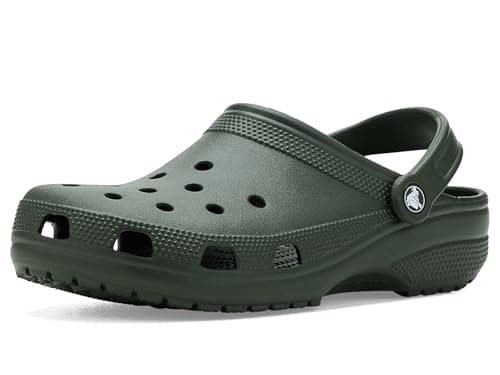
Crocs Classic Clog
11.2 oz per pair
molded Croslite foam
pivoting heel strap
rinses clean, floats, dries in minutes
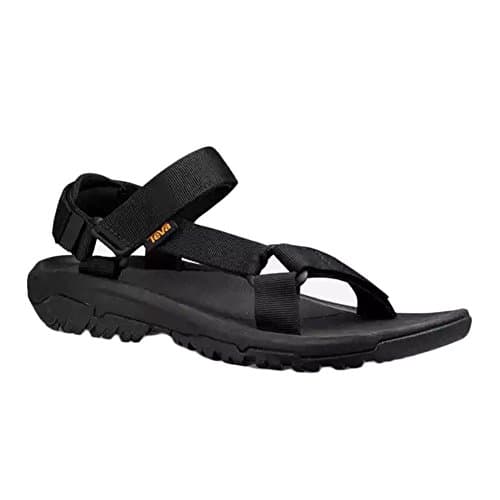
Teva Hurricane XLT2
15.5 oz per pair
EVA midsole, Durabrasion rubber outsole
3 hook-and-loop points
quick-drying recycled polyester webbing
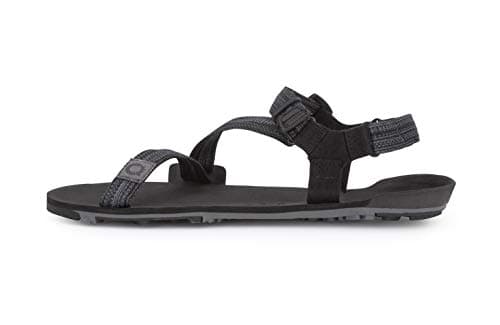
Xero Shoes Z-Trail EV
5.4 oz each, mens 9
11 mm FeelLite three-layer
adjustable straps
dries quickly, rolls up
Figures as published by each manufacturer.
Closed toe or open
This is the choice that matters most, and it comes down to where you camp.
Closed toe — the Crocs here. Better around a fire, better on ground with roots and rocks, better when it is cold enough to want socks on. Worse in water, because they hold it.
Open sandal — the Teva and the Xero. Better for stream crossings and beaches, better in genuine heat, and they dry properly. Worse near a fire, and worse on ground where you might stub a toe in the dark.
A campfire is the specific hazard worth naming: an ember on bare skin is a burn, and an ember on a foam clog melts a hole and then burns. The safety context is in campfire safety basics.
Socks with sandals, without apology
Wearing socks with camp sandals is not a fashion failure; it is the correct answer to two problems. It keeps your feet warm in the evening once you stop moving, and it puts a layer between your skin and webbing straps that are carrying grit from the day. A dedicated pair of dry camp socks that never get worn walking is one of the cheapest comfort upgrades available — the options are in best hiking socks.
The weight argument for backpackers
Camp shoes are the classic item cut from an ultralight list, and the arithmetic is worth doing honestly. The Xero Z-Trail EV is about 10.8 oz for the pair; the Crocs are 11.2 oz. That is roughly the weight of a large water bottle, and it is the single most reliable way to protect your feet across a multi-day trip.
Set against that, if your footwear is trail runners rather than boots, the case weakens: trail shoes dry faster, breathe better and are already comfortable to sit around in. The comparison is in hiking boots vs trail shoes.
A camp shoe is also a stream crossing shoe
Crossing water in your hiking boots means walking in wet boots for hours afterwards. Crossing barefoot on a rocky bed is how ankles get turned and feet get cut. A sandal with a proper heel strap solves both, which is why the Teva and the Xero earn their place on a backpacking list twice over.
The one thing that will not work is a slide or a flip-flop, because moving water takes them off your feet. If you are choosing between camp shoes and no camp shoes on a route with crossings, the crossings decide it.
Which to buy
Buy the Crocs Classic Clog for car camping, because nothing else is this easy to get on and this easy to clean. Buy the Teva Hurricane XLT2 if there is water on the route or heat at the campsite. Buy the Xero Z-Trail EV if you are carrying them a long way and would otherwise leave camp shoes at home.
11.2 oz per pair of molded Croslite foam with a roomy toe box, that rinses clean and dries in minutes.
Crocs publishes a weight of 11.2 oz per pair, molded Croslite construction — an EVA type foam that now includes 25 percent bio-circular material — a roomy fit with the widest toe box in the range, and a pivoting heel strap.
The reason these dominate campgrounds is that they solve every camp shoe requirement at once. They go on without hands or socks, they can be worn in a shower block, they float, they rinse clean under a tap, and swollen feet at the end of a day fit into them without argument.
The drawback
Bulky. They do not compress, they do not strap flat to a pack, and they are the least discreet thing on this page.
Published specs
Weight
11.2 oz per pair
Material
molded Croslite, an EVA-type foam
Bio content
Croslite now includes 25 percent bio-circular material
15.5 oz per pair with an EVA midsole, a Durabrasion rubber outsole and three hook-and-loop adjustment points.
Teva publishes a weight of 15.5 oz per pair in the womens version, an EVA foam midsole, a Durabrasion rubber outsole, a REPREVE recycled polyester webbing upper that dries quickly, three hook-and-loop adjustment points, and a cushioned neoprene heel pad.
The three adjustment points are what separates this from a slide. A sandal you can tighten across the instep and around the heel stays on your foot in moving water and on uneven ground, which is the difference between a camp sandal and a shower sandal.
The drawback
An open sandal at a campfire is a hazard, and the webbing straps hold grit that abrades your feet on a longer walk.
5.4 oz each in a mens 9, on an 11 mm three-layer sole with a 5,000 mile sole warranty.
Xero publishes weights of 5.4 oz each in a mens 9 and 4.3 oz each in a womens 7, an 11 mm FeelLite sole stack combining a FeelTrue rubber outsole, a TrailFoam midsole and a BareFoam footbed, a zero drop, a dual chevron lug pattern, and a 5,000 mile sole warranty.
Ten and a half ounces for the pair is roughly a third of what a pair of Crocs weighs, and they roll up. For a backpacker deciding whether camp shoes are worth carrying at all, this is the version where the answer becomes yes.
The drawback
An 11 mm zero-drop sole gives you almost no cushioning or protection, and going straight from cushioned boots to these can make your feet and calves ache.
For multi-day trips, yes. Taking boots off lets them dry from the inside overnight and lets swollen feet recover before the next day. Damp boots on day three are how blisters and macerated skin happen on a trip that was fine on day two.
QWhat is the lightest camp shoe?
Among these, the Xero Shoes Z-Trail EV at 5.4 oz each in a mens 9, so about 10.8 oz for the pair. Crocs Classic Clogs are 11.2 oz per pair. Both are roughly the weight of a large water bottle.
QAre sandals or closed-toe camp shoes better?
Closed toe is safer around a fire and on rooty ground, and better when it is cold. Open sandals dry properly, work for stream crossings and are better in heat. A campfire is the specific hazard: an ember melts through foam and then burns.
QCan I use camp sandals for stream crossings?
Yes, if they have a proper heel strap. Crossing in boots means hours in wet boots, and crossing barefoot risks cuts and turned ankles. Slides and flip-flops do not work, because moving water takes them off your feet.
How we picked
Everyone else in this category will tell you they tested twenty of these. We have not tested any of them, and we would rather say so than pretend. There is no gear closet here and no test lab.
What we did instead: pulled the published specifications from each manufacturer's own spec sheet or manual, named the standard behind every rating so you can check what it actually promises, did the arithmetic that turns a spec into a decision, and pulled today's real retail price rather than quoting one from memory. Every pick states a drawback, because a list where nothing is wrong with anything is an advert.
The limits of that method, stated plainly: published specs do not capture zipper quality, seam durability, or how a tent behaves at 2am in a storm. Where that matters, we say so on the pick. The full method is here.