Hiking Boots vs Trail Shoes, Settled on Weight and Ankle Support
A mid boot weighs about four ounces more per foot than a low shoe. Over a day that is real, and it is a smaller difference than the ankle-support argument implies.
Trail & Tarp earns a commission from qualifying purchases made through links on this page, at no extra cost to you. Full disclosure.
The two questions that decide it
The short answer
How heavy is your pack, and how rough is the ground? A heavy pack on uneven terrain argues for a mid-cut boot; a light load on maintained trails argues for a low shoe. Nothing else — season, brand, waterproofing, price — changes the answer as much as those two. For most campers walking from a campsite with a daypack, a trail shoe is the honest choice and a boot is the comfortable habit.
Mid-cut boot
Low-cut trail shoe
Example weight per shoe
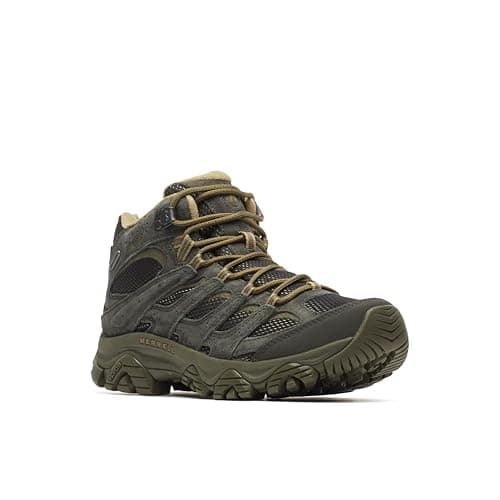
1 lb 1.45 oz, Merrell Moab 3 Mid WP
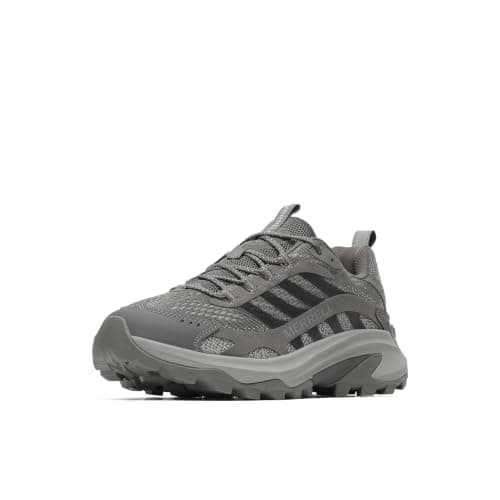
12.69 oz, Merrell Moab Speed 2
Ankle
Collar above the ankle
Below the ankle, free
Break-in
Days to weeks
Usually immediate
Debris
Keeps grit and scree out
Lets it in without gaiters
Drying
Slow, especially with a membrane
Fast
Best with
A loaded pack, rough ground, cold and wet
A daypack, maintained trails, warm weather
Published per-shoe weights for two shoes from the same maker and family, which is the cleanest comparison available.
The weight difference, honestly stated
Merrell publishes 1 lb 1.45 oz per shoe for the Moab 3 Mid Waterproof and 12.69 oz per shoe for the Moab Speed 2. That is about 4.8 oz per foot, or a little under 10 oz for the pair.
The old rule of thumb is that a pound on your feet costs about as much energy as five on your back. Treat that as a rough heuristic rather than a measured constant, but the direction is right: weight at the end of a swinging limb costs more than weight carried on your torso. Ten ounces across a pair is not nothing on a long day, and it is also not the difference between finishing and not.
The ankle support argument, examined
The claim that mid boots prevent ankle injuries is far less settled than the marketing suggests. A boot collar does limit range of motion at the extremes, and on scree, boulder fields and off-camber ground under a heavy pack that is genuinely useful. On a maintained trail with a daypack, the evidence that it prevents sprains is weak.
What is not disputed is what the collar does do reliably: it keeps grit, scree, snow and trail debris out of the shoe. Anyone who has stopped four times in an hour to empty a low shoe knows the value of that, and it is why gaiters exist for the trail-shoe crowd.
We are not going to publish injury guidance, because we are not qualified to. What we can say is that a boot that fits badly is worse for your feet than a shoe that fits well, and fit is free — the method is in how to break in hiking boots.
Drop and lug depth are the specs to compare
Merrell publishes an 11.5 mm drop and 5 mm lugs on a Vibram TC5+ outsole for the Moab 3 Mid WP, and a 10 mm drop with 4 mm lugs on a Vibram TC5+ outsole with a FloatPro foam midsole for the Moab Speed 2. Deeper lugs bite better in mud and soft ground and wear faster on rock and hardpack; drop changes how your stride loads the calf and Achilles, and changing it abruptly is a common cause of soreness. If you switch between boot and shoe, do it gradually.
Waterproof membranes, and when they hurt
A membrane keeps water out and also keeps it in. On a wet day in cold weather that trade is clearly worth it. In summer heat, or on a trail with repeated stream crossings, a membrane turns a shoe into a bucket: once water comes over the top it cannot drain, and a wet membrane boot takes a day or more to dry.
The non-waterproof version of the same shoe soaks instantly and dries in an hour of walking, which for many summer trips is the better arrangement. Merrell publishes both a waterproof Moab 3 Mid with an M Select DRY membrane and a non-waterproof Moab Speed 2, which is exactly the choice being described. The other end of the same argument — keeping the shell working — is in how to wash and reproof a rain jacket, and drying either at camp is in how to dry clothes and boots at camp.
What to buy first
For somebody outfitting for camping rather than for hiking specifically, a mid-cut three-season boot is the more useful single purchase. It covers campsite chores in wet grass, cold mornings, day walks and the occasional rough trail, and it keeps debris out. A Moab 3 Mid Waterproof or a Salomon X Ultra 5 Mid are both squarely in that category.
Add trail shoes second, once you know you walk enough to care about ten ounces. The reverse order works too if all your walking is summer day-hiking. What does not work is buying a stiff, heavy mountaineering boot for three-mile trails, which is the classic over-buy in this category — discussed in is expensive camping gear worth it.
Whichever you choose, the socks matter more
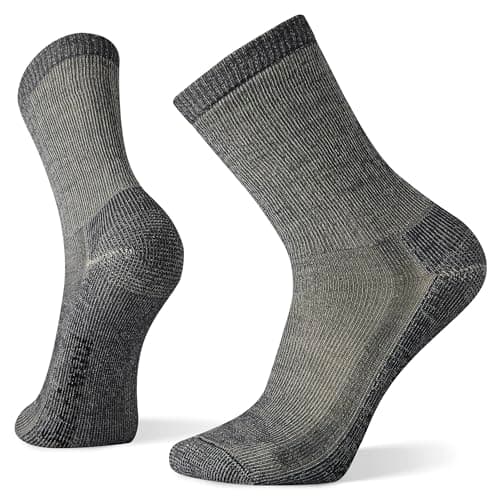
Sock fiber and height cause more foot misery than the boot-versus-shoe decision does. Cotton holds moisture against skin and blisters follow; wool or engineered synthetic keeps skin drier. And sock height must exceed the collar height, or the collar rubs bare skin all day.
QAre hiking boots or trail shoes better for camping?
For most campers, a mid-cut boot is the more useful single purchase: it covers wet grass, cold mornings, day walks and rough trails, and keeps grit out. Trail shoes win on weight and drying time for summer day walks with a light pack.
QHow much lighter are trail shoes than hiking boots?
Roughly 5 oz per foot in the same family. Merrell publishes 1 lb 1.45 oz per shoe for the Moab 3 Mid Waterproof and 12.69 oz per shoe for the Moab Speed 2 - a little under 10 oz across the pair.
QDo hiking boots actually prevent ankle injuries?
Less clearly than the marketing suggests. A collar limits range of motion at the extremes, which is useful on scree and off-camber ground under a heavy pack. What it does do reliably is keep grit, scree and snow out of the shoe.
QShould hiking boots be waterproof?
In cold, wet conditions, yes. In summer heat or on trails with repeated stream crossings, a membrane traps water that comes in over the top and takes a day to dry, while a non-waterproof shoe drains and dries within an hour of walking.
Sources
Every figure on this page comes from a published source. We have not tested this gear, so the numbers are the manufacturer's or the standard body's, not ours. How we research.