Easy Camping Meals for Beginners, Planned Around One Pan and a Cooler
The best camping meal is the one you already made at home. Everything on this page is designed so the hardest thing you do at the campsite is heat something up.
Trail & Tarp earns a commission from qualifying purchases made through links on this page, at no extra cost to you. Full disclosure.
The rule that makes camp cooking easy
The short answer
Do the chopping, mixing, marinating and portioning at home, in your own kitchen, with a sink and a bin. At the campsite, cook — do not prepare. Almost everything that makes cooking outdoors hard is preparation, not cooking: no counter, no running water, wind, insects, poor light, and nowhere to put anything down.
Applied properly, this turns a camping dinner into ten minutes of stirring. Chili goes in a zip bag already made. Chicken goes in a bag already marinated and cut. Onions and peppers are already sliced. Pancake mix is already measured, dry, in a bottle you add water to. Nothing needs a chopping board, and washing up is one pan and the plates.
A first weekend, meal by meal
Meal
What to bring
At camp
Friday dinner
Chili or curry, cooked at home and frozen flat in a bag
Reheat in one pot, 15 min. The frozen bag also chills the cooler
Saturday breakfast
Pancake mix pre-measured in a bottle; eggs in a rigid container; bacon
Bacon first, pancakes in the fat, 20 min
Saturday lunch
Bread, cheese, cured meat, tomatoes, fruit
Nothing. This is the point
Saturday dinner
Marinated chicken thighs and pre-cut vegetables in bags
One pan, high heat, 20 min. Rice or couscous alongside
Sunday breakfast
Whatever eggs are left, plus bread
Scramble. 10 min
Emergency meal
Pasta and a jar of sauce, in the dry box
Boil, stir. Exists so a bad day cannot ruin dinner
A two-night plan for a family, requiring one pan and one pot and no chopping at the site.
Freeze the first night's dinner
This is the highest-value trick in the whole plan and it does two jobs at once. A meal frozen flat in a zip bag is a block of ice for the first day, keeping everything else cold, and by the time you want it on Friday evening it has thawed to the point where it reheats in fifteen minutes.
It also means the hardest meal of the trip — the one you cook after driving, pitching a tent and losing a tent peg — requires no decisions. Freeze flat rather than in a block: it thaws evenly, stacks properly and chills a much larger area of the cooler. The full ice strategy is in how to keep food cold camping, and the retention figures behind it in how long does ice last in a cooler.
Cook on one burner, not two
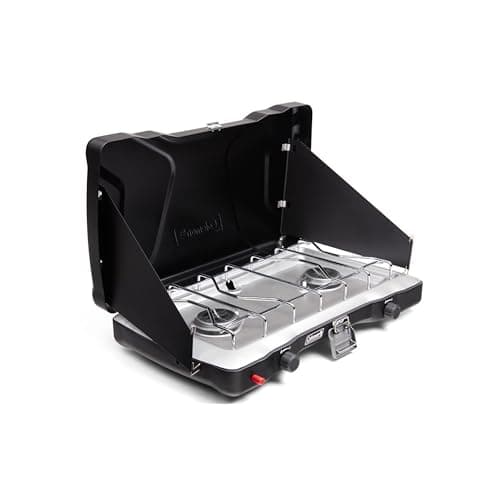
A Coleman Triton+ two-burner stove publishes 22,000 BTU total across two independently adjustable burners and fits a 12 in and a 10 in pan side by side. That is genuinely useful, and for a first trip you should still plan meals that need only one of them.
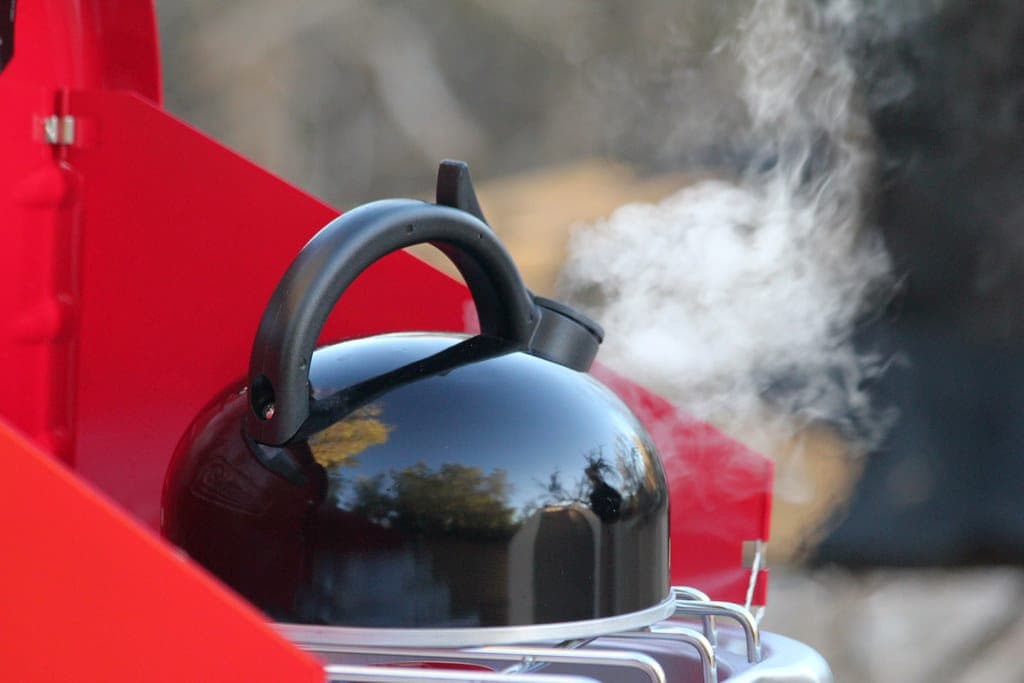
The reason is timing rather than capacity. Two burners means two things finishing at different moments, in the dark, with no counter space to rest a hot pan on. One-pan meals — a fry-up, a stir fry, a chili, pasta with a sauce stirred through — finish together and get served straight from the pan. Use the second burner for the kettle, which is what it is genuinely best at.
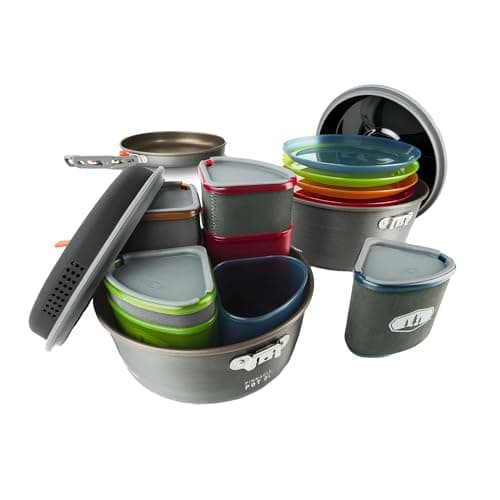
A four-person cookset like the GSI Pinnacle Ceramic Camper publishes 3 L and 2 L pots with strainer lids, a 9 in fry pan and tableware for four, at 3 lb 10.1 oz. The strainer lid is the detail worth having: draining pasta at a campsite without one is how people burn their hands.
What to leave at home
A chopping board and a big knife, unless you have a specific plan for them. A second frying pan. Anything that only does one job — the egg ring, the toast rack, the novelty pie iron. Camp kitchens fail by accumulation: every extra item is one more thing to wash, dry, pack and lose. The organizing system that keeps this under control is in the camp kitchen setup guide.
Packing food so the cooler works
A cooler is not a fridge and it does not care what you want. It performs according to how full it is, how cold the contents went in, and how often you open it. Three habits:
Chill everything before it goes in. Putting room-temperature food into a cooler spends ice melting it down, not keeping it cold.
Pack in reverse order of use, so Sunday breakfast is at the bottom and Friday dinner is on top. Every rummage costs you cold air.
Run a second, small cooler for drinks. Drinks get opened twenty times a day and food gets opened three times. Keeping them together ruins the food cooler.
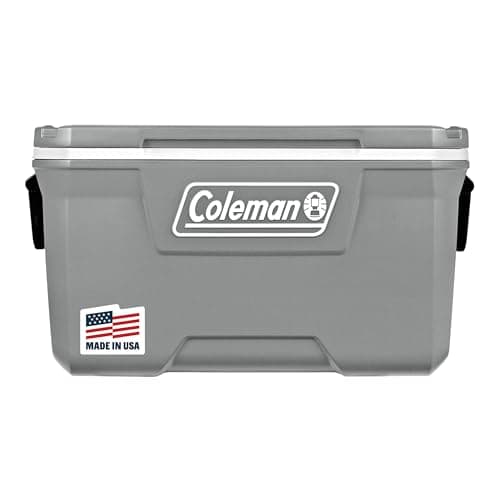
A Coleman Classic 70-Quart publishes a claim of up to 3 days at 90 F and a lid rated to sit on at 250 lb, which is the size that suits a family weekend. Nothing about that claim survives being opened every twenty minutes for a soda, which is exactly why the drinks live somewhere else.
Dry food and the box it lives in
Everything that does not need cooling — pasta, rice, oil, coffee, spices, bread, snacks — should live in one rigid, sealed box rather than loose bags. It keeps rodents out overnight, survives being stacked in a car, and means you can find the salt without emptying the boot.
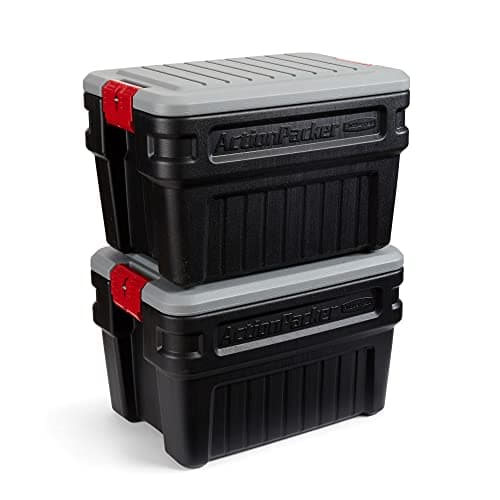
A Rubbermaid ActionPacker 24 Gal publishes 26 by 18.5 by 17 in outside, a 50 lb load limit and a lid that takes a padlock. Decant oil, salt and spices into small bottles rather than carrying full-size ones — a small set of camp spice bottles is the difference between food that tastes like food and food that tastes like the outdoors.
Cleaning up, which is the actual work
Wipe the pan out with paper before it goes near water. Wash with the minimum water you can, strain the food scraps out of the greywater, and dispose of both properly. Store all food and all cooking gear away from the tent overnight, in the vehicle or a locker, which matters everywhere and matters enormously in bear country.
22,000 BTU across two independently adjustable burners, and room for a 12 in and a 10 in pan. Plan one-pan meals and use the second burner for the kettle.
One you cooked at home. Freeze a chili or curry flat in a zip bag: it acts as ice in the cooler for the first day and reheats in one pot in about fifteen minutes on the evening you arrive, which is the hardest meal of the trip to cook from scratch.
QHow do I plan camping meals for a weekend?
Plan five meals plus one emergency meal, do all chopping and mixing at home, and design each dinner around a single pan. Pack the cooler in reverse order of use so the last meal is at the bottom, and keep drinks in a separate cooler.
QDo I need a two-burner stove for camping?
It helps, but plan meals that need only one burner. Two things finishing at different times in the dark with no counter space is harder than it sounds. Use the second burner for a kettle, which is what it is genuinely best at.
QWhat food should I not take camping?
Anything that needs preparation on site, anything in glass, and anything that only survives if the cooler performs perfectly. Leave the single-purpose gadgets at home too; every extra item is one more thing to wash, dry and pack.
Sources
Every figure on this page comes from a published source. We have not tested this gear, so the numbers are the manufacturer's or the standard body's, not ours. How we research.