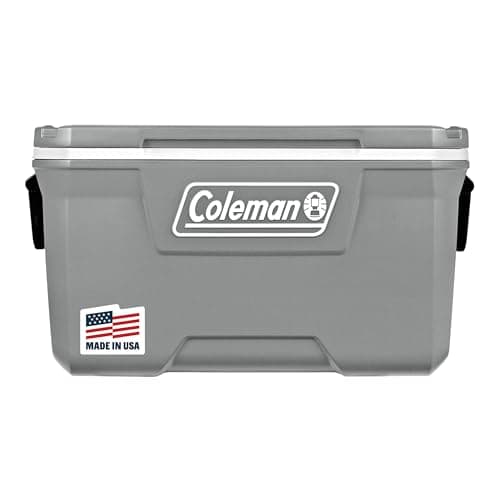
Coleman Classic 70-Quart Cooler
Coleman
Coleman publishes up to 3 days of ice retention at 90 F for this one, which is the claim this page is testing against.
$74.99 · Check price on Amazon
#ad how this is funded · price as of October 23, 2026
Every cooler is sold with a number of days attached. There is no standard test behind any of them, so here is what the makers claim, what the claims assume, and what actually decides it.
Trail & Tarp earns a commission from qualifying purchases made through links on this page, at no extra cost to you. Full disclosure.
The short answer
Manufacturers claim three to five days for insulated hard coolers and up to seven for thick-walled rotomolded ones, and every figure assumes ideal handling. Coleman publishes “up to 3 days at temperatures as high as 90 F” for the Classic 70-quart, Igloo publishes up to 5 days for the BMX 52, and RTIC publishes “up to 7 days” for its Ultra-Light while explicitly attaching its own cooling tips. YETI does not publish a day count for the Tundra 45 at all.
| Cooler | Published ice claim | What the claim assumes |
|---|---|---|
| Coleman Classic 70 qt | up to 3 days at up to 90 F | Full cooler, limited opening |
| Igloo BMX 52 | up to 5 days at 90 F | Full cooler, limited opening |
| RTIC 52 QT Ultra-Light | up to 7 days | Stated: following RTIC's cooling tips |
| YETI Tundra 45 | no day count published | Publishes a 2:1 ice-to-contents ratio instead |
| Soft cooler bag | typically under a day | Thin insulation, frequent opening |
No industry standard governs cooler ice retention the way ASTM F3340 governs sleeping pad R-value. Each brand designs its own test: how full the cooler is, what ratio of ice to contents, whether it was pre-chilled, ambient temperature, how often the lid opens, whether it is in shade. Change any of those and the answer changes by days.
This is why we do not publish our own ice-life table with confident numbers in it. We have not run a controlled test, and repeating a number we cannot source would be exactly the thing we tell you to be suspicious of elsewhere.
Do not drain the meltwater
Cold water is still cold, and it fills the air gaps that would otherwise be occupied by warm air. Leave it until you need the space or you are packing up. The only reason to drain early is if something in the cooler must stay dry, and the fix for that is a sealed container, not an empty cooler.
Two nights is easy for any hard cooler in any condition, so stop worrying about brands for weekend trips. Freeze two gallon jugs of water, add a bag of cubes to fill the gaps, put drinks in a separate small cooler, and keep both in the shade. On a hot Sunday you will still have ice.
For a week, the calculation changes: you are budgeting for a mid-trip ice run, or buying into thicker walls. That is where a rotomolded cooler earns its price, and where the difference between the coolers in best coolers for camping starts to be worth arguing about.
The food-safety half of this — what to freeze, what to keep out of the water and how to keep things cold without any electricity — is in how to keep food cold camping.
Coleman
Coleman publishes up to 3 days of ice retention at 90 F for this one, which is the claim this page is testing against.
#ad how this is funded · price as of October 23, 2026
YETI
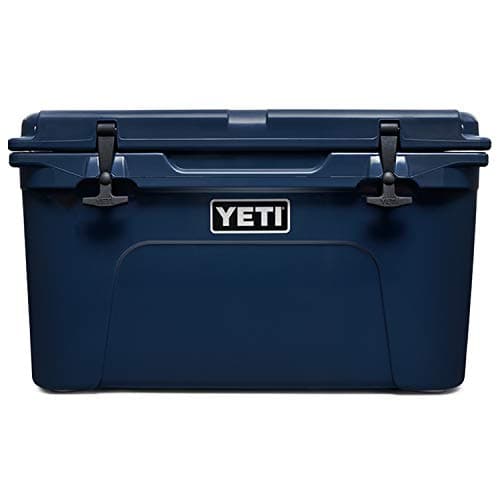
Rotomolded walls and thick insulation: the construction that actually buys long retention, rather than a marketing figure.
#ad how this is funded · price as of October 23, 2026
Igloo
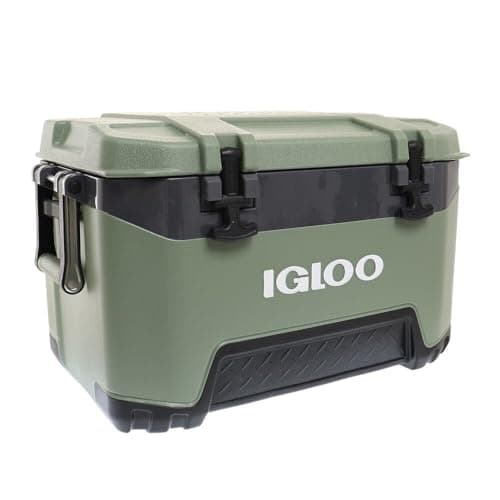
A mid-priced hard cooler with a published ice claim, for trips where a rotomolded box is more than you need.
#ad how this is funded · price as of October 23, 2026
Manufacturers claim three to five days for standard insulated hard coolers - Coleman publishes up to 3 days at 90 F for the Classic 70-quart and Igloo up to 5 days for the BMX 52 - and up to seven days for RTIC's Ultra-Light when following its cooling tips. Real results depend on pre-chilling, ice type, ratio and how often the lid opens.
Much less than the published claims. A car parked in the sun becomes far hotter than the ambient temperature and the cooler absorbs that heat continuously. Keep the cooler in the shade outside the vehicle, or in the footwell out of direct sun, rather than in a hot trunk.
Yes. A block has much less surface area relative to its mass, and melting happens at the surface. Cubes chill contents faster but disappear sooner, which is why the standard advice is block ice for duration plus some cubes to fill gaps.
Yes, until you need the space. The water is still close to freezing and it displaces warm air, which slows further melting. Draining it early leaves the cooler with more warm air inside and shortens the ice life.
Every figure on this page comes from a published source. We have not tested this gear, so the numbers are the manufacturer's or the standard body's, not ours. How we research.