YETI vs RTIC Coolers: Which One Should You Actually Buy?
Two coolers, two philosophies, and one of them publishes a day count while the other publishes an ice ratio. The difference in how they describe themselves is the most useful thing about the comparison.
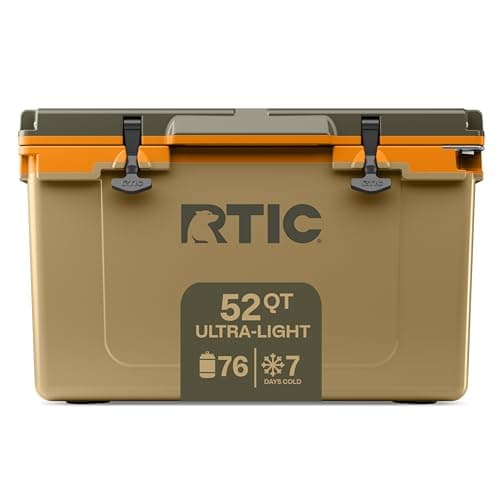
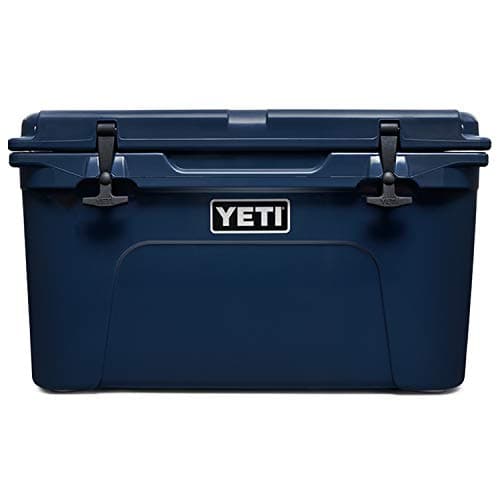
Buy the RTIC unless you need bear certification or the toughest possible build. The RTIC 52 QT Ultra-Light publishes 76 cans or 51 lb of ice at 21 lb empty; the YETI Tundra 45 publishes 54 cans or 37 lb of ice at 24.6 lb empty, and costs substantially more. What the YETI adds is rotomolded construction and IGBC bear certification, which matter in specific places and not at a state park campground.
The published numbers
YETI Tundra 45
RTIC 52 QT Ultra-Light
Can capacity
54 (no ice) / 28 at 2:1
76 (no ice)
Ice capacity
37 lb
51 lb
Empty weight
24.6 lb
21 lb
Outside
25.6 x 15.9 x 15.5 in
27.17 x 17.49 x 17.33 in
Inside
18.3 x 9.4 x 10.7 in
21.25 x 12 x 12 in
Insulation
rotomolded, urethane foam
up to 3 in foam, O-ring gasket
Ice claim
not published as days
up to 7 days following RTIC's tips
Bear certified
Yes, IGBC
Not published
All figures from the manufacturers' own product pages, read 2026-09-03.
What the two spec sheets tell you about the companies
YETI does not publish a day count at all. Instead it publishes a 2:1 ice ratio, which converts its headline 54-can figure into the 28 cans you can actually fit alongside enough ice to keep them cold. That is a company describing a packed cooler rather than an empty one.
RTIC publishes the seven-day figure with a condition attached: “following RTIC's cooling tips.” That is more honest than an unqualified number, and it is also an admission that the result depends on you. Both approaches are defensible; neither is directly comparable to the other, because there is no standard ice-retention test.
What we cannot tell you
We have not run either cooler through a controlled ice test, so we make no claim about which actually holds ice longer. What we can compare is what each company publishes, and on published capacity per pound and per dollar the RTIC is ahead. On certification and construction the YETI is ahead. Both are real advantages for different buyers.
The verdict
For most camping families, the RTIC. More ice capacity, more cans, less empty weight, and a substantially lower price. At a campground with a car nearby, none of the YETI's extra ruggedness gets used.
Buy the YETI if you camp in bear country where certified food storage is required or strongly advised, if the cooler will be thrown in and out of a truck bed for a decade, or if resale value matters to you — YETI holds it and RTIC does not.
And consider neither. If you camp a few weekends a year within reach of a store, a Coleman Classic 70-Quart or an Igloo BMX 52 with block ice and a pre-chill will get you through the trip for a fraction of either price. Both are in best coolers for camping, and the technique that matters more than the cooler is in how long does ice last in a cooler.
The picks in full
1. The YETI
YETI Tundra 45
YETI
54 cans or 37 lb of ice, IGBC bear certified, and honest enough to publish a 2:1 ice ratio.
YETI publishes 54 cans or 37 lb of ice, 28 cans at a 2:1 ice ratio, 25.6 by 15.9 by 15.5 in outside, 18.3 by 9.4 by 10.7 in inside, 24.6 lb empty, rotomolded construction and Interagency Grizzly Bear Committee certification.
The certification is not marketing. In some parks and forests, food must be stored in a certified container, and a cooler that qualifies saves you carrying a separate bear canister.
The drawback
24.6 lb empty and the highest price here, for less capacity than the RTIC. You are buying construction and certification.
76 cans or 51 lb of ice at 21 lb empty, with up to 3 in of foam and an O-ring gasket.
RTIC publishes 76 cans or 51 lb of ice, 27.17 by 17.49 by 17.33 in outside, 21.25 by 12 by 12 in inside, 21 lb empty, up to three inches of foam insulation, an O-ring gasket, and a claim of about 30% lighter than rotomolded coolers of similar capacity.
On the numbers it holds 41% more cans than the Tundra 45 while weighing 3.6 lb less empty. For a family that camps at organized campgrounds, that is the more useful cooler.
The drawback
Not bear certified, and its up-to-seven-days claim is quoted with RTIC's own cooling tips attached.
On published capacity it is ahead: 76 cans or 51 lb of ice at 21 lb empty against 54 cans or 37 lb of ice at 24.6 lb for the YETI Tundra 45. What YETI adds is rotomolded construction and IGBC bear certification, which the RTIC Ultra-Light does not publish.
QWhich cooler holds ice longer, YETI or RTIC?
There is no standard ice-retention test, so the published claims are not comparable. RTIC publishes up to seven days following its own cooling tips; YETI publishes no day count at all. We have not run a controlled test and will not rank them on retention.
QDo you need a bear-certified cooler for camping?
Only in areas where it is required or advised, which some national forests and parks specify. The YETI Tundra 45 is IGBC certified; the RTIC Ultra-Light does not publish certification. Check the rules for the specific place you are camping.
QAre rotomolded coolers worth the money for car camping?
For weekend camping near a store, usually not. Pre-chilling, using block ice and opening the lid less will do more for your ice than the construction upgrade. Rotomolded pays off on long trips, in sustained heat and under rough handling.
How we picked
Everyone else in this category will tell you they tested twenty of these. We have not tested any of them, and we would rather say so than pretend. There is no gear closet here and no test lab.
What we did instead: pulled the published specifications from each manufacturer's own spec sheet or manual, named the standard behind every rating so you can check what it actually promises, did the arithmetic that turns a spec into a decision, and pulled today's real retail price rather than quoting one from memory. Every pick states a drawback, because a list where nothing is wrong with anything is an advert.
The limits of that method, stated plainly: published specs do not capture zipper quality, seam durability, or how a tent behaves at 2am in a storm. Where that matters, we say so on the pick. The full method is here.