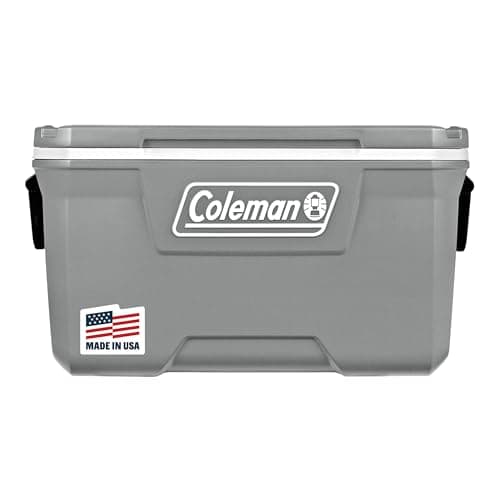
Coleman Classic 70-Quart Cooler
Coleman
70 qt holding 50 cans and 35 lb of ice, with a 3-day claim at 90 F. Coleman's volume-per-dollar argument.
$74.99 · Check price on Amazon
#ad how this is funded · price as of October 27, 2026
Both brands publish multi-day ice claims at 90 degrees on their mainstream boxes, and every one of them comes from the same kind of unopened-cooler test. The number is not what separates them.

Trail & Tarp earns a commission from qualifying purchases made through links on this page, at no extra cost to you. Full disclosure.
The short answer
At the mainstream price point these two brands are interchangeable on performance. Both publish multi-day ice claims at 90 F. Choose on size, on whether you want wheels, and on which specific model is in front of you — not on the badge. Where they genuinely differ is the range each pushes hardest: Coleman on large capacity and seat-rated lids, Igloo on wheeled all-terrain designs.
This is worth saying plainly because the brand comparison is one of the most searched questions in camping and the honest answer is unsatisfying. Neither company publishes wall thickness, R-value, or a standardized ice-retention test, so there is no specification to compare that would settle it.
| Cooler | Brand | Capacity | Ice claim | Empty weight | Outside |
|---|---|---|---|---|---|
| Classic 70-Quart | Coleman | 70 qt / 50 cans, 35 lb ice | up to 3 days at 90 F | 12 lb 6.4 oz | 31 x 15.75 x 17.5 in |
| Classic 100 Wheeled | Coleman | 100 qt / 80 cans, 50 lb ice | up to 5 days at 90 F | not published | not published |
| BMX 52 | Igloo | 52 qt / 83 cans | up to 5 days at 90 F | 16.4 lb | 26.2 x 16.42 x 16.06 in |
| Trailmate Journey 70 | Igloo | 70 qt / 112 cans | not published | not published | not published |
The gaps in that table are the most informative part of it. Neither brand publishes empty weights consistently, neither publishes insulation thickness, and Igloo does not publish an ice claim at all for its flagship wheeled cooler. You are buying on capacity and features because those are the only figures either company commits to.
If you need to move a loaded cooler across grass or sand, that is a real difference and it favors Igloo. If you need the most volume per dollar or a lid you can sit on, it favors Coleman. The wheeled options are compared in best coolers with wheels.
Identical ice claims are a sign the test is not standardized
There is no industry standard for cooler ice retention the way there is ISO 23537 for sleeping bags or ASTM F3340 for sleeping pads. Each maker runs its own test, under its own conditions, and publishes its own figure. When two competitors publish the same five-day number at the same price, it tells you they have converged on a similar marketing claim — not that their coolers perform identically, and not that either will manage its full claim in your hands. Treat the figures as within-brand rankings only.
Since the brands will not give you a number to compare, the levers that matter are the ones you control:
Do those and either brand will outperform a premium cooler used carelessly. The arithmetic is in how long does ice last in a cooler.
Neither Coleman nor Igloo competes with a rotomolded box on construction. YETI publishes IGBC bear certification on the Tundra 45; RTIC publishes up to 3 in of foam on the 52 QT Ultra-Light. Neither Coleman nor Igloo publishes anything comparable at the mainstream price.
That matters in bear country, where certified storage may be legally required, and on trips past about four days. It does not matter on a two-night weekend, which is the argument made in full in best budget coolers and YETI vs RTIC coolers.
Both brands fail in the same places and roughly the same order: the hinge first, then the latch, then the drain plug gasket. These are the moving parts, they are plastic at this price on both brands, and neither publishes a durability figure.
The practical consequence is to buy the simplest model that meets your needs. Every additional mechanism — a wheeled handle, a lid-mounted cup holder, a hinged split lid — is another thing that breaks, and on a cooler at this price none of them are repairable.
| What you need | Buy |
|---|---|
| Most volume per dollar | Coleman Classic 70-Quart |
| To haul it across grass or sand | Igloo Trailmate Journey 70 |
| Something one person can lift empty | Igloo BMX 52 at 16.4 lb |
| A lid that works as a seat | Coleman, rated to 250 lb |
| Ice for more than four days | neither; step up to a rotomolded box |
| Bear-country food storage | neither; you need IGBC certification |
Whichever you pick, spend a little of the difference on a basket or divider tray so dry food is not sitting in meltwater. It does more for your weekend than the brand on the lid.
Coleman
70 qt holding 50 cans and 35 lb of ice, with a 3-day claim at 90 F. Coleman's volume-per-dollar argument.
#ad how this is funded · price as of October 27, 2026
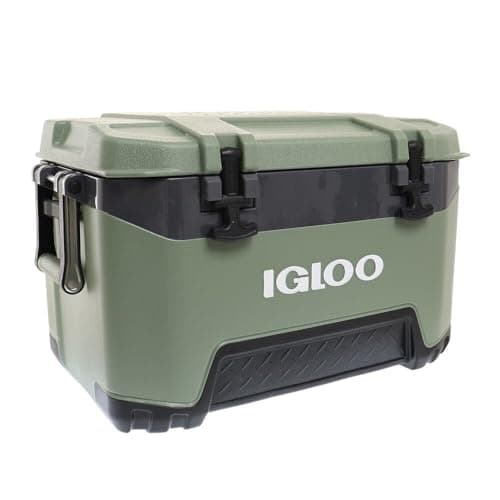
Igloo
52 qt at 16.4 lb empty, same published 5-day claim. The one a single person can position.
#ad how this is funded · price as of October 27, 2026
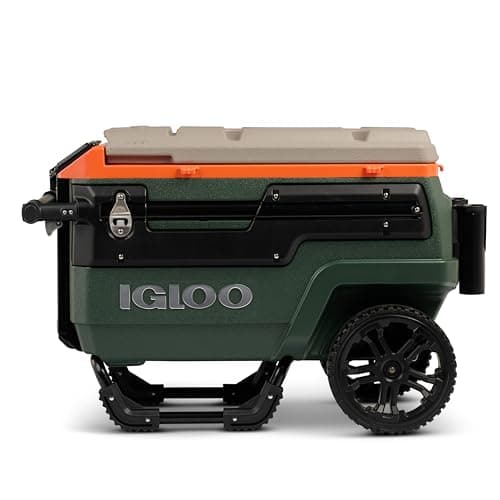
Igloo
70 qt on 10 in never-flat wheels rated for sand. Igloo's genuine advantage over Coleman.
#ad how this is funded · price as of October 27, 2026
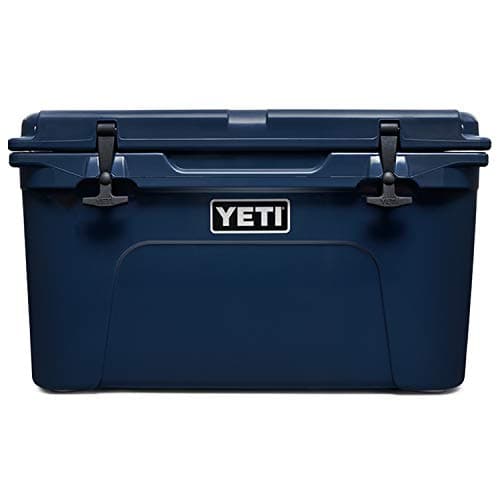
YETI
37 lb of ice and IGBC bear certification. What neither mainstream brand publishes at this price.
#ad how this is funded · price as of October 27, 2026
At the mainstream price they are close on performance: Coleman publishes up to 3 days at 90 F for the Classic 70-quart and up to 5 for the Classic 100 Wheeled, and Igloo up to 5 for the BMX 52. Coleman leans toward large capacity and seat-rated lids, Igloo toward wheeled all-terrain designs. Choose on size and features rather than brand.
Only within a brand. There is no industry standard for cooler ice retention the way ISO 23537 exists for sleeping bags, so each maker runs its own test and publishes its own figure. Two competitors publishing the same five-day number have converged on a marketing claim.
Not on construction. YETI publishes IGBC bear certification on the Tundra 45 and rotomolded build; neither mainstream brand publishes anything comparable. That matters in bear country and past about four days, and not at all on a two-night weekend.
The hinge, then the latch, then the drain plug gasket, on both brands. These are the plastic moving parts and neither maker publishes a durability figure. Buy the simplest model that meets your needs, because every extra mechanism is another unrepairable failure point.
Every figure on this page comes from a published source. We have not tested this gear, so the numbers are the manufacturer's or the standard body's, not ours. How we research.