Skip to content
Trail & Tarp

Tents

The Best Tents for Windy Conditions, and the Specs That Predict It

No manufacturer publishes a wind rating, because there is no standard test. Four things on the spec sheet predict it anyway, and they are not the ones on the front of the box.

By Sawyer V.Published September 27, 2026Last updated September 27, 2026How we research
OneTigris Stella 2-Person

Trail & Tarp earns a commission from qualifying purchases made through links on this page, at no extra cost to you. Full disclosure.

Quick picks

#ProductBest forPrice
1
OneTigris Stella 2-Person

Best budget option for an exposed site

OneTigris Stella 2-Person

7001 aluminum poles in a spider-plus-bracing-cross-pole layout over roughly 28 to 29 sq ft, at a listed 4.4 lb.

A cheap tent with the right geometry, on nights you could still bail from
$209.98 · Check price on Amazon

#ad how this is funded · price as of October 23, 2026

2
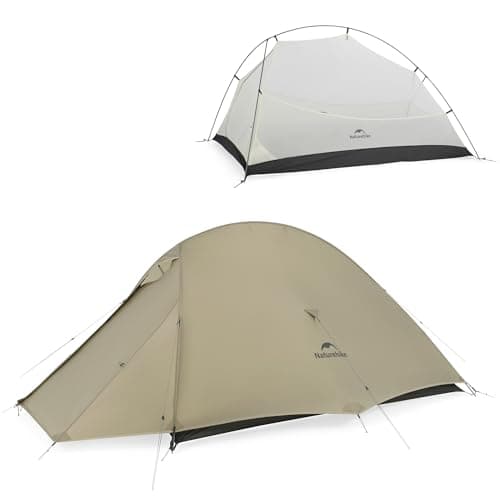
Naturehike Cloud Peak 2

Lightest wind-worthy option

Naturehike Cloud Peak 2

A three-pole 7001 aluminum cross structure at about 4.76 lb, with 20D silicone nylon rated to 4,000 mm.

Carrying a genuinely stable tent
$159.00 · Check price on Amazon

#ad how this is funded · price as of October 23, 2026

3
MSR Access 2

Best pole here, and the best-sourced numbers

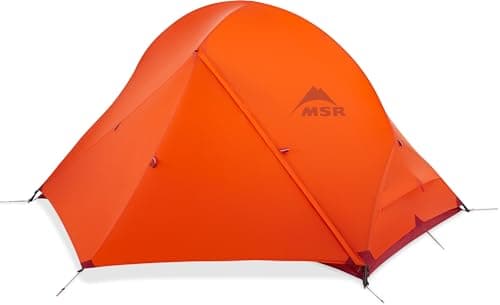
MSR Access 2

One 9.3 mm Easton Syclone composite pole over about 29 sq ft, at roughly 4 lb packed.

Exposed winter camps you carry to rather than drive to
$799.95 · Check price on Amazon

#ad how this is funded · price as of October 23, 2026

Nobody publishes a wind rating

The short answer

There is no standard wind test for tents, so any “rated to 40 mph” claim you see is marketing rather than measurement. Four published specifications predict wind performance instead: pole material, pole count and geometry, fabric denier, and how many guyout points the fly has.

Read those four and you can rank tents for wind without anyone publishing a number. Read the front of the box and you cannot.

What to look for

SpecificationWhat to wantWhy
Pole materialaluminum, 7000-series or DACaluminum bends and can be splinted; fiberglass splinters and cannot
Pole count and layoutthree or more, crossinga cross pole resists the side load that wind applies
Fabric denierhigher on fly and floorthin fabric flogs, fatigues and tears at stress points
Guyout pointsseveral, on the fly body not just cornersguylines are what actually hold a tent down
Profilelow and roundedheight is leverage; a tall cabin catches wind like a sail
The published figures that predict wind performance, in the absence of any standard rating.

Profile is the one people ignore. A tall cabin tent with vertical walls is the worst possible shape in wind regardless of its poles, which is the trade explained in dome vs cabin tents.

Compared on published numbers

TentPolesWeightFloorFabric
OneTigris Stella 27001 aluminum, spider plus a bracing cross pole4.4 lb listedabout 28-29 sq ft3,000 mm fly
Naturehike Cloud Peak 27001 aluminum, three-pole crossabout 4.76 lb274 x 210 cm pitched20D silicone nylon, 4,000 mm
MSR Access 2one Easton Syclone composite poleabout 4 lb 1 oz packedabout 29 sq ft20D fly at 1,200 mm, 30D floor
Figures as published by each manufacturer.

Pitching beats buying

A well-pitched budget tent survives wind that destroys a badly pitched expensive one. Point the smallest end into the wind, use every guyout point rather than just the corners, stake at roughly 45 degrees, and use the site: pitch behind a bank, a vehicle or scrub rather than in the open. The technique in full is in how to pitch a tent in wind, and it matters more than anything on this page.

The stakes that come in the box will fail first

Every tent here ships with thin pressed-aluminum pegs that bend on the first root and pull straight out of sand or loose soil. In wind, stakes are the failure point far more often than poles.

A set of proper Y-beam or steel stakes is the cheapest meaningful upgrade in camping, and 50 ft of spare guyline is the second. The components are explained in tent poles and stakes explained.

Which to buy

Buy the MSR Access 2 if you carry your tent into exposed ground and want the pole least likely to take a permanent bend. Buy the Naturehike Cloud Peak 2 if you want a three-pole cross geometry at under 5 lb. Buy the OneTigris Stella 2 only if budget is the binding constraint: the geometry is right, but a 20D fly and listing-only specifications are a lot to trust in a gale. And note what this page no longer contains: an expedition tent. All three are shelters you carry, not ones to leave pitched through a multi-day storm.

If your camping is summer weekends at wooded campgrounds, none of these is necessary — start at best car camping tents and spend the difference on better stakes. The four-season case is argued in best 4-season tents.

The picks in full

1. Best budget option for an exposed site

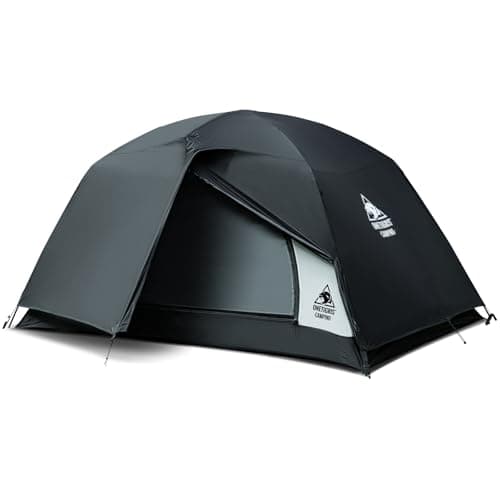
OneTigris Stella 2-Person

OneTigris

7001 aluminum poles in a spider-plus-bracing-cross-pole layout over roughly 28 to 29 sq ft, at a listed 4.4 lb.

The published figures are roughly 28 to 29 sq ft of inner floor, inner dimensions of 82.7 by 51.2 in, a 45.3 in peak, a listed 4.4 lb weight, a 20D silicone-coated nylon fly rated 3,000 mm, a 40D bathtub floor, and 7001 aluminum poles in one spider pole plus a short bracing cross pole.

That bracing pole is the wind-relevant part and the reason this still belongs on the page. A two-pole dome deforms under a side load; a pole running across the structure resists exactly that, which is what wind does to a tent. Geometry beats fabric weight for stability, up to a point.

The point where it stops being enough is sourcing. Every figure above is from the listing or a reviewer, including the pole alloy, and a 20D canopy is a thin thing to have between you and a gale. If the forecast is genuinely bad rather than merely breezy, the honest answer on this page is the MSR Access 2 — and if it is worse than bad, none of these.

The drawback

It has the right geometry and the weakest sourcing here. OneTigris publishes no spec sheet, so the pole material comes from an independent review rather than the maker, and weight is listed at 4.4 lb against a measured 4.8 lb. A 20D fly is thin for sustained wind-driven rain, which is why this is no longer the page's top wind pick - see the MSR Access 2 below.
OneTigris Stella 2-Person

Published specs

Capacity
2
Floor area
about 28 to 29 sq ft; sources differ
Inner dimensions
82.7 x 51.2 in
Peak height
45.3 in
Total weight
4.4 lb per the listing; one independent review measured 4.8 lb
Packed size
19.7 x 5.9 in
Fly
20D silicone-coated nylon, 3,000 mm
Floor
40D silicone-coated nylon, bathtub cut
Poles
7001 aluminum, one spider pole plus a short bracing cross pole
Note
OneTigris publishes no reachable first-party spec sheet for this tent, so every figure here comes from the Amazon listing or independent reviews, and reviewers dispute the listing's 4-season claim

Specs: OneTigris Stella 2-Person published listing specifications

$209.98 · Check price on Amazon

#ad how this is funded · price as of October 23, 2026

2. Lightest wind-worthy option

Naturehike Cloud Peak 2

Naturehike

A three-pole 7001 aluminum cross structure at about 4.76 lb, with 20D silicone nylon rated to 4,000 mm.

Naturehike publishes about 2.16 kg / 4.76 lb, a pitched size of 274 by 210 by 105 cm, 20D silicone-coated nylon on fly and floor, a 4,000 mm hydrostatic head, 7001 aluminum poles in a three-pole cross structure and double-wall construction.

Three poles in a cross geometry at under 5 lb is the reason this is here. You are getting the pole count that matters in wind without the weight that usually comes with it, and paying for it in fabric thickness.

The drawback

20D fabric is thin for a tent sold as four-season. A high hydrostatic head number does not stop thin nylon abrading or tearing on rough ground.

Naturehike Cloud Peak 2

Published specs

Weight
about 2.16 kg / 4.76 lb
Pitched size
274 x 210 x 105 cm
Fly and floor
20D silicone-coated nylon
Hydrostatic head
4,000 mm
Poles
7001 aluminum alloy, three-pole cross structure
Layers
double wall
Season rating
4-season

Specs: Naturehike Cloud Peak 2-Person 4-Season Backpacking Tent product page

$159.00 · Check price on Amazon

#ad how this is funded · price as of October 23, 2026

3. Best pole here, and the best-sourced numbers

MSR Access 2

MSR

One 9.3 mm Easton Syclone composite pole over about 29 sq ft, at roughly 4 lb packed.

MSR publishes about 29 sq ft of floor plus a 17.5 sq ft vestibule, an 84 by 50 in floor, a 42 in peak, a packed weight of about 4 lb 1 oz, one 9.3 mm Easton Syclone composite pole, a 20D ripstop fly with a 1,200 mm XtremeShield coating and a 30D ripstop floor rated 3,000 mm.

The pole is the wind story, and it is a different argument from fabric weight. Easton Syclone is composite rather than aluminum, and the point of it is that a gust which would put a permanent bend in an alloy pole gets flexed and returned instead. On a tent this light that matters more than denier does.

What it does not give you is the brute fabric strength of a true expedition shelter. A 20D fly at 1,200 mm is thin by winter-basecamp standards, so this is the tent to carry into exposed ground, not the one to leave pitched through a multi-day storm.

The drawback

A class change worth stating plainly: this replaced an expedition tent and is not one. One pole rather than a four-pole frame, a 20D fly at 1,200 mm rather than 70D at 2,000, and MSR markets it for winter touring. It is also the most expensive tent here. For weather that could genuinely flatten a shelter, nothing on this page is the right answer now.

MSR Access 2

Published specs

Capacity
2
Floor area
about 29 sq ft, plus a 17.5 sq ft vestibule
Floor dimensions
84 x 50 in
Peak height
42 in
Minimum weight
about 3 lb 10 oz / 1.64 kg
Packed weight
about 4 lb 1 oz / 1.86 kg
Packed size
about 18 x 6 in
Poles
one 9.3 mm Easton Syclone composite pole
Fly
20D ripstop nylon, 1,200 mm XtremeShield
Floor
30D ripstop nylon, 3,000 mm
Season rating
3 to 4 season, marketed for winter touring rather than expedition use
Note
retailer figures vary slightly on packed weight (3.63 to 4.06 lb) and one lists the floor as 20D rather than 30D, so those two are approximate

Specs: MSR Access 2 published specifications, Ascent Outdoors

$799.95 · Check price on Amazon

#ad how this is funded · price as of October 23, 2026

Questions people actually ask

QWhat makes a tent good in wind?

Aluminum poles rather than fiberglass, three or more poles in a crossing geometry, higher fabric denier, plenty of guyout points on the fly body, and a low rounded profile. No maker publishes a wind rating because there is no standard test, so those published specs are what you judge on.

QAre tent wind ratings real?

No. There is no standardized wind test for tents, so any specific mph figure is a marketing claim rather than a measurement. Judge on pole material, pole count and geometry, fabric denier and guyout points instead.

QIs a cabin tent bad in wind?

Yes, worse than a dome. Tall vertical walls catch wind like a sail and load pole junctions designed for headroom rather than force. If wind is a real possibility, a low dome geometry is the safer shape whatever else the tent offers.

QWhat fails first on a tent in high wind?

The stakes, usually, not the poles. Every tent in this class ships with thin pressed-aluminum pegs that bend or pull out of loose ground. Heavier Y-beam or steel stakes plus spare guyline is the cheapest upgrade you can make for wind.

How we picked

Everyone else in this category will tell you they tested twenty of these. We have not tested any of them, and we would rather say so than pretend. There is no gear closet here and no test lab.

What we did instead: pulled the published specifications from each manufacturer's own spec sheet or manual, named the standard behind every rating so you can check what it actually promises, did the arithmetic that turns a spec into a decision, and pulled today's real retail price rather than quoting one from memory. Every pick states a drawback, because a list where nothing is wrong with anything is an advert.

The limits of that method, stated plainly: published specs do not capture zipper quality, seam durability, or how a tent behaves at 2am in a storm. Where that matters, we say so on the pick. The full method is here.

Sources for this page