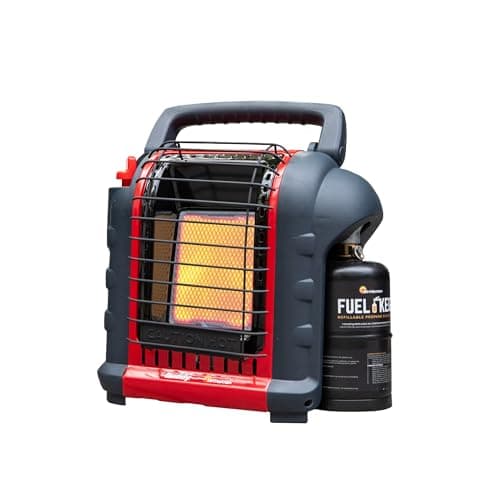
The Best Tent Heaters for Camping, and the Rules That Come With Them
A tent heater is the only piece of camping gear that can kill you while you sleep. That is not a reason to avoid one; it is a reason to buy the certified kind and run it properly.
Any fuel-burning heater produces carbon monoxide. It is colorless, odorless, and it kills people in tents and vans every winter. Run a heater only while you are awake, keep two vents open on opposite sides of the tent, never sleep with it running, and put a battery carbon monoxide alarm at head height in the tent. Every product below is chosen partly on whether it has an oxygen depletion sensor.
We are not going to soften that. The failure mode here is not discomfort, it is asphyxiation, and it happens because the heater is working normally in a space that has stopped supplying enough oxygen. An propane heater burning cleanly still consumes the oxygen in a small sealed tent, and when combustion goes incomplete it starts producing carbon monoxide instead of carbon dioxide.
Figures as published by Mr. Heater. Coverage figures assume an enclosed space, not a tent.
Two products, one brand, and that is deliberate. The oxygen depletion sensor is the line we draw, and the unbranded propane heaters that fill this category on marketplaces do not publish one. Recommending one of those to save money would be recommending the removal of the only automatic safeguard in the product.
The coverage figures are not tent figures
Both coverage numbers — 225 and 450 sq ft — describe heating an enclosed structure like a garage or a cabin. A tent is neither enclosed nor insulated: it is a single layer of 68D polyester with mesh panels, deliberately designed to exchange air.
So the heater is not warming the tent, it is warming you, radiantly, while you sit in front of it. Turn it off and a tent loses that heat within minutes. This is why the honest use case is a cold morning and a cold evening, not a warm night.
The cold you are trying to fix is probably coming from below
People buy a tent heater because they were cold all night, and the heater does not fix it, because the heat was leaving through the ground. Body weight crushes the insulation under you flat, and the earth conducts heat away for eight hours regardless of the air temperature. A pad with a higher R-value solves that permanently, for less money, with no fuel and no risk — see why you get cold in a sleeping bag. Buy the pad first. Buy the heater only if you still want warm air at breakfast.
Fuel: 1 lb cylinders versus a 20 lb tank
Both heaters thread directly onto a 1 lb disposable cylinder, and both accept a hose to a 20 lb tank. The disposable cylinders are convenient, expensive per hour, and produce a steel can of waste every few hours of running.
Setup
What it suits
Trade
1 lb cylinder direct
one cold morning, occasional use
5.4 h on low at best, then a new cylinder
20 lb tank plus hose and filter
a week-long or repeat-trip setup
the tank is heavy and needs somewhere outside the tent to stand
Two 1 lb cylinders (Big Buddy)
an evening in an awning
up to 11 h, at two cylinders' cost
Based on the run times published by Mr. Heater for each configuration.
If you go the hose route, buy the filter with it. Mr. Heater specifies one because the oils in bulk-tank propane can foul the regulator on these heaters, and that is the most common cause of a Buddy heater that suddenly will not stay lit. The same fuel arithmetic for cooking is in propane vs butane camp stoves.
The rules, written out
Never sleep with it running. This is the one that gets broken and the one that kills. Warm the tent, turn it off, get in the bag.
Two vents, opposite sides. Cross-ventilation, not one cracked door. Air has to move through, not sit.
An alarm at head height. Carbon monoxide mixes rather than sinking, and you want it detected where you breathe. A battery CO alarm is a few dollars and the only thing in the tent that will wake you.
Clear space around it. Sleeping bags, jackets and tent walls are all flammable. These are radiant heaters with a hot ceramic face.
Level ground. The tip-over switch works, but a heater that has fallen over has already been against the fabric.
Check the altitude limit. Oxygen depletion sensors are calibrated for lower elevations and will shut the heater down repeatedly high up, which is the sensor doing its job.
What the specifications do not tell you
No manufacturer publishes a tent-specific coverage figure, because no manufacturer wants to certify a heater for use in a tent. The listings say “indoor safe” about cabins, garages and workshops, and that phrase does not transfer to a nylon dome. Treat every coverage number as a ceiling rather than a recommendation.
Mr. Heater does not publish a weight for the Portable Buddy on the listing we read, so we have left that cell blank rather than estimate it.
Which to buy, and whether to buy one at all
Buy the Portable Buddy if you want to take the edge off a cold morning in a normal family tent. Buy the Big Buddy if you need hours of running in a large tent, an awning or a canvas shelter and you will connect a 20 lb tank.
4,000 or 9,000 BTU across up to 225 sq ft, with an oxygen depletion sensor, a tip-over switch and a thermal cutoff.
Mr. Heater publishes 4,000 or 9,000 BTU/hr on two settings, coverage up to 225 sq ft, run times of 5.4 hours on low and 2.4 hours on high from a 1 lb cylinder, piezo ignition, and three independent safety systems: an oxygen depletion sensor, an accidental tip-over switch and a thermal shutdown. It also runs off a 20 lb tank with an optional hose and filter.
The oxygen depletion sensor is the specification that matters and the reason to buy this rather than a generic propane heater. It shuts the burner off when the oxygen concentration in the space falls, which is the condition that precedes carbon monoxide buildup. It is a backstop, not a license — but a heater without one has no backstop at all.
The 225 sq ft coverage figure is far larger than any tent. Read it as headroom: in a four- or six-person tent this heater on low is usually enough, and on high it is often too much.
The drawback
5.4 hours on low from a 1 lb cylinder means it does not run all night, and 1 lb cylinders are expensive and wasteful compared with a 20 lb tank plus a hose.
Three settings to 18,000 BTU across up to 450 sq ft, with up to 11 hours from two 1 lb cylinders.
Mr. Heater publishes 4,000, 9,000 and 18,000 BTU/hr settings, coverage up to 450 sq ft, up to 11 hours of run time on two 1 lb cylinders, an 18 lb weight, and the same tip-over and oxygen depletion protection as the smaller unit. It accepts a 20 lb tank with a hose.
The reason to choose this one is run time rather than heat. Two cylinders, or a 20 lb tank, is the difference between a heater you run for an hour at each end of the night and one you can leave going through an evening in an awning or a large canvas tent.
In a nylon backpacking tent it is absurd, and in a six-person family tent it will spend its life on the lowest setting. Buy it for the fuel capacity, not the top number.
The drawback
18 lb and 18,000 BTU is far more heater than a tent needs, and the extra output buys nothing if your problem is a cold sleeping pad rather than cold air.
Only with ventilation, a carbon monoxide alarm, and never while asleep. Any fuel-burning heater consumes oxygen and can produce carbon monoxide, which is colorless and odorless. Choose a model with an oxygen depletion sensor and tip-over shutoff, keep two vents open on opposite sides, and turn it off before you go to sleep.
QCan you run a Buddy heater all night in a tent?
No. Do not sleep with any fuel-burning heater running. Beyond the safety rule, the Portable Buddy publishes 5.4 hours on low from a 1 lb cylinder, so it would not last the night anyway. Warm the tent before bed, shut it off, and rely on your sleeping bag and pad.
QWhat size tent heater do I need?
Less than the coverage numbers suggest. The Portable Buddy publishes up to 225 sq ft and the Big Buddy up to 450 sq ft, but those describe enclosed structures like garages. A tent is uninsulated and vents constantly, so in practice the smaller heater on its low setting is enough for most family tents.
QWhy am I still cold with a tent heater?
Because the heat is leaving through the ground, not the air. Your body weight crushes the insulation beneath you flat, and the earth draws heat away all night. A sleeping pad with a higher R-value fixes that permanently and works while you sleep, which is exactly when the heater has to be off.
How we picked
Everyone else in this category will tell you they tested twenty of these. We have not tested any of them, and we would rather say so than pretend. There is no gear closet here and no test lab.
What we did instead: pulled the published specifications from each manufacturer's own spec sheet or manual, named the standard behind every rating so you can check what it actually promises, did the arithmetic that turns a spec into a decision, and pulled today's real retail price rather than quoting one from memory. Every pick states a drawback, because a list where nothing is wrong with anything is an advert.
The limits of that method, stated plainly: published specs do not capture zipper quality, seam durability, or how a tent behaves at 2am in a storm. Where that matters, we say so on the pick. The full method is here.