Insulation works by thickness, and thickness is exactly what stops you operating a zip, a stove valve, a lighter or a phone. No single glove resolves this. A thin liner you can work in, plus a removable shell or mitt for standing around, covers both without ever exposing bare skin to cold metal.
This matters more at a campsite than on a hike, because camp tasks are precisely the fiddly ones: pitching a tent in wind, threading guy lines, lighting a stove, working zips and buckles. Those are the moments people pull gloves off entirely, and cold hands are hard to get warm again once you lose them.
The related trap is wet. Once a fleece glove is soaked it is worse than nothing, because evaporation actively pulls heat out of your hands. Carrying a second dry pair is a more reliable fix than buying one warmer pair.
A liner. Thin fleece or merino, touchscreen capable. Worn constantly from dawn until the sun is properly up. This is the layer you do everything in.
An insulated shell or mitt. Goes over the liner for sitting still, for wind, and for the walk to the toilet block at 6am. Mitts are warmer than gloves because fingers share heat.
A spare liner. The cheapest insurance in the system. A dry pair at 4pm after a wet afternoon is worth more than any upgrade.
Work gloves, for camp chores. Handling firewood, a hot pot handle or a saw destroys technical gloves. A cheap leather or synthetic work pair saves them.
Mitts are warmer than gloves, for a reason worth knowing
Fingers in a mitt share a single air space and warm each other; fingers in separate glove compartments each have to heat their own volume and each present more surface area to the cold. At the same insulation weight a mitt is consistently warmer. The cost is dexterity, which is exactly why the liner-plus-mitt system works so well: you get mitt-level warmth for standing around and glove-level dexterity the moment you pull the outer layer off.
Materials, briefly
Fleece is warm for its weight, dries quickly and is not windproof at all, which is why a fleece glove on its own feels cold in any breeze. Merino is warmer when damp and less durable. Leather palms resist abrasion and stiffen when wet and dried hard.
Waterproof membranes in gloves are a genuine compromise: they stop rain getting in and they also trap sweat, and a glove full of your own moisture is cold. For camping rather than ski touring, a water-resistant windproof shell over a liner you can swap is usually the better system, which is what Outdoor Research is doing with the Versaliner.
Camp tasks that eat gloves
Firewood, guy lines and cooking are the three. Handling split wood shreds fleece, tensioning a guy line with a cold hand is how people cut themselves, and grabbing a pot handle with a synthetic glove melts it — which is one reason cast iron and a proper pot gripper exist.
A cheap pair of leather work gloves in the gear bin handles all three and protects the gloves you paid for. The saw and axe pages make the same point from the other direction — see best camping saws.
Sizing, and the one mistake
Gloves that are too tight are colder than gloves that are slightly loose, because compressed insulation does not loft and restricted circulation means less warm blood reaching your fingers. If you are wearing a liner underneath, size the shell to fit over it rather than buying both to your own hand size.
The same principle runs through the whole clothing system, and the order the layers go in is in how to layer for camping.
Which to buy
Buy the Outdoor Research Versaliner Sensor if you want one purchase that covers both jobs, and accept it as a wind rather than a wet-weather system. Buy the Black Diamond MidWeight ScreenTap liners if you already own a warm outer glove, or if your camping is autumn mornings rather than winter, and note the published 32 to 40 F range is the honest limit.
Either way, buy a second cheap liner pair. A dry glove is the upgrade nobody plans for and everybody needs.
The picks in full
1. Best overall
Outdoor Research Versaliner Sensor Gloves
Outdoor Research
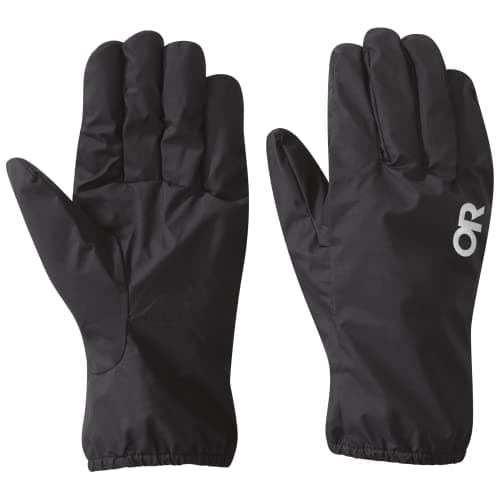
A touchscreen fleece liner plus a removable Pertex Shield wind shell, with a pocket in the liner for a chemical hand warmer.
Outdoor Research publishes a two-part system of a fleece liner glove and a removable wind shell mitt, a liner in 93 percent polyester and 7 percent spandex ActiveTemp fleece, a shell in Pertex Shield 2.5L 40D nylon ripstop, a total weight of 19.36 oz / 549 g, touchscreen compatibility on the liner, a liner pocket for a chemical hand warmer, and a note that the shells are water resistant rather than seam sealed.
The system is the point. Shells on, your hands are warm and useless; shells off, the liner still covers your fingers and works a phone or a stove valve. Being able to switch in three seconds without exposing bare skin is what a single glove cannot do.
The drawback
Outdoor Research states the shells are water resistant rather than seam sealed, so this is a wind and light-precipitation system rather than a wet-weather one.
Published specs
System
fleece liner glove plus a removable wind shell mitt
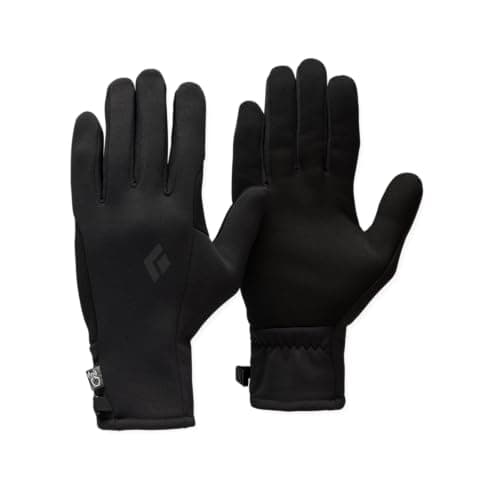
41.4 g per pair of stretch fleece with conductive palm and fingers and a goat leather palm patch, rated 32 to 40 F.
Black Diamond publishes a weight of 41.4 g per pair, 222 g stretch fleece on the back of the hand with a nylon face, 222 g U|R Powered conductive fleece on the palm and fingers for gloves-on touchscreen use, a suede goat leather palm patch, and a temperature range of 32 to 40 F / 0 to 4 C.
The leather palm patch is the detail that makes these last. A pure fleece glove is destroyed by trekking pole grips, tent guy lines and pot handles within a season; a reinforced palm turns them into something you use for years.
The drawback
Black Diamond publishes a 32 to 40 F range, and that is honest. These are liners: below freezing with any wind they are not enough on their own.
Two layers rather than one pair. A thin touchscreen liner you can work in, plus a removable insulated or windproof shell for standing still. Insulation works by thickness, and thickness is exactly what stops you operating a zip or a stove valve.
QAre mitts warmer than gloves?
Yes, at the same insulation weight. Fingers in a mitt share one air space and warm each other, while fingers in separate compartments each heat their own volume and expose more surface area. The cost is dexterity, which a liner underneath solves.
QShould camping gloves be waterproof?
Not necessarily. A waterproof membrane stops rain getting in and traps sweat, and a glove full of your own moisture is cold. For camping, a water-resistant windproof shell over a liner you can swap out when damp is usually the better system.
QWhy are my gloves cold even though they are thick?
Often because they are too tight. Compressed insulation cannot loft and restricted circulation means less warm blood reaching your fingers. Size a shell to fit over your liner rather than buying both to your bare hand size.
How we picked
Everyone else in this category will tell you they tested twenty of these. We have not tested any of them, and we would rather say so than pretend. There is no gear closet here and no test lab.
What we did instead: pulled the published specifications from each manufacturer's own spec sheet or manual, named the standard behind every rating so you can check what it actually promises, did the arithmetic that turns a spec into a decision, and pulled today's real retail price rather than quoting one from memory. Every pick states a drawback, because a list where nothing is wrong with anything is an advert.
The limits of that method, stated plainly: published specs do not capture zipper quality, seam durability, or how a tent behaves at 2am in a storm. Where that matters, we say so on the pick. The full method is here.