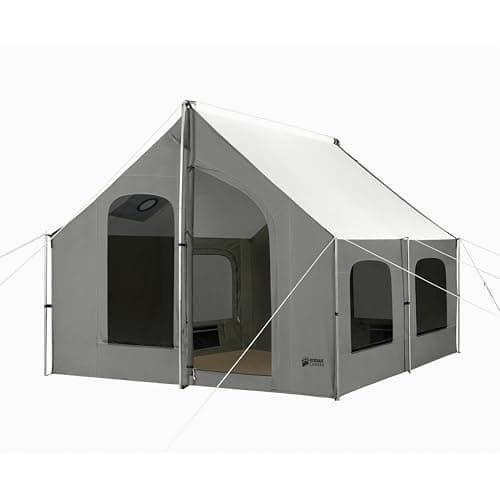
Kodiak Canvas 10 x 10 ft Cabin Lodge SR
Kodiak Canvas
10 oz Hydra-Shield canvas over a 13.5 oz vinyl floor. About 75 lb packed, and it chars instead of melting.
$849.99 · Check price on Amazon
#ad how this is funded · price as of October 27, 2026
One of these weighs nine pounds and one weighs sixty-eight. That is not a detail, it is the entire decision, and it is settled by how the tent gets to the site.
Trail & Tarp earns a commission from qualifying purchases made through links on this page, at no extra cost to you. Full disclosure.
The short answer
Canvas breathes, chars rather than melting, lasts decades and weighs six to seven times as much. Coated nylon and polyester are light enough to carry, dry fast and pack small, and they condense, melt on contact with an ember and degrade in UV. If the tent goes in a vehicle and stays up for days, buy canvas. If you carry it, buy synthetic.
Almost every other difference between these two materials follows from that one. Canvas is a heavy natural fiber that lets water vapor through; synthetics are light coated plastics that do not. Everything downstream — condensation, warmth, fire risk, lifespan, price — comes back to it.
| Tent | Material | Fabric weight | Packed weight | Floor |
|---|---|---|---|---|
| Kodiak Cabin Lodge SR 10 x 10 | Hydra-Shield cotton canvas | 10 oz ceiling, 8.5 oz wall | about 75 lb incl. poles and stakes | 13.5 oz vinyl, welded seams |
| White Duck Regatta Bell Tent | army duck cotton canvas | 8.5 oz | not published | 7.5 oz sewn-in PE |
| OneTigris Rock Fortress | 70D coated nylon, 3,000 mm | 70 denier | 9.2 lb | none, floorless tipi |
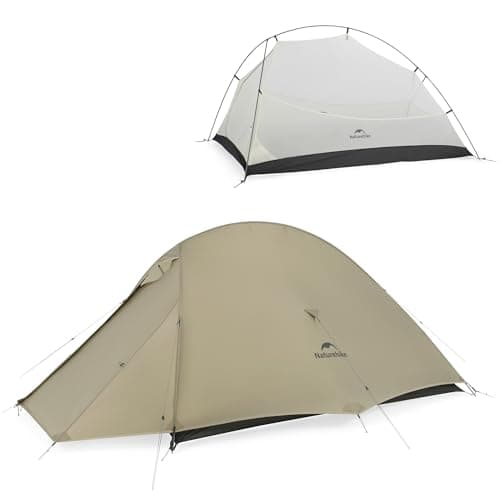
| Naturehike Cloud Up 2 | 20D silicone nylon, 3,000 mm+ | 20 denier | about 3.04 lb minimum | 20D nylon, 4,000 mm+ |
Note that the two materials are not even measured the same way. Canvas is quoted in ounces per square yard, synthetics in denier, which is a thread weight. You cannot compare the numbers directly, which is part of why this decision confuses people.
An adult produces a substantial amount of water vapor overnight just by breathing. In a coated nylon tent that vapor has nowhere to go: it hits the cold inner surface and runs back down as condensation, which is why people wake up with a wet tent on a clear night and assume it rained.
Canvas is porous. Vapor passes through the weave and leaves, so a canvas tent stays noticeably drier inside. That is the single biggest quality-of-life advantage canvas has, and it matters most in cold weather when you have the doors shut. The mechanism and the fixes for synthetics are in how to stop tent condensation.
Canvas chars. An ember that lands on it leaves a scorch mark and goes out. Coated nylon melts: the same ember puts a hole straight through, and the hole grows. This is why traditional hot tents are canvas and why a synthetic hot tent needs a spark arrestor treated as mandatory rather than optional.
Neither material is fireproof and neither should be treated as such. The difference is in how forgiving a mistake is, and around a wood stove that is worth a great deal — see best hot tents with stove jacks.
Canvas has to be dried before it is stored
Cotton canvas packed away damp will mildew, and mildew on canvas is permanent: it stains, it smells, and it eventually rots the fibers. A 75 lb tent that comes home wet has to be pitched again in a garage or a yard until it is bone dry, which is a real chore people do not anticipate. Synthetics mildew too and recover far better, because the growth sits on a coating rather than in a fiber. If you cannot commit to drying a canvas tent properly, buy synthetic — the general routine is in how to clean and store a tent.
That is why a fifteen-year-old canvas tent can be perfectly serviceable and a fifteen-year-old nylon fly usually is not. If the flaking has started, the options are in how to waterproof a tent.
Canvas is often described as warmer. It is, marginally, because the material is thicker and blocks more radiant heat and wind. The effect is real and small: a canvas tent without a heat source is still close to ambient temperature overnight.
What makes a canvas tent feel warm is usually the stove inside it rather than the fabric. And in every tent, the warmth that actually determines your night comes from the pad underneath you — see sleeping pad R-value explained.
| Your situation | Buy |
|---|---|
| You carry the tent on your back | synthetic, without hesitation |
| Vehicle camping, up for one or two nights | synthetic; the weight is not worth it |
| Basecamp for a week, drive-up site | canvas, if you will dry it properly |
| Running a wood stove inside | canvas for forgiveness, synthetic only with a spark arrestor |
| Hot, humid climate | canvas; the breathability is the whole point |
| You store gear in a damp garage | synthetic; canvas will not survive it |
For most people reading this site — a household camping a few weekends a year at drive-up campgrounds — the honest answer is synthetic. Canvas is a specialist purchase that rewards a specific pattern of use, and the weight and drying commitment are not theoretical.
If you do go canvas, a canvas reproofing treatment every few seasons keeps the water repellency up. The synthetic starting points are in best car camping tents and best budget camping tents.
Kodiak Canvas
10 oz Hydra-Shield canvas over a 13.5 oz vinyl floor. About 75 lb packed, and it chars instead of melting.
#ad how this is funded · price as of October 27, 2026
White Duck Outdoors
8.5 oz army duck cotton with a sewn-in PE groundsheet. The bell-tent version of the same trade.
Naturehike
About 3.04 lb of 20D silicone nylon. Twenty times lighter than the canvas, and it condenses.
#ad how this is funded · price as of October 27, 2026
OneTigris
9.2 lb of 70D nylon with a stove jack. Synthetic hot tenting, which needs the spark arrestor treated as mandatory.
For a drive-up basecamp that stays pitched for days, yes: canvas breathes, condenses far less, chars rather than melting and lasts decades. For anything you carry, no. A canvas tent can weigh about 75 lb against 9 lb for a comparable synthetic.
Yes, substantially. Cotton canvas is porous, so water vapor from breathing passes through the weave and leaves. Coated nylon and polyester trap it, which is why people wake to a wet synthetic tent on a clear night and assume it rained.
Decades, if it is always dried before storage. Canvas dies from mildew and rot, which comes almost entirely from being packed damp. Coated synthetics die instead from UV and from the polyurethane coating hydrolyzing into a sticky, flaking layer.
Marginally. The thicker material blocks more radiant heat and wind, but a canvas tent without a heat source is still near ambient overnight. What makes canvas tents feel warm is usually the wood stove inside them, not the fabric.
Every figure on this page comes from a published source. We have not tested this gear, so the numbers are the manufacturer's or the standard body's, not ours. How we research.