Tent capacity is a floor-area calculation at roughly 20 to 22 inches of shoulder width per person, with no allowance for gear, elbows or a dog. Two 20 by 72 in pads take 20 square feet; a two-person tent typically publishes 28 to 32 square feet, and a three-person tent publishes 39 to 52. That difference is where packs, boots and the space to sit up and get dressed live.
The rule people are given is to buy one size up from the headcount, and it is not upselling. Between two adults sharing a tent for three nights, the difference between 30 and 45 square feet is the difference between a shelter you tolerate and one you can live in during a wet afternoon.
The exception is when you are counting grams. A three-person tent costs one to two pounds over a comparable two-person, and on a long carry that may be the wrong trade. The general sizing argument is in what size tent do I need.
Compared on published numbers
Tent
Floor area
Peak height
Weight
Doors
Vestibules
ALPS Mountaineering Lynx 3
52 sq ft
48 in
7 lb 3 oz total
2
2, 20 sq ft total
Kelty Far Out 3
39.64 sq ft
43 in
5 lb 3 oz minimum
not published
not published
Coleman Sundome 3
49 sq ft
52 in
about 9 lb
1
none
Figures as published by each manufacturer.
Weight is the spread that decides the category for you: 5 lb 3 oz to about 9 lb across tents with floor areas within 12 square feet of each other. The Kelty is a backpacking tent, the Coleman is a car camping tent, and the ALPS sits between the two.
Two doors is worth more than ten square feet
This is the feature most people underrate until the first night one of them needs to get out. In a single-door tent, whoever sleeps on the far side climbs over the other person, in the dark, in a sleeping bag. In a two-door tent nobody does, and the argument ends.
Two doors also means two vestibules, and vestibule space is the most useful square footage in a tent because it takes wet, dirty gear out of the sleeping area entirely. The ALPS publishes 20 square feet of it across two, which is roughly 40 percent of the interior floor added outside.
Check the floor length before the floor area
A 7 ft floor is 84 inches, which fits a 6 ft camper with six inches of clearance and a 6 ft 4 in camper with almost none. Touching the inner wall with your head or feet transfers condensation into your sleeping bag, which is why tall campers report cold nights in bags rated well below the temperature. Read the shorter of the two floor dimensions, and if you are over six feet see how to stop tent condensation.
What the specifications do not tell you
Wind performance is not published by anyone, because there is no standard test to publish against. Pole material is the closest proxy: aluminum bends and can be splinted at the campsite, fiberglass splinters and cannot. On any tent you carry, that is worth paying for, and the components are explained in tent poles and stakes explained.
Hydrostatic head is the other gap. Coleman does not publish a millimeter rating for the Sundome, and neither does Kelty on the listing we read for the Far Out 3. We are not going to invent figures to fill a column; what those ratings mean when they are published is in tent waterproof ratings explained.
What to buy with it
The stakes included with every tent in this price range bend on the first root. A set of proper aluminum or steel stakes is the cheapest meaningful upgrade in camping and the fix for the most common failure. Beyond that, whether a footprint is worth it is argued in do you need a tent footprint.
Which to buy
Buy the ALPS Lynx 3 if two people are sharing it and you want the doors and the floor. Buy the Kelty Far Out 3 if you are carrying it and two pounds matters. Buy the Coleman Sundome 3 for a summer campground on a budget, and add a tarp over the door if rain is forecast.
If the headcount is genuinely three adults, or four with children, this is the wrong size — start at best family camping tents instead.
The picks in full
1. Best overall
ALPS Mountaineering Lynx 3
ALPS Mountaineering
52 sq ft of floor plus 20 sq ft of vestibule across two doors, under a 48 in peak, at 7 lb 3 oz total.
ALPS publishes a 7 ft 6 in by 7 ft floor at 52 sq ft, a 48 in center height, a minimum weight of 6 lb 8 oz and a total weight of 7 lb 3 oz, two vestibules totaling 20 sq ft at 32 in deep, and a 21 by 6.5 in packed size.
Fifty-two square feet is the largest floor here, and the two-door layout is what makes it the pick. Two doors means neither person climbs over the other at 2am, and two vestibules means each person has somewhere to put boots and a pack that is not the floor they are sleeping on.
The drawback
7 lb 3 oz total is heavy for a backpacking tent, and 48 in of peak height means sitting up, not kneeling comfortably.
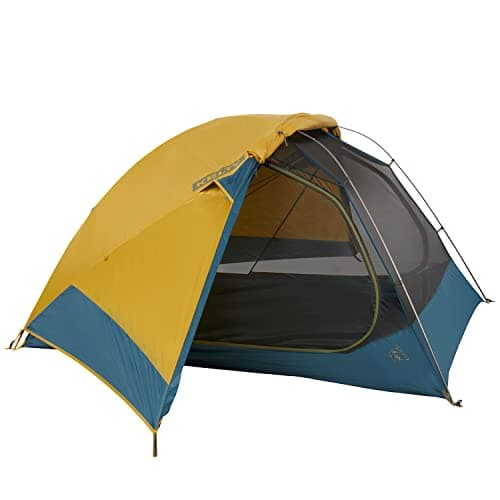
39.64 sq ft under a 43 in peak at a 5 lb 3 oz minimum weight.
Kelty publishes a floor area of 39.64 sq ft, a 43 in peak height, a minimum weight of 5 lb 3 oz and a three-person capacity.
Two pounds saved against the ALPS is the entire argument, and on a tent that gets carried rather than driven it is a real one. Read the floor figure honestly: this is the tent for two people who want space, not for three people who want to fit.
The drawback
39.64 sq ft is 12 square feet less than the Lynx 3, and a 43 in peak is the lowest here. It is a three-person tent by floor plan and a roomy two-person tent in practice.
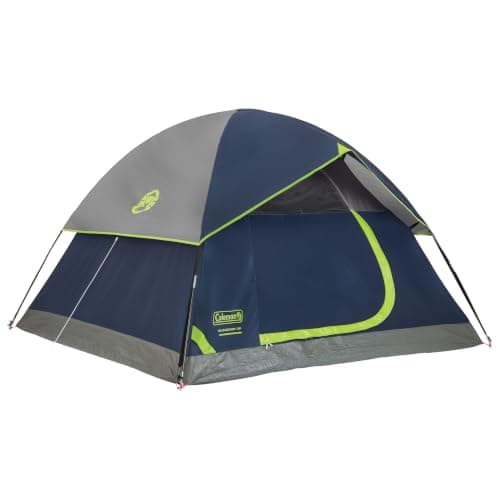
49 sq ft of floor at 7 by 7 ft under a 4 ft 4 in ceiling, at about 9 lb, with a WeatherTec tub floor.
Coleman publishes a 7 by 7 ft floor at 49 sq ft, a 4 ft 4 in center height, a weight of about 9 lb, a WeatherTec tub-style floor, room for one queen airbed and a three-season rating.
The reason this tent keeps selling is not the specification, it is the supply chain: replacement poles and flies for the Sundome line are stocked in most sporting goods stores in the country. A tent you can repair on a Saturday morning outlives a better tent you cannot.
The drawback
About 9 lb and a partial roof fly rather than full coverage. In wind-driven rain the exposed mesh upper walls will pass spray, and there is no vestibule.
Two adults comfortably, with room for packs and boots. Three fit only if nobody brings anything inside: three standard 20 by 72 in pads take 30 square feet, and these tents publish 39.64 to 52 square feet total.
QShould two people buy a 2-person or a 3-person tent?
A 3-person, unless you are counting grams. A two-person tent typically publishes 28 to 32 square feet, which fits two pads and nothing else. The extra 10 to 20 square feet is where gear goes and where you sit up to get dressed.
QIs a 3-person tent too heavy for backpacking?
Not necessarily. The Kelty Far Out 3 publishes a 5 lb 3 oz minimum weight, which is a reasonable two-person carry split between two people. Car-camping three-person tents run closer to 9 lb, which is not.
QDoes a 3-person tent fit a queen air mattress?
In the car camping sizes, yes. A queen bed is about 60 by 80 in and Coleman publishes a fits-one-queen rating for the 7 by 7 ft Sundome 3. Measure the bed you own rather than trusting the box.
How we picked
Everyone else in this category will tell you they tested twenty of these. We have not tested any of them, and we would rather say so than pretend. There is no gear closet here and no test lab.
What we did instead: pulled the published specifications from each manufacturer's own spec sheet or manual, named the standard behind every rating so you can check what it actually promises, did the arithmetic that turns a spec into a decision, and pulled today's real retail price rather than quoting one from memory. Every pick states a drawback, because a list where nothing is wrong with anything is an advert.
The limits of that method, stated plainly: published specs do not capture zipper quality, seam durability, or how a tent behaves at 2am in a storm. Where that matters, we say so on the pick. The full method is here.