How to Stay Cool Camping in Hot Weather, Starting With Where You Pitch
A closed tent in sun is a greenhouse, and no fan fixes a greenhouse. Almost everything that works in heat is decided before you put a peg in the ground.
Trail & Tarp earns a commission from qualifying purchases made through links on this page, at no extra cost to you. Full disclosure.
Why the tent is hotter than outside
The short answer
Sunlight passes through the fly, is absorbed by everything inside, and re-radiates as longer-wave heat that the fabric does not let back out. That is the greenhouse effect, and it means a closed tent in direct sun runs well above ambient air temperature. The fixes, in order of how much they help: shade, ventilation, and only then anything with a fan in it.
The practical version: a tent left closed and pitched in the open on a hot morning will be unusable by ten and will still be warm at midnight, because everything inside it — floor, bags, gear, ground — has spent the day storing heat. A tent in shade with both doors open never gets there in the first place.
Site choice does most of the work
In order of value:
Shade for the afternoon, not for the morning. Everyone picks a shaded spot at 9am and discovers at 3pm that the shade has moved. Watch where the sun will be at four, which is when the heat peaks, and pitch for that.
High and open, not low and sheltered. Cool air pools at night in hollows, which sounds appealing until you realize hollows also have no breeze during the day. Slightly elevated with airflow beats a sun trap every time.
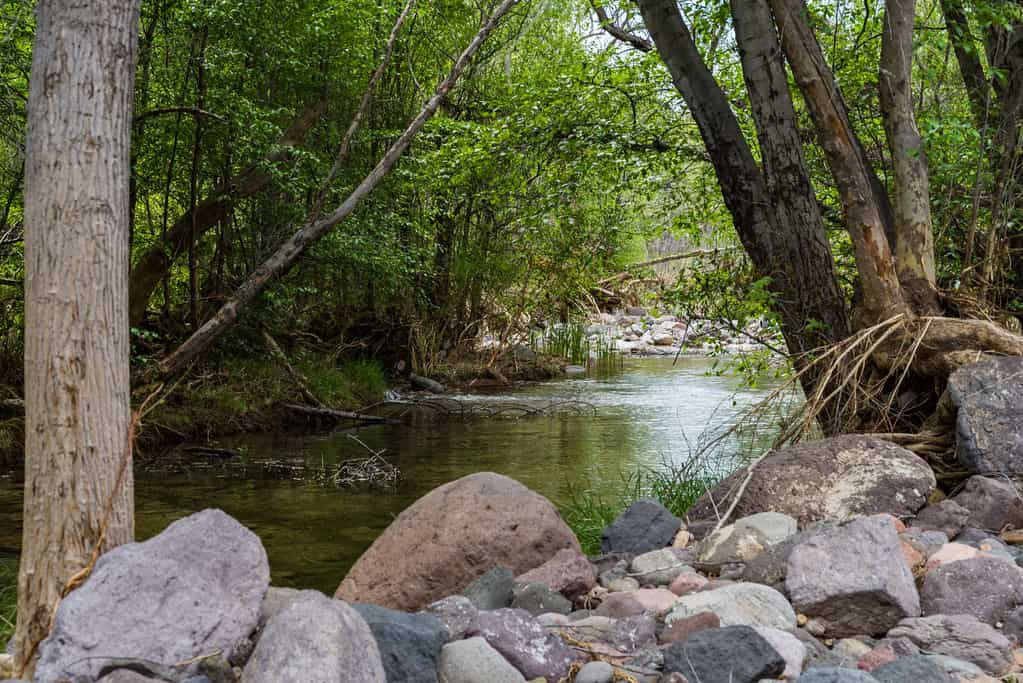
Near water, but not in the reeds. A breeze off water is genuinely cooler. Standing water beside your tent is a mosquito nursery.
Not on gravel or sand. Pale hard ground reflects heat up into the tent all afternoon and holds it into the evening. Grass is cooler by a noticeable margin.
Ventilation: cross-flow or nothing
One open door does very little. Air needs somewhere to come in and somewhere to leave, on opposite sides, ideally with a height difference so hot air can exit high while cooler air enters low. Every serious tent has vents at the top of the fly for exactly this, and almost nobody opens them.
Practically: open both doors if you have two, open every fly vent, roll the fly back where the design allows it, and if the tent has a full mesh inner, take the fly off entirely on a dry night. A tent with two doors and two vestibules such as the Kelty Wireless 6 — published at two 19.5 sq ft vestibules — is far more pleasant in heat than a one-door tent of the same size, because you can actually create a cross-flow.
The same airflow that cools you also removes moisture, which is why hot-weather ventilation and condensation management are the same practice. That connection is made in how to stop tent condensation.
Shade you bring beats shade you find
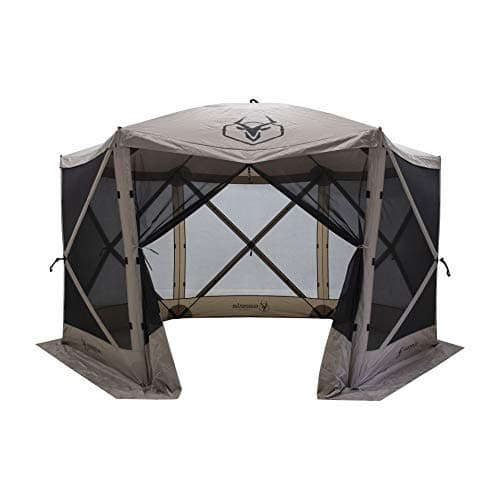
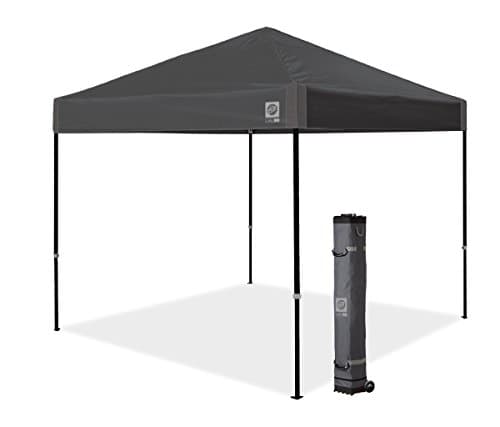
The single biggest improvement to a hot campsite is a canopy over the living area, so the table, the stove and the chairs are all out of direct sun. A Gazelle G6 publishes 92 sq ft under an 86 in center height with a UV50+ rated shell, and a 10 by 10 pop-up canopy publishes 100 sq ft of cover at a 6 ft 6 in valance clearance. Either turns the middle of the day from something you endure into something you can sit through. Full comparison in best shade canopies for camping.
The night, which is the part that actually matters
Heat during the day is uncomfortable. Heat at night stops people sleeping and ends trips. Five things help, roughly in order:
Action
Why it works
Effect
Open the tent fully before sunset
Dumps the day's stored heat while the air is cooling
Large
Sleep on a foam or low-R pad, not a thick insulated one
R-value works both ways; less insulation means the ground cools you
Moderate to large
Sleeping bag unzipped as a quilt, or just a liner
Removes the trapped air layer entirely
Large
Damp cloth on the back of the neck or wrists
Evaporative cooling at high blood flow points
Moderate, and short-lived
A fan on a power station
Moves air across skin; does not lower air temperature
Moderate, and it is the last resort
Our ranking. Every item above the fan costs nothing.
The pad point is the one that surprises people. An R-value of 7 or 8 is a wonderful thing in October and actively unhelpful in August, because it stops the ground — which is much cooler than the air — from taking heat away from you. A Klymit Static V Base publishes R 1.3, which is exactly what you want on a hot night and useless in the cold.
Hydration is a cooling system, not just a comfort
Sweating is how a body sheds heat, and sweating requires water. The CDC advises drinking more than usual in hot conditions and not waiting until you feel thirsty. Practically that means planning for around 1.5 gallons per person per day rather than the usual 1, keeping a spare container nobody touches, and checking on children, who dehydrate faster and notice later.
Loose, light-colored, long-sleeved synthetic or merino beats a bare torso in strong sun: it blocks radiation while still letting sweat evaporate. A wide brim beats a cap. The layering principles that keep you warm are the same ones that keep you cool, applied in reverse, and they are in how to layer for camping.
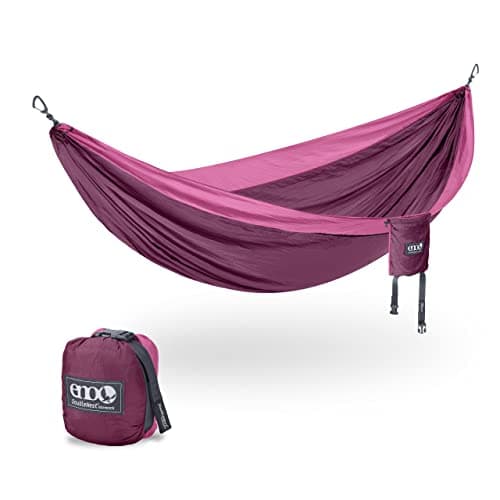
A hammock is the genuinely good hot-weather sleeping answer that nobody mentions. Air moves on all sides of you rather than being trapped between your body and the ground, which is why hammocks are cold in winter and excellent in summer. An ENO DoubleNest publishes 9 ft 6 in by 6 ft 4 in, 19 oz and a 400 lb capacity, with straps sold separately. Add a bug net and it becomes a whole hot-weather sleep system — see the hammock roundup.
Know the actual warning signs
Heat exhaustion presents as heavy sweating, cold clammy skin, weakness, nausea and dizziness, and it is a signal to stop, get into shade, cool down and drink. Heat stroke — hot dry skin, confusion, a very high body temperature, loss of consciousness — is a medical emergency and needs an ambulance, not a rest. The CDC publishes the full symptom list, linked below, and it is worth reading before a hot trip rather than during one. We do not publish medical advice on this site; that page is the source to use.
The gear this page points to
Gazelle G6 6-Sided Portable Gazebo
Gazelle Tents
92 sq ft of shade under an 86 in center height with a UV50+ rated shell. Getting the living area out of direct sun is the single biggest improvement to a hot campsite.
Sunlight passes through the fly, is absorbed by everything inside, and re-radiates as heat the fabric will not let back out. A closed tent in direct sun runs well above the outside air temperature, and everything inside stores that heat into the evening.
QHow do you keep a tent cool in hot weather?
Pitch in shade that will still be shade at 4pm, create a cross-flow by opening doors and fly vents on opposite sides, and take the fly off entirely on a dry night if the inner is mesh. Open the tent fully before sunset to dump the day's stored heat.
QShould I use a thick sleeping pad in hot weather?
No. R-value insulates in both directions, so a high-R pad stops the cool ground from taking heat away from you. A low-R pad such as the Klymit Static V Base at R 1.3 is the summer choice; save the R 7 pads for cold ground.
QHow much water do you need camping in hot weather?
Plan on about 1.5 gallons per person per day instead of the usual 1 gallon. The CDC advises drinking more than usual in heat and not waiting until you are thirsty. Children dehydrate faster than adults and notice later, so check on them.
Sources
Every figure on this page comes from a published source. We have not tested this gear, so the numbers are the manufacturer's or the standard body's, not ours. How we research.