Skip to content
Trail & Tarp

Camp comfort

The Best Camping Hammocks for Lying Around, Not Sleeping

A hammock is the cheapest comfort upgrade at a campsite and the most misunderstood sleep system. Here is the difference, and what it costs to cross from one to the other.

By Sawyer V.Published September 3, 2026Last updated September 3, 2026How we research
A camping hammock strung between two trees

Trail & Tarp earns a commission from qualifying purchases made through links on this page, at no extra cost to you. Full disclosure.

Quick picks

#ProductBest forPrice
1
No photo

Best value, and best first hammock

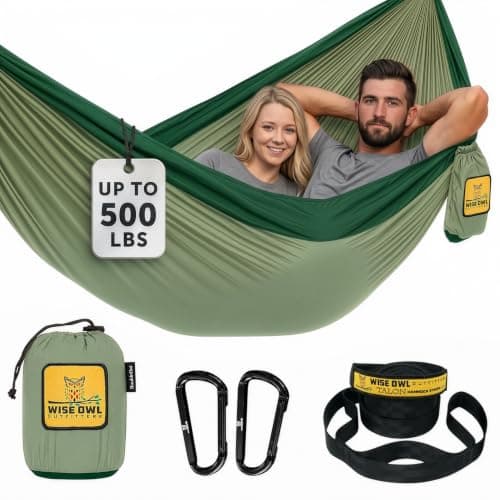
Wise Owl Outfitters DoubleOwl Hammock

10 by 6.5 ft rated to 500 lb, and it comes with two 9 ft tree straps and carabiners in the box.

A first hammock, families, guests
2
No photo

Best made

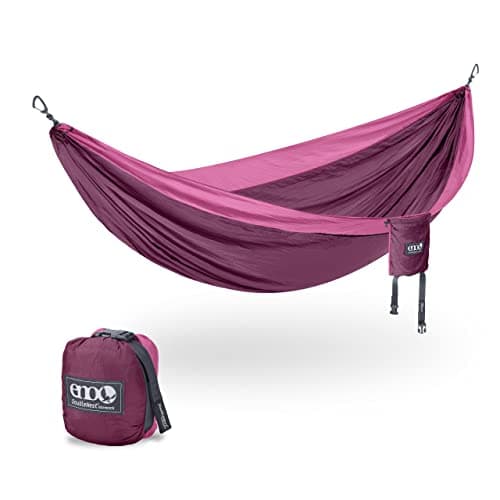
ENO DoubleNest Hammock

9 ft 6 in by 6 ft 4 in of 70D nylon rated to 400 lb, at 19 oz with aluminum hardware.

Buyers who want the standard and will keep it for years
3
No photo

Best packable

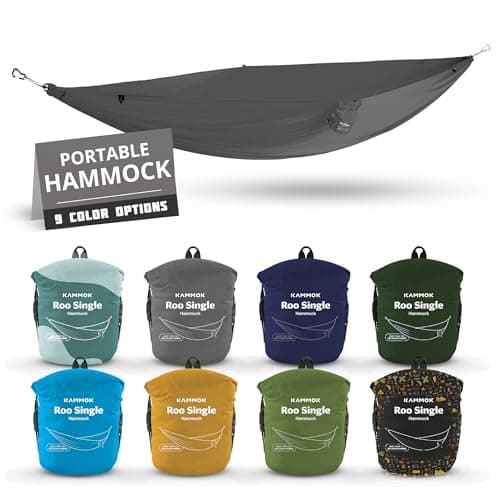
Kammok Roo Single Hammock

11.4 oz packed to about the size of a grapefruit, rated to 500 lb in a 100 by 50 in single.

One person, small packs, carrying it any distance

Lounging or sleeping? Decide first

The short answer

A hammock plus straps is a lounger. A hammock that you sleep in needs three more things: a tarp, a bug net, and insulation underneath you. The insulation is the part people miss. In a hammock your body compresses the fabric and your sleeping bag against still air, and you lose heat to it all night — the same mechanism that makes an airbed cold. The fix is an underquilt or a sleeping pad inside the hammock.

HammockSizeCapacityWeightStraps included
Wise Owl DoubleOwl10 x 6.5 ft500 lb24 ozYes, two 9 ft
ENO DoubleNest9 ft 6 in x 6 ft 4 in400 lb19 ozNo
Kammok Roo Single100 x 50 in500 lb11.4 ozCheck the listing
All figures as published by the manufacturers.

Straps are the purchase, not the accessory

Rope and thin cord cut into bark and damage trees, and many parks and campgrounds require wide webbing straps for exactly that reason. Look for straps at least 0.75 in wide with multiple attachment loops so you can adjust the hang without retying anything.

Hang geometry matters too: the usual guidance is straps at roughly a 30-degree angle from horizontal, with the hammock hung with a deep sag rather than pulled tight. A tight hammock squeezes your shoulders; a saggy one lets you lie diagonally, which is flatter and far more comfortable.

Check there are trees

Plenty of campgrounds have gravel pads, thin saplings or a strict no-hanging policy, and some open sites have no trees at all. Two solid trunks roughly 12 to 15 ft apart is the requirement. If you cannot guarantee that, a hammock is a nice extra rather than a sleep plan, and your tent stays the primary shelter.

What a hammock is genuinely good for

What we did not do

We have not slept a season in any of these, so we make no claim about which fabric wears first or which straps stretch. Everything above is published specification plus the physics of how hammocks lose heat, which is well established and easy to verify. Our method is at how we research.

For sitting up rather than lying down, see best camping chairs.

The picks in full

1. Best value, and best first hammock

Wise Owl Outfitters DoubleOwl Hammock

Wise Owl Outfitters

10 by 6.5 ft rated to 500 lb, and it comes with two 9 ft tree straps and carabiners in the box.

Wise Owl publishes 10 by 6.5 ft, a 500 lb capacity, 24 oz, 210T rip-resistant parachute nylon, and, crucially, two 9 ft tree straps with carabiners included.

That last detail is why it is first. Straps are not optional — rope damages trees and most parks require webbing — and buying them separately often costs a meaningful fraction of the hammock. Included straps make this the cheapest complete setup here by a distance.

The drawback

24 oz, the heaviest here, and 210T parachute nylon is not the finest fabric on the market. It is a lounger, not an heirloom.
No product photo: we don't take our own

Published specs

Capacity
500 lb
Size
10 ft x 6.5 ft
Weight
24 oz
Fabric
210T parachute nylon
Straps
two 9 ft straps included

Specs: Wise Owl Outfitters published specs

2. Best made

ENO DoubleNest Hammock

ENO

9 ft 6 in by 6 ft 4 in of 70D nylon rated to 400 lb, at 19 oz with aluminum hardware.

ENO publishes 9 ft 6 in by 6 ft 4 in, a 400 lb capacity, 19 oz, FreeWave 70D nylon and anodized 7075 aluminum carabiners. It is the category standard, and the build quality is where the money goes.

Budget for straps at the same time. A hammock without them is not usable, and the cheapest webbing straps are not the place to save money because they are what holds you off the ground.

The drawback

Straps are sold separately, which adds meaningfully to the real price. The 400 lb rating is the lowest here.

No product photo: we don't take our own

Published specs

Capacity
400 lb
Size
9 ft 6 in x 6 ft 4 in
Weight
19 oz
Fabric
70D nylon
Straps
sold separately

Specs: ENO product page

3. Best packable

Kammok Roo Single Hammock

Kammok

11.4 oz packed to about the size of a grapefruit, rated to 500 lb in a 100 by 50 in single.

Kammok publishes 100 by 50 in, a 500 lb capacity, an 11.4 oz weight and a packed size of 6.1 by 3.3 by 3.3 in.

Half the weight of the doubles and a fraction of the volume, which makes it the one that actually gets carried on a first backpacking trip or thrown in a day pack. Note the same 500 lb rating as the much larger Wise Owl.

The drawback

A single is 50 in wide against the doubles' 76 in and up, so it is a solo hammock and a snug one for lying diagonally.

No product photo: we don't take our own

Published specs

Capacity
500 lb
Size
100 x 50 in
Weight
11.4 oz
Packed
6.1 x 3.3 x 3.3 in

Specs: Kammok product page

Questions people actually ask

QCan you sleep in a camping hammock overnight?

Yes, with three additions: a tarp for rain, a bug net, and insulation underneath such as an underquilt or a sleeping pad inside the hammock. Without insulation you lose heat to the air moving beneath you and will be cold even in a warm sleeping bag.

QDo you need straps for a camping hammock?

Yes, and wide webbing straps rather than rope. Rope damages bark, and many parks require webbing. Some hammocks include straps: Wise Owl's DoubleOwl ships with two 9 ft straps and carabiners, while ENO sells them separately.

QHow far apart should trees be for a hammock?

Roughly 12 to 15 feet for a standard camping hammock, with straps hung at about a 30-degree angle from horizontal and a deep sag in the hammock so you can lie diagonally.

QAre camping hammocks comfortable to sleep in?

Many people find them more comfortable than the ground, provided the hammock is hung with a deep sag and they lie diagonally rather than straight along it. Sleeping flat along a tightly hung hammock squeezes the shoulders and is the usual reason people dislike them.

How we picked

Everyone else in this category will tell you they tested twenty of these. We have not tested any of them, and we would rather say so than pretend. There is no gear closet here and no test lab.

What we did instead: pulled the published specifications from each manufacturer's own spec sheet or manual, named the standard behind every rating so you can check what it actually promises, did the arithmetic that turns a spec into a decision, and pulled today's real retail price rather than quoting one from memory. Every pick states a drawback, because a list where nothing is wrong with anything is an advert.

The limits of that method, stated plainly: published specs do not capture zipper quality, seam durability, or how a tent behaves at 2am in a storm. Where that matters, we say so on the pick. The full method is here.

Sources for this page