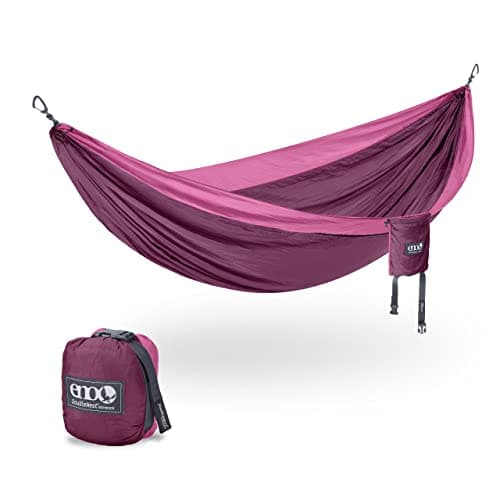
ENO DoubleNest Hammock
ENO
400 lb capacity, 9 ft 6 in x 6 ft 4 in, 19 oz. A generous one-person bed and a two-person seat.
$74.95 · Check price on Amazon
#ad how this is funded · price as of October 23, 2026
A hammock is not a lighter tent. It is a different sleeping system with a different failure mode, and two questions settle the choice before any specification does.
Trail & Tarp earns a commission from qualifying purchases made through links on this page, at no extra cost to you. Full disclosure.
The short answer
Two questions decide this, and neither is about comfort. Are there two solid trees roughly nine to fifteen feet apart at every site you will sleep at? And is everyone sleeping separately? If either answer is no, take the tent. A hammock sleeps one person and needs anchors. A tent sleeps a family and needs flat ground. Everything else is a detail.
The comparison people expect is about comfort, and it is genuinely close — a well-hung hammock is more comfortable than a pad on uneven ground, and plenty of people sleep better in one. But comfort is not what sends people home at midnight. Running out of trees does, and getting cold does, and both are predictable before you leave.
| Hammock system | Car camping tent | Small tent | |
|---|---|---|---|
| Example | ENO DoubleNest + Atlas straps + ProFly tarp + Ember UnderQuilt | Coleman Skydome 6 | Coleman Sundome 4 |
| Sleeps | 1 adult | fits 2 queen airbeds | fits 1 queen airbed |
| Weight | 19 oz + 9 oz + 22 oz + 27 oz = about 4.8 lb | about 16.8 lb | about 10 lb |
| Capacity | 400 lb hammock, 400 lb straps | not published | not published |
| Needs | two trees about 9 ft 2 in apart | flat ground, 10 x 8.5 ft | flat ground, 9 x 7 ft |
| Weather cover | tarp, 10 ft 6 in x 6 ft 4 in, 1,000 mm | integrated rainfly | integrated rainfly |
| Insulation under you | underquilt, rated 40-60 F | sleeping pad, any R-value | sleeping pad, any R-value |
Read the weight row honestly. A hammock on its own is 19 ounces and a tent is ten pounds, which is the comparison hammock marketing wants you to make. A hammock you can actually sleep in through a cold night is a hammock plus straps plus a tarp plus an underquilt, and that is about 4.8 lb — still lighter than the tent, but nothing like eight times lighter.
ENO publishes a hanging distance of 9 ft 2 in plus or minus 10 in for the DoubleNest, and the Atlas straps are 9 ft each with 30 attachment points, which is what gives you the range to work with trees that are not perfectly spaced. In practice the usable gap is roughly nine to fifteen feet between two trunks solid enough to take a shock load.
That is easy in eastern hardwood forest and impossible almost everywhere else. Desert sites, alpine sites above treeline, beach sites, prairie campgrounds and a great many developed campgrounds with manicured loops simply do not have the anchors. Some parks also prohibit hanging anything from trees at all, and others require wide webbing straps specifically to stop bark damage.
Check the tree rules before the tree spacing
Hanging gear damages bark when the strap is narrow, which is why parks that allow hammocks increasingly specify a minimum webbing width. ENO's Atlas straps are 1000D polyfilament webbing tapering from 1.5 in to 0.75 in. Rope, cord and paracord are what the rules are aimed at, and they are also what fails. Read the land manager's page before you pack the hammock instead of the tent, and treat Leave No Trace as the baseline — our dispersed camping for beginners guide covers where those rules bite hardest.
A hammock sold as a “double” is a two-person sitting hammock. The ENO DoubleNest publishes a 400 lb capacity and a 9 ft 6 in by 6 ft 4 in size, and two adults do fit in it — in a pile, at an angle, with one person on top of the other by morning. For sleeping it is a generous one-person hammock.
So a family of four is four hammocks, four sets of straps, four tarps and four underquilts, hung at four separate tree pairs, with the children out of arm's reach in the dark. A Coleman Skydome 6 publishes 85 square feet and fits two queen airbeds, and everybody is in one room. This is the single most common reason people go back to a tent, and it has nothing to do with how either one sleeps.
If the trip is you alone or two adults who are happy in separate hammocks, the headcount objection disappears entirely. Sizing for the tent side is in what size tent do I need.
The short answer
A hammock is colder than the same night on the ground, because moving air strips heat from underneath you on all sides. A sleeping bag cannot fix it: your weight crushes the insulation flat exactly where you need it. The fix is an underquilt hung outside the hammock, or a pad inside it.
This is the same physics as the ground, taken further. On the ground, body weight compresses the fill under you and the earth conducts heat away, which is why R-value decides warmth more than the bag rating does. In a hammock the compressed fill is the same, but instead of insulating soil there is open air on every side, moving. People describe it as their back being cold while their top half is fine, and that description is diagnostic.
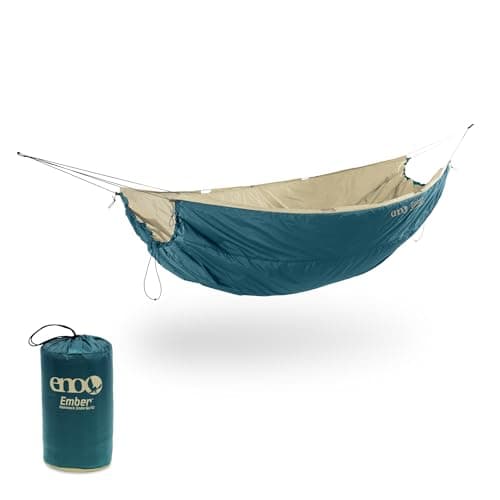
Note the honest ceiling on the usual fix. ENO publishes a temperature range of 40 to 60 F for the Ember UnderQuilt at 27 oz, with 160 g of recycled polyester in two layers. That is a three-season shoulder-weather product, not a cold-weather one. Below roughly 40 F you are into a heavier underquilt or a serious pad, while on the ground you can simply buy more R-value — an Exped MegaMat 10 publishes an R-value of 8.1 at 3.9 in thick and works in any tent you own.
The full explanation of why people blame the wrong piece of gear is in why you get cold in a sleeping bag.
A tent arrives as a system. It has a floor, a bathtub seam, a sewn-in bug mesh and a rainfly cut to fit it, and none of those are separate decisions. A hammock has none of them, and each one is a purchase and a pitch.
A hammock bug net is the cheapest of those gaps to close, and the one most people discover on night one.
None of the above means the tent is simply better. On the right site a hammock is the better shelter, for reasons a spec sheet does not capture.
| Your situation | Take |
|---|---|
| Camping with children or a partner in one shelter | a tent |
| Campgrounds you have not seen, or anywhere without reliable trees | a tent |
| Desert, beach, prairie or above treeline | a tent; there is no choice to make |
| Nights below about 40 F | a tent, unless you already own a cold-rated underquilt |
| Solo in wooded country, wet or rooty ground | a hammock |
| Backpacking solo where the whole route is forested | a hammock, on weight and site freedom |
| Your first ever camping trip | a tent; it fails in fewer ways |
The honest summary for most readers of this site: buy the tent first. It works at every site in the country, it sleeps the people you are bringing, and its cold-weather fix is a pad you can buy in any R-value. Add a hammock later as the thing you hang for the afternoon and occasionally sleep in — which is how most hammock owners actually use one.
If you are going the other way, do it in one purchase rather than four. A hammock without straps, a tarp and an underquilt is a garden chair, and buying them one bad night at a time is how people conclude hammocks do not work.
This is the comparison nobody publishes, and it is the one that predicts regret. A tent is one purchase plus a pad. A hammock is four purchases before it matches what the tent did on the first night.
| Job | Tent solves it with | Hammock needs |
|---|---|---|
| Somewhere to lie | the tent | the hammock |
| Staying off the ground | the floor | the straps |
| Rain | the integrated rainfly | a separate tarp |
| Bugs | the sewn-in mesh | a separate bug net |
| Warmth underneath | a sleeping pad | an underquilt, or a pad inside |
| Somewhere for your pack | the vestibule | whatever the tarp covers |
For the tent side, the starting points are best car camping tents and best backpacking tents for beginners. For the hammock side, best camping hammocks and underquilts and tarps cover the four items in order. A set of tree straps is the one nobody should skip, because it is what the tree rules are written about.
ENO
400 lb capacity, 9 ft 6 in x 6 ft 4 in, 19 oz. A generous one-person bed and a two-person seat.
#ad how this is funded · price as of October 23, 2026
ENO
9 ft straps, 30 attachment points, 1.5 in webbing. The item park tree rules are written about.
ENO
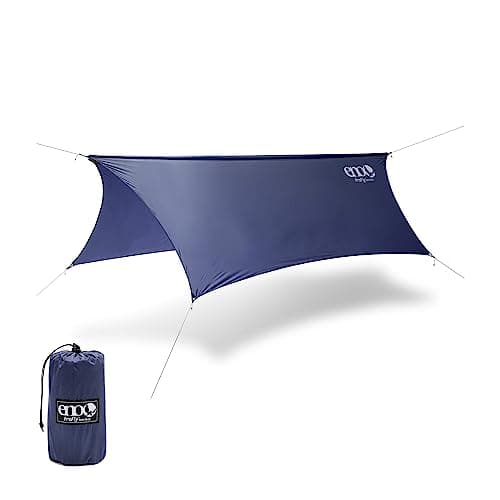
10 ft 6 in x 6 ft 4 in of 70D ripstop at 1,000 mm. The hammock's missing rainfly.
ENO
Rated 40-60 F at 27 oz. Fixes the cold back, and states its own three-season ceiling.
#ad how this is funded · price as of October 23, 2026
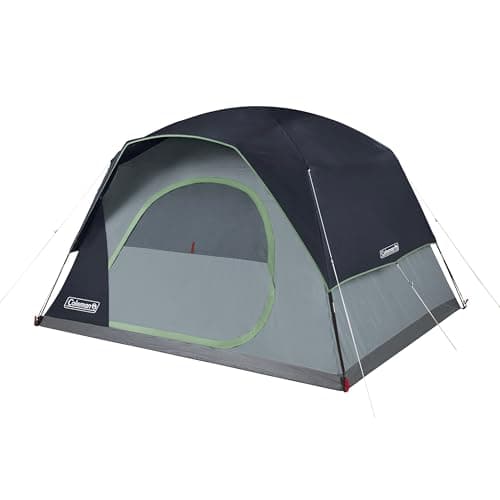
Coleman
85 sq ft, 6 ft of standing height, two queen airbeds. What four hammocks are competing with.
#ad how this is funded · price as of October 23, 2026
Exped
R-value 8.1 at 3.9 in. The tent side's cold-weather answer, and it works in any tent.
Only on the right site. A hammock needs two solid trees roughly 9 to 15 ft apart and sleeps one person, so it wins for a solo camper in forest with rough or wet ground. A tent works anywhere flat, sleeps a family in one shelter, and arrives with its floor, bug mesh and rainfly already attached.
Yes, at the same temperature. Moving air strips heat from underneath you on every side, and your body weight crushes the sleeping bag's insulation flat where you need it most. The fix is an underquilt outside the hammock or a pad inside it. ENO rates the Ember UnderQuilt at 40 to 60 F, which is a shoulder-season figure rather than a cold-weather one.
They fit, but not comfortably overnight. The ENO DoubleNest publishes a 400 lb capacity at 9 ft 6 in by 6 ft 4 in, which is a two-person sitting hammock and a generous one-person bed. Two adults end up piled together by morning.
Four things before it matches a tent: tree straps, a tarp bigger than the hammock, a bug net, and an underquilt or pad for warmth underneath. Buying them one bad night at a time is why people conclude hammocks do not work.
Lighter, but not by as much as the hammock alone suggests. An ENO DoubleNest is 19 oz, but with Atlas straps, a ProFly tarp and an Ember UnderQuilt the system is about 4.8 lb against roughly 10 lb for a Coleman Sundome 4.
Every figure on this page comes from a published source. We have not tested this gear, so the numbers are the manufacturer's or the standard body's, not ours. How we research.