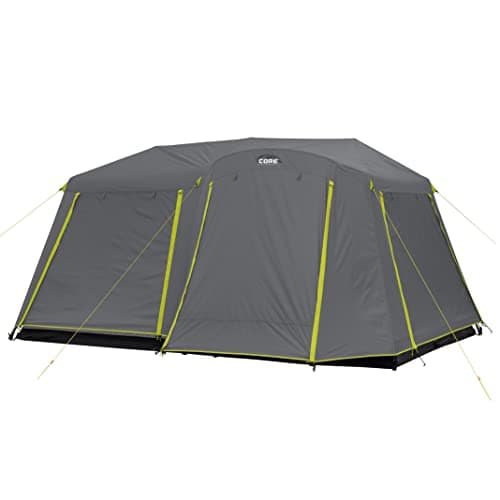
CORE 9 Person Instant Cabin Tent
CORE Equipment
The mass-market case in one product: 126 sq ft at a 78 in center height for 40 lb nobody has to carry.
$429.99 · Check price on Amazon
#ad how this is funded · price as of October 23, 2026
Outdoor brands are not arranged on a quality ladder. They are arranged by what they are for, and knowing that map is worth more than knowing who is best.
Trail & Tarp earns a commission from qualifying purchases made through links on this page, at no extra cost to you. Full disclosure.
The short answer
Camping brands cluster into four groups: mass-market car camping, entry-level technical, component specialists, and single-category makers. Comparing across the groups is meaningless. Comparing within one is useful. Coleman is not worse than Therm-a-Rest; they do not make the same kind of thing for the same kind of trip.
| Group | Who is in it | What they are for | Where they are wrong |
|---|---|---|---|
| Mass-market car camping | Coleman, CORE, Eureka, Igloo, Rubbermaid, GCI, Lifetime | Big, heavy, affordable campground gear | Anything you carry |
| Entry-level technical | Kelty, ALPS Mountaineering, TETON Sports, Naturehike, Klymit | The point where trail gear becomes affordable | Ultralight weight targets |
| Component specialists | Therm-a-Rest, Exped, Sea to Summit, Osprey, MSR, Platypus, Petzl, Black Diamond | One system done to a measurable standard | Budget builds |
| Single-category makers | Darn Tough, Smartwool, Injinji, Sawyer, Thermacell, Rumpl, Jetboil | One product, done properly, usually guaranteed | Everything they do not make |
Coleman, CORE and Eureka dominate the family tent aisle, and for good reason: they build large shelters at prices nothing technical can approach. A CORE 9 Person Instant Cabin publishes a 14 by 9 ft floor at a 78 in center height with setup from 2 minutes, weighing 40 lb. That is 126 sq ft of shelter for a fraction of what a technical brand would charge, and the 40 lb is irrelevant because it lives in a car.
The pattern across this group is the same: steel and fiberglass rather than aluminum, thicker fabric, more space, more features, more weight. Igloo and Coleman own the cooler shelf. Rubbermaid and Sterilite own storage. GCI and Lifetime own chairs and tables. None of them makes anything you would carry more than two hundred yards, and none of them needs to.
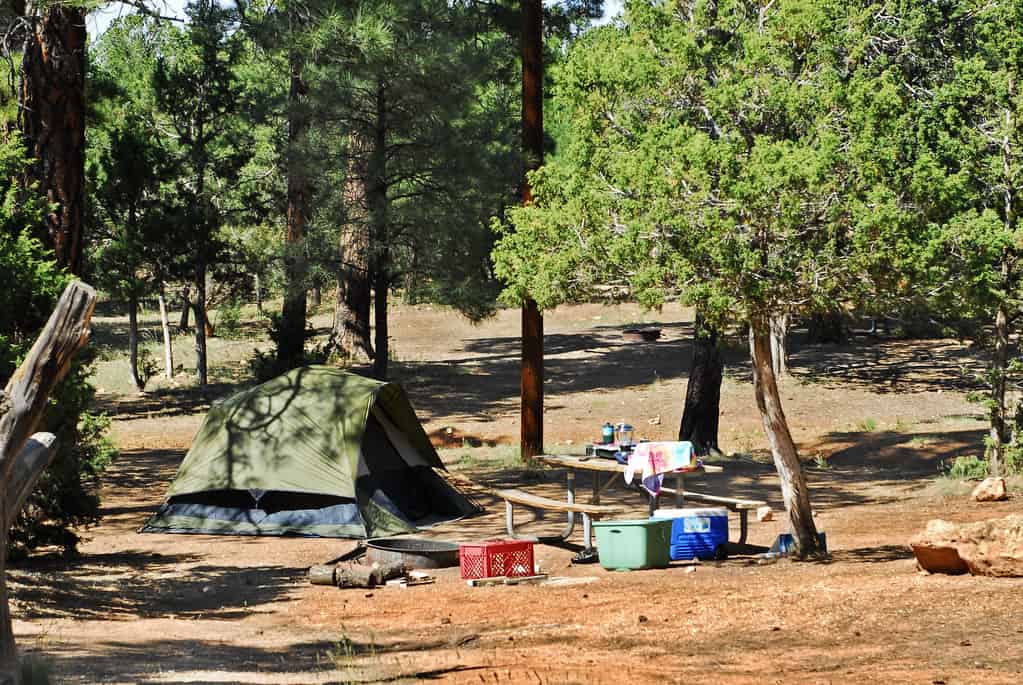
Where this group genuinely fails a beginner is when somebody buys a family tent for a walk-in pitch. The distinction is in car camping tent vs backpacking tent.
This is the most useful group for a beginner to know, because it is where trail gear becomes affordable without becoming fragile. Kelty is the clearest example: a Late Start 2P publishes 68D polyester at 1200 mm on aluminum poles for a 4 lb 5 oz minimum weight — heavier than a premium backpacking tent and far more forgiving of a beginner's pitch.
ALPS Mountaineering plays the same role with more floor area: a Lynx 2 publishes 37.5 sq ft, two doors and two vestibules for a 5 lb 4 oz minimum weight. TETON Sports does it for packs, with a Scout 3400 published at an adjustable 15 to 19.5 in torso range and a 26 to 60 in waist belt, which fits smaller and younger walkers that premium packs do not. Klymit does it for pads, and Naturehike does it for lightweight tents.
The trade in this group is consistent: half a pound to a pound heavier than the premium equivalent, at a fraction of the price, with specifications that are published honestly. For a first season that is the right end of the market.
The test that cuts through brand marketing
Does the maker publish a number, and does it name the standard behind it? Therm-a-Rest publishes R-values to ASTM F3340. Kelty publishes ISO 23537 comfort and limit figures for its bags. Petzl publishes runtime to ANSI/PLATO FL1. A brand that publishes only adjectives — “ultra-warm”, “all-weather” — is telling you it has nothing to measure. That single test sorts more reliably than any brand reputation, and it is the method behind every page here, described in how we research.
These are the brands whose numbers everyone else gets compared against. Therm-a-Rest and Exped set the reference for sleeping pads: a MegaMat 10 publishes R 8.1 and 3.9 in of thickness, and a MondoKing 3D publishes R 7.0 at 4.25 in. Osprey does it for packs, with a Rook 65 published at an adjustable 18 to 22 in torso and a 30 to 40 lb load range.
Sea to Summit and MSR occupy the same position for the small components — pillows, cooksets, dry bags, filters — and Petzl and Black Diamond for headlamps, where both publish to ANSI/PLATO FL1 so the figures are comparable.
Buying from this group is worth it in precisely the categories where money changes a measured number, which is the argument in is expensive camping gear worth it. It is not worth it for a table.
The most underrated group for a beginner, because these brands live or die on one product and usually back it with a guarantee. Darn Tough publishes an unconditional lifetime guarantee on its socks and knits them in Vermont. Sawyer makes filters and repellents and publishes micron ratings and duration figures for both. Thermacell makes one kind of thing. Rumpl makes blankets. Jetboil makes one stove concept.
When one of these brands appears on this site it is usually because the published figures are unusually specific — a 61% merino, 36% nylon, 3% Lycra composition, or a 0.1 micron absolute rating with removal percentages attached. Specificity is what a single-category maker has instead of a broad catalog.
Several excellent makers — REI Co-op, Big Agnes, Nemo, Hyperlite — appear rarely or not at all here, and it is not a quality judgment. This site earns through the Amazon Associates program only, so a brand that sells largely direct or through a single retailer cannot be linked in a way that funds the site, and we do not write about products we cannot link. That is stated plainly in the affiliate disclosure, and it is a limitation worth knowing about when you read any roundup here.
We also do not rank brands against each other on build quality, durability or customer service, because we have not tested any of it. What this page does is describe what each brand builds and what it publishes, which is checkable.
And where a brand's catalog crosses groups — Kelty makes both a 4 lb backpacking tent and a family blanket, Coleman makes both a 40 lb cabin and a rechargeable lantern — judge the product, not the logo. The sequencing of an entire first kit is in start here, and the secondhand route through all of it is in how to buy used camping gear.
CORE Equipment
The mass-market case in one product: 126 sq ft at a 78 in center height for 40 lb nobody has to carry.
#ad how this is funded · price as of October 23, 2026
Kelty
Entry-level technical: 68D at 1200 mm on aluminum poles, 4 lb 5 oz minimum. Heavier and far more forgiving than premium.
Exped
Component specialist: R 8.1 measured to ASTM F3340, which is what other brands get compared against.
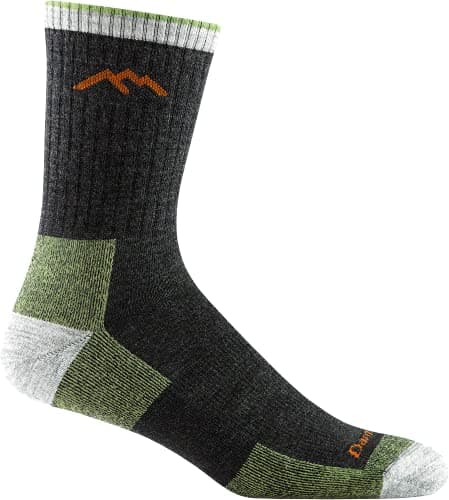
Darn Tough
Single-category maker: one product, a published 61/36/3 fiber composition, and an unconditional lifetime guarantee.
#ad how this is funded · price as of October 23, 2026
It depends on the trip rather than a ranking. Coleman, CORE and Eureka dominate affordable car camping shelters. Kelty, ALPS Mountaineering, TETON Sports and Naturehike make entry-level gear you can carry. Therm-a-Rest, Exped, Osprey and Sea to Summit are the component specialists.
For car camping, yes. Coleman builds large, heavy, affordable shelters, coolers, stoves and lanterns for campgrounds, and does it well. None of it is designed to be carried, which is where people get caught out buying a family tent for a walk-in pitch.
Check whether the maker publishes numbers and names the standard behind them. Therm-a-Rest publishes R-values to ASTM F3340, Kelty publishes ISO 23537 bag ratings, Petzl publishes runtimes to ANSI/PLATO FL1. A brand offering only adjectives has nothing to measure.
Because this site earns through the Amazon Associates program only, and brands that sell largely direct or through a single retailer cannot be linked in a way that funds it. That is a limitation of the site, not a judgment on the brand.
Every figure on this page comes from a published source. We have not tested this gear, so the numbers are the manufacturer's or the standard body's, not ours. How we research.