Car Camping Tent vs Backpacking Tent: What the Extra Twenty Pounds Buys
These are not two grades of the same product. They are two different objects that happen to share a name, and buying the wrong one is the most common expensive mistake a beginner makes.
Trail & Tarp earns a commission from qualifying purchases made through links on this page, at no extra cost to you. Full disclosure.
The one-line difference
The short answer
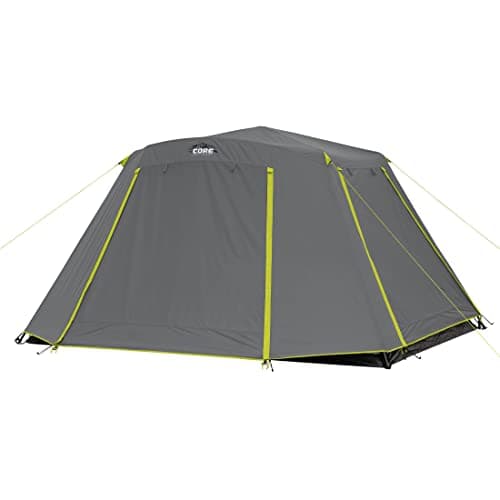
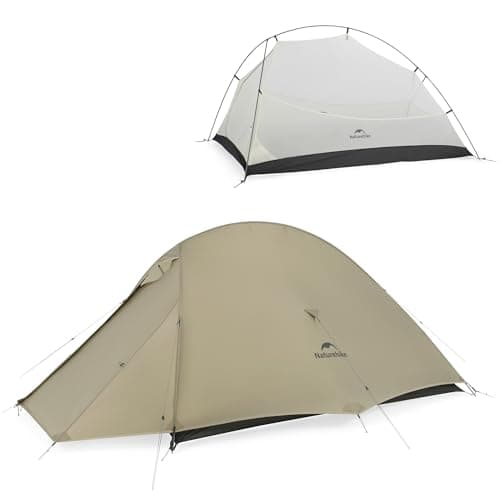
A car camping tent optimizes for the hours you spend awake inside it. A backpacking tent optimizes for the hours you spend carrying it. Everything else — height, floor area, fabric thickness, pole material, price — follows from that one decision. A CORE 6 person instant cabin publishes 99 sq ft, a 72 in center height and a 27 lb weight. A Naturehike Cloud Up 2 publishes about 3 lb and a 41.3 in peak. Both are tents. Nothing else about them is comparable.
Beginners run into this because the two categories sit next to each other in the same aisle and the same search results. A search for “2 person tent” returns a 12 lb cabin that two people could hold a dinner party in and a 3 lb dome two people can barely lie down in, at similar prices, described in similar words. The specs tell you which is which immediately once you know which specs to read.
Car camping tent
Backpacking tent
Typical weight
12 to 40 lb
3 to 6 lb
Floor per sleeper
20 to 25 sq ft
15 to 19 sq ft
Peak height
60 to 84 in, often near-vertical walls
38 to 46 in, tapered
Fabric
68D to 150D polyester
15D to 75D nylon or polyester
Poles
Steel or fiberglass, sometimes pre-attached
Aluminum alloy, usually one hubbed set
Setup
1 to 15 minutes, often needs two people
5 minutes, designed for one
Packed size
Duffel, 24 to 30 in long
Water bottle to loaf of bread
Typical published ranges across the two categories, not a claim about any single model.
What the weight actually buys you
Twenty-odd extra pounds sounds absurd until you list what it is spent on, item by item. Steel poles instead of aluminum, because steel is cheap and you are not carrying it. Thicker fabric everywhere, so a dog, a folding chair leg or a child does not put a hole in it. Near-vertical walls, which need more material and a heavier frame but turn a 99 sq ft floor into 99 sq ft you can stand in rather than 40 sq ft you can stand in and 59 you crawl through. Bigger doors. Real windows. Room dividers.
Those are not luxuries when the tent is where a family sits out an afternoon of rain. They are the entire product. A CORE 6 Person Instant Cabin publishes 99 sq ft at a 72 in center height and a 27 lb weight with setup from 60 seconds — a shelter you pitch once and live in. Nobody would carry it a mile, and nobody has to.
In the other direction, a Kelty Late Start 2P publishes 30.6 sq ft, a 42.5 in height and a 4 lb 5 oz minimum weight. It is not a worse tent. It is a tent where every one of those car camping features has been deleted on purpose, because each one costs weight and you carry all of it.
The arithmetic that settles it
The honest test is not what kind of camper you think you are. It is how far the tent travels from the vehicle. Under about 200 yards, weight is irrelevant and you should buy on floor area and height. Over a mile, weight dominates everything and you should buy on minimum weight and packed size. In between, either works and the deciding factor is how many trips a year you make.
A 20% of body weight ceiling on a loaded pack means a 160 lb adult carries about 32 lb. Sharing a Naturehike Cloud Up 2 across two packs costs each person about 1.5 lb, or under 5% of that ceiling. Sharing a 27 lb cabin tent costs each person 13.5 lb, or 42% of it, before a sleeping bag, a pad, food or water. That is why the categories exist, and it is the whole answer.
If you are only buying one, buy the car camping tent
Almost every beginner's first ten nights are within sight of a vehicle, and a car camping tent is more comfortable, more durable and cheaper per square foot for exactly those nights. A backpacking tent bought “because it does both” does the first job badly — you get a small, low, cramped shelter for money that would have bought a spacious one. The reverse mistake, taking a cabin tent up a trail, is not a mistake anybody makes twice. Start with the car camping tent roundup.
Where the two overlap, and where they genuinely do not
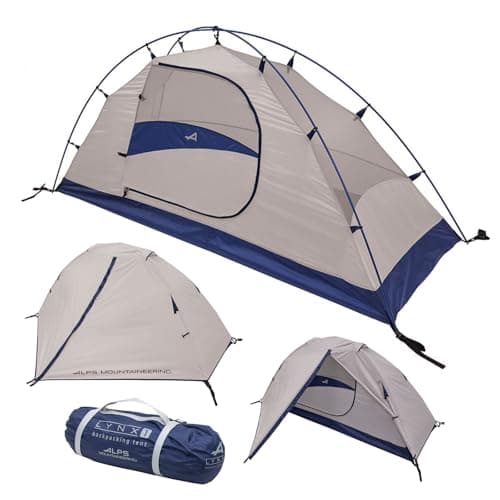
There is a real middle: three-season dome tents in the 8 to 12 lb range with aluminum or fiberglass poles, a full fly and two doors. They are heavy for a trail and small for a campground, and they suit the person who car camps most weekends and walks in one or two nights a year. If that is genuinely you, a mid-weight two or three person dome with two vestibules is the honest compromise — something like a Lynx 2 at a published 5 lb 12 oz total with 37.5 sq ft and two doors.
Where they do not overlap at all is family camping. There is no backpacking tent that houses two adults and two children comfortably, and there never will be, because the weight of the fabric alone would break the concept. If children are involved and you want to walk in, the answer is two small tents rather than one large one — which also solves bedtimes. The sizing math is in what size tent do I need.
Reading a spec sheet in thirty seconds
Four fields tell you which category you are looking at, and in what order to read them:
Weight. Over 10 lb, it is a car camping tent whatever the listing says. Under 7 lb, it is a backpacking tent.
Pole material. Steel or fiberglass means campground. Aluminum alloy means trail, or at least a tent designed with weight in mind.
Peak height. Over 60 in you can stand or nearly stand. Under 46 in you sit up and that is all.
Packed size. If it is quoted in feet, it lives in a car. If it is quoted as a diameter and a length in inches, it straps to a pack.
Two fields that do not distinguish the categories, despite being the ones most beginners fixate on: the capacity number, which is the count of adults lying shoulder to shoulder in both cases, and the hydrostatic head rating, which clusters between 1200 and 3000 mm across both. Neither tells you what kind of tent you are holding.
Yes, and you will be less comfortable than a car camping tent at the same price would have made you. You get a smaller floor, a lower peak height and thinner fabric, and you gain a weight saving that is worth nothing in a campground.
QCan I use a car camping tent for backpacking?
Only for very short walk-ins. A typical family tent runs 20 to 40 lb, which is most or all of a beginner's entire pack weight budget before sleeping bag, pad, food and water. Under about 200 yards from the car it is fine; beyond that it is not.
QHow do I tell a backpacking tent from a car camping tent on a listing?
Read weight, pole material, peak height and packed size in that order. Over 10 lb with steel or fiberglass poles is a car camping tent. Under 7 lb with aluminum poles and a packed size given as a diameter and length is a backpacking tent.
QWhich should a beginner buy first?
The car camping tent, almost always. Most first trips happen within sight of a vehicle, where the car camping tent is more comfortable, tougher and cheaper per square foot. Buy the backpacking tent when you have a specific trail trip planned.
Sources
Every figure on this page comes from a published source. We have not tested this gear, so the numbers are the manufacturer's or the standard body's, not ours. How we research.