Skip to content
Trail & Tarp

Buying advice

The Best Camping Gear on a Budget: Where to Spend and Where Not To

Outfitting a household for camping does not require spending evenly. Three items decide whether you enjoy the trip; the rest can be the cheapest thing that works.

By Sawyer V.Published September 27, 2026Last updated September 27, 2026How we research
Coleman Sundome 3-Person Tent

Trail & Tarp earns a commission from qualifying purchases made through links on this page, at no extra cost to you. Full disclosure.

Quick picks

#ProductBest forPrice
1
Coleman Sundome 3-Person Tent

Best budget tent

Coleman Sundome 3-Person Tent

49 sq ft at 7 by 7 ft under a 4 ft 4 in ceiling, at about 9 lb.

Two people who want a shelter that works and parts they can replace
$99.99 · Check price on Amazon

#ad how this is funded · price as of October 23, 2026

2
No photo

Best budget sleeping pad

Klymit Static V Base

18.7 oz packing to 8 by 3 in, with an honest ASTM R-value of 1.3.

Summer camping where the ground is not cold
3
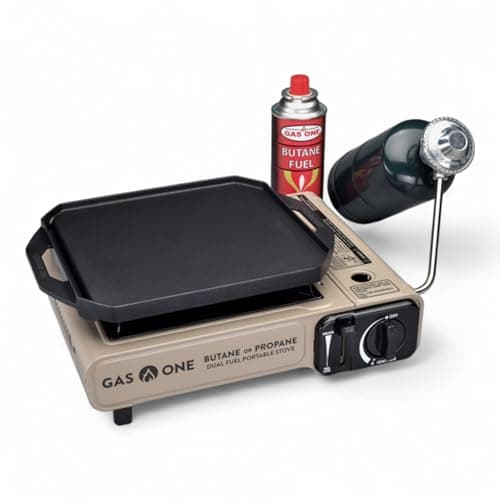
Gas One GS-3400P Dual-Fuel Stove

Best budget stove

Gas One GS-3400P Dual-Fuel Stove

8,000 BTU from either butane or propane at 3.1 lb, with pressure-sensor cartridge ejection.

Cooking for one or two without buying a two-burner
$56.99 · Check price on Amazon

#ad how this is funded · price as of October 23, 2026

Spend unevenly

The short answer

Three things decide whether a camping trip is enjoyable: what you sleep on, what you sleep in, and whether the shelter keeps water out. Spend there. Almost everything else in a camping kit can be the cheapest version that functions, or something you already own.

We are not quoting price points on this page. Prices move, the site shows live figures on each buy row, and a page promising a dollar ceiling stops being true quietly. What follows is where the money goes, not what it costs.

Where to spend

ItemWhy it earns the moneyThe spec to read
Sleeping padthe ground steals heat all night; the pad is the only thing stopping itR-value
Sleeping bagtoo cold and nobody sleeps, which ends tripsISO comfort rating, not a maker's number
Tent floor and flya wet tent is the single worst camping failuretub floor, taped seams, full-coverage fly
The three places a cheap item costs you the trip.

Note the bag row. An ISO comfort figure is measured to a standard; a maker's number is not, and the two are routinely 10 to 15 F apart on the same bag — sleeping bag temperature ratings explained.

Where cheap is genuinely fine

Borrow or rent the first time

The cheapest camping trip is one where you buy almost nothing. Borrow a tent, borrow chairs, use your kitchen pots, and find out what you actually care about before spending. Many outdoor retailers and some public library systems rent gear cheaply, and a single borrowed weekend teaches you more about what to buy than any amount of reading. Buying used is the next step — see how to buy used camping gear, and the items not worth buying at all are in camping gear you do not need.

The stacking trick

R-values add, so two cheap pads beat one mid-price pad on cold ground. A closed-cell foam pad at R 2.0 under a Static V Base at R 1.3 gives roughly R 3.3 for a fraction of a single high-R pad, and a puncture then costs you comfort rather than the night.

Do the same with warmth: a liner adds a few ounces and some degrees to a bag you already own, which is far cheaper than a warmer bag — do you need a sleeping bag liner.

What a first budget kit looks like

CategoryBudget answer
Sheltera Sundome-class tent with a tub floor, plus a cheap poly tarp
Sleepinga rectangular synthetic bag, an inflatable pad, a foam pad under it
Kitchena single-burner dual-fuel stove and pots from your kitchen
Cold storageany hard cooler, packed properly, opened rarely
Lightone headlamp per person, one cheap lantern
Everything elseborrowed, or from home
Our view of a functional first kit, spending only where it changes the night.

Work through the car camping checklist and mark each line borrow, own or buy before you spend anything. The wider question of whether premium gear pays off later is argued in is expensive camping gear worth it.

The picks in full

1. Best budget tent

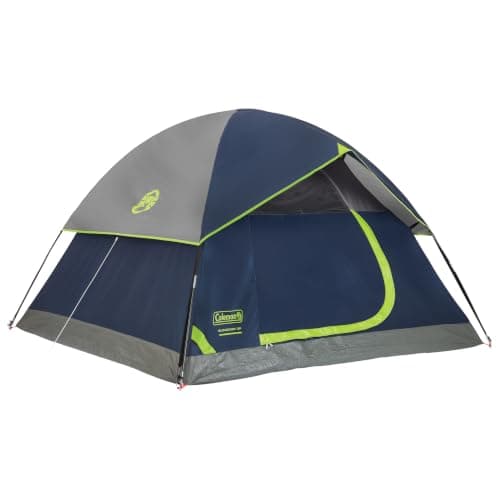
Coleman Sundome 3-Person Tent

Coleman

49 sq ft at 7 by 7 ft under a 4 ft 4 in ceiling, at about 9 lb.

Coleman publishes a 7 by 7 ft floor at 49 sq ft, a 4 ft 4 in center height, a weight of about 9 lb, a WeatherTec tub floor and room for one queen airbed.

The argument is not the specification, it is the supply chain: replacement poles and flies for the Sundome line sit on shelves across the country. A cheap tent you can repair outlives a better tent you cannot.

The drawback

A partial roof fly rather than full coverage, so wind-driven rain will reach the mesh upper walls, and there is no vestibule.
Coleman Sundome 3-Person Tent

Published specs

Floor
7 x 7 ft, 49 sq ft
Center height
4 ft 4 in
Weight
about 9 lb
Airbeds
fits 1 queen
Floor
WeatherTec tub-style
Season rating
3-season

Specs: Coleman Sundome 3-Person Camping Tent product page

$99.99 · Check price on Amazon

#ad how this is funded · price as of October 23, 2026

2. Best budget sleeping pad

Klymit Static V Base

Klymit

18.7 oz packing to 8 by 3 in, with an honest ASTM R-value of 1.3.

Klymit publishes an ASTM R-value of 1.3, a 72 by 23 by 2.5 in size, an 18.7 oz / 530 g weight and an 8 by 3 in packed size.

This is the honest budget pad: cheap, light, packable and clear about its limit. Add a closed-cell foam pad underneath and the R-values stack into a three-season setup for very little — inflatable vs self-inflating pads.

The drawback

R 1.3 is a summer figure and Klymit says so. On cold ground you will be cold regardless of your sleeping bag.

No product photo: we don't take our own

Published specs

R-value
1.3 (ASTM)
Size
72 x 23 x 2.5 in
Weight
18.7 oz / 530 g
Packed
8 x 3 in
Type
inflatable, uninsulated

Specs: Klymit Static V Base published specs

3. Best budget stove

Gas One GS-3400P Dual-Fuel Stove

Gas One

8,000 BTU from either butane or propane at 3.1 lb, with pressure-sensor cartridge ejection.

Gas One publishes 8,000 BTU, dual fuel compatibility with 8 oz butane or 16.4 oz propane, a 3.1 lb weight, a 13.5 by 11.2 by 4.4 in size and a pressure-sensor cartridge ejection safety system.

Dual fuel is unusual at this price and genuinely useful: butane is cheap and clean, propane works in the cold. The fuel argument is in propane vs butane.

The drawback

One burner and 8,000 BTU. It heats one pan at a time, so a two-course meal happens in sequence.

Gas One GS-3400P Dual-Fuel Stove

Published specs

Output
8,000 BTU
Fuel
8 oz butane or 16.4 oz propane
Weight
3.1 lb
Size
13.5 x 11.2 x 4.4 in
Safety
pressure-sensor cartridge ejection

Specs: Gas One GS-3400P published specs

$56.99 · Check price on Amazon

#ad how this is funded · price as of October 23, 2026

Questions people actually ask

QWhat camping gear is worth spending money on?

Three things: the sleeping pad, the sleeping bag and the tent's floor and fly. The ground steals heat all night and only the pad stops it; a cold night ends trips; and a leaking tent is the worst camping failure. Almost everything else can be the cheapest version that works.

QWhat camping gear can I buy cheap?

Cookware, chairs, tables, water containers and most clothing. A supermarket pot boils water exactly as well as a titanium one, most campgrounds supply a picnic table, and any non-cotton clothing from any store will do. Wool socks are the one clothing upgrade worth making early.

QHow can I go camping without buying gear?

Borrow or rent for the first trip. Many outdoor retailers and some library systems rent kit cheaply, and your kitchen already has pots. One borrowed weekend tells you more about what you actually need than any amount of research, and you buy afterwards with real information.

QIs it better to buy one good sleeping pad or two cheap ones?

Two cheap ones, often, because R-values add. A closed-cell foam pad at R 2.0 under an inflatable at R 1.3 gives roughly R 3.3 for less than one mid-price pad, and a puncture then costs you comfort instead of the whole night.

How we picked

Everyone else in this category will tell you they tested twenty of these. We have not tested any of them, and we would rather say so than pretend. There is no gear closet here and no test lab.

What we did instead: pulled the published specifications from each manufacturer's own spec sheet or manual, named the standard behind every rating so you can check what it actually promises, did the arithmetic that turns a spec into a decision, and pulled today's real retail price rather than quoting one from memory. Every pick states a drawback, because a list where nothing is wrong with anything is an advert.

The limits of that method, stated plainly: published specs do not capture zipper quality, seam durability, or how a tent behaves at 2am in a storm. Where that matters, we say so on the pick. The full method is here.

Sources for this page